

Agentforce 360 Deep Dive: Vibes, aka Vibe Coding for the Enterprise
In this Agentforce 360 deep dive, we explore how Agentforce Vibes helps teams build and customize agents faster by turning natural language into enterprise-ready code and configurations.
The Agentforce 360 Platform just keeps on giving! This series may never end. And if you want to start at the beginning, view the list of articles on the sidebar to catch up. This overview introduces Agentforce Vibes. So let’s get into it!
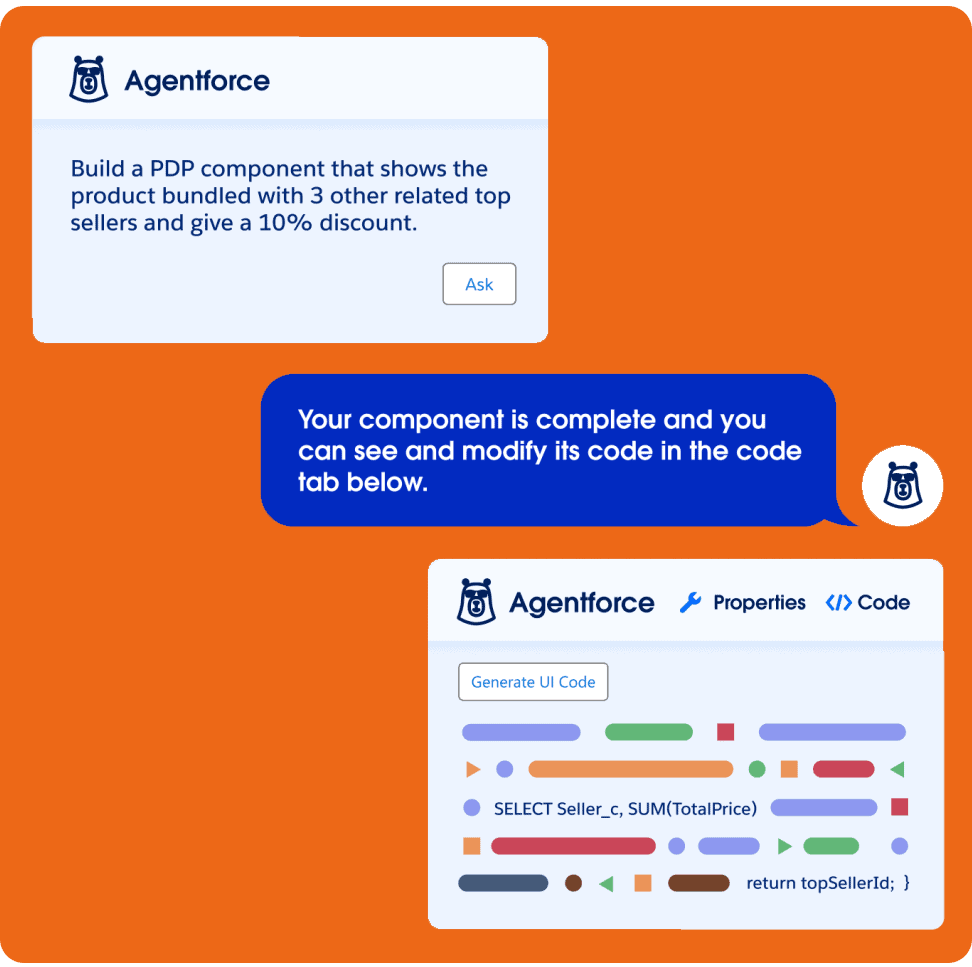
What does Vibe Coding do?
So far you already have Builder, Script, and Intelligent Context. These tools make it much easier for non-coders to create agents. However, you still have to have a basic understanding of code language. Salesforce defines vibe coding as a way to “use natural language to build and customize Salesforce faster, right from your coding environment.”
If you’re used to asking ChatGPT for a way to do a task, and it provides the Python prompt or Excel formulas to execute the task, think of this in a similar way.
Vibes extrapolates precise code from your natural language prompts and ensures there is enterprise-grade security and governance applied.
At the Salesforce Agentforce World Tour event, this is how they highlighted Vibes:
In simple terms, you describe what you want built and Salesforce handles how it gets built.
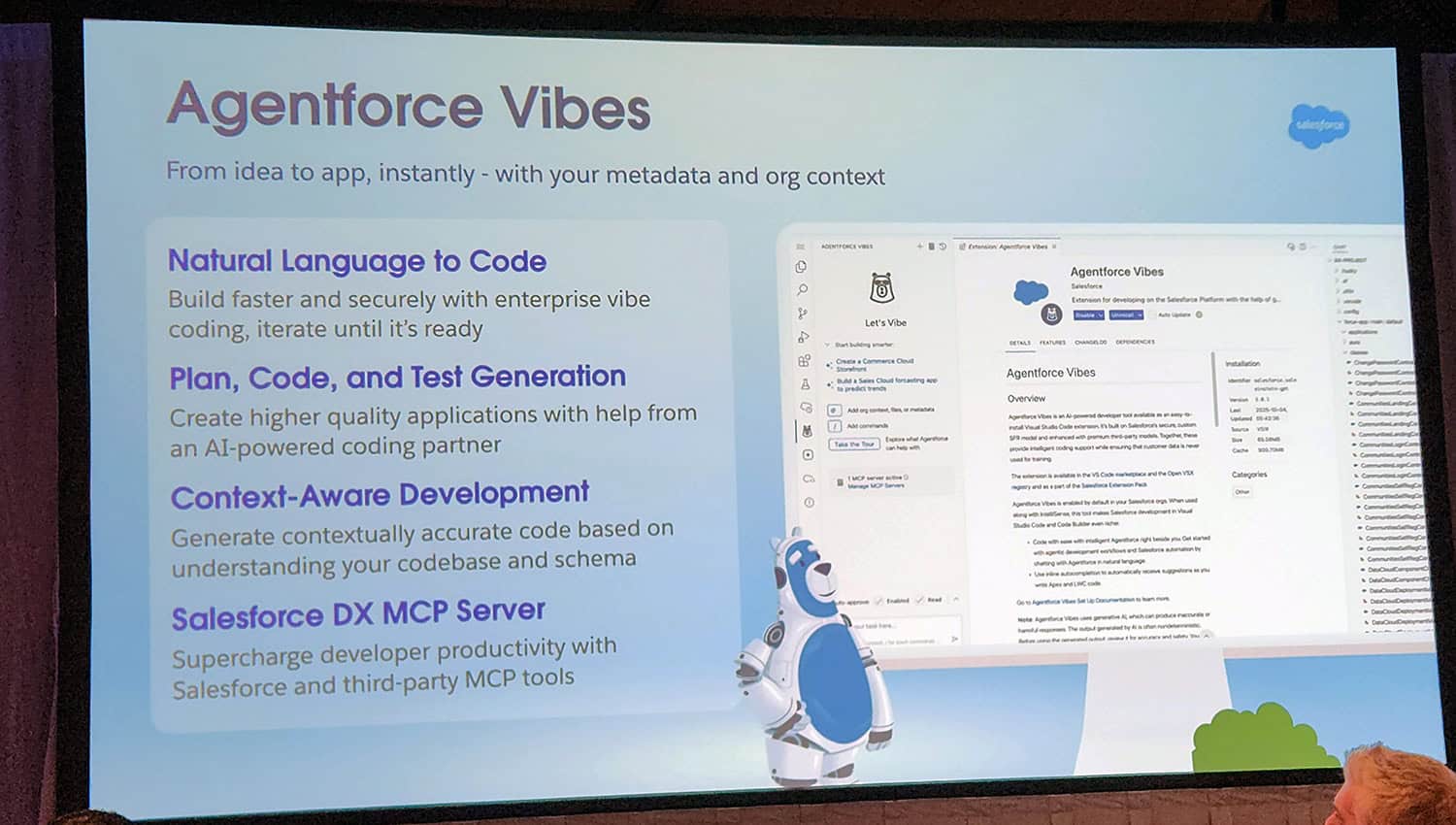
Taken at Agentforce World Tour in Houston, January 2026 – Agent Vibes, now in GA

Consulting Partner

Managed Services Provider
Why Smartbridge is Excited about Vibe Coding
From idea to app instantly. This is the sales pitch for Agentforce Vibes. We see it less as replacing development and more as accelerating the starting point. Natural language may kick off the build, but structured testing, governance, and refinement still finish it.
Agentforce 360 Use Case
Agentforce Vibes for a Restaurant franchise support agent buildout
A restaurant franchise group wants to deploy an internal agent that helps store managers troubleshoot POS issues, labor scheduling questions, and supply shortages. Traditionally, building that support workflow would require translating operational knowledge into technical requirements, then waiting on development cycles.
With vibe coding, operations leaders can describe those workflows directly — defining escalation paths, required inputs, and support scenarios through natural language. Developers still review and refine the output, but the initial build moves significantly faster, allowing the organization to deploy and evolve the agent without long backlogs.

Looking Forward
But Venu, you may ask, why would a consulting firm like Smartbridge be excited about low- and no-code alternatives to agentic development?
Because faster building doesn’t remove the need for strategy, governance, and operational alignment. If anything, vibe coding increases the importance of designing the right workflows, guardrails, and data foundations before scaling agents across the enterprise.
Salesforce’s goal is to accelerate the creation and adoption of AI, but that doesn’t reduce the need for partners. In fact, our role has become even more vital as these tools have raised the bar for how agents get designed, governed, and scaled.
I’ll be concluding this series shortly with a few more posts on control & governance (as that will be very needed going forward), and a wrap-up of several more features Agentforce has just dropped — or will drop soon.