

Agentforce 360 Deep Dive: Intelligent Context for Accurate Agent Responses
In this Agentforce 360 deep dive, we explore how Intelligent Context helps agents reason over unstructured business data so responses are accurate, relevant, and trustworthy.
Welcome back to the next installment in our series breaking down the new Agentforce 360 platform by Salesforce. Be sure to visit our previous articles linked on the right, although you don’t necessarily need to be caught up to dive in below. Because this article is all about Intelligent Context, a feature powered by Data 360, it’s all about fixing your agents for accuracy. And I’m here for it!
Agents are only as good as the content AND context they can provide, and we often forget the latter. When a proper response is buried within documents, that content isn’t always easy for non-humans to interpret. Tables, charts, design, images, diagrams…. they all get in the way of accuracy with traditional LLM data indexing. It’s the age-old problem of unstructured data. We felt this with spreadsheet reporting, then BI dashboards, and now it is even more of a risk with AI.
As Salesforce puts it, “the result is agents that reason with the right data.”
Welcome to Agentforce 360’s latest achievement: Intelligent Context!
What does Intelligent Context do, exactly?
The best way to understand intelligent context is through the FedEx example shared by Salesforce during their Agentforce World Tour event.
Basically, a customer’s question to a FedEx chatbot requires an answer found in an internal PDF. Traditionally, PDF flattening occurs when agents index them, which removes context. It ends up looking a lot like this:
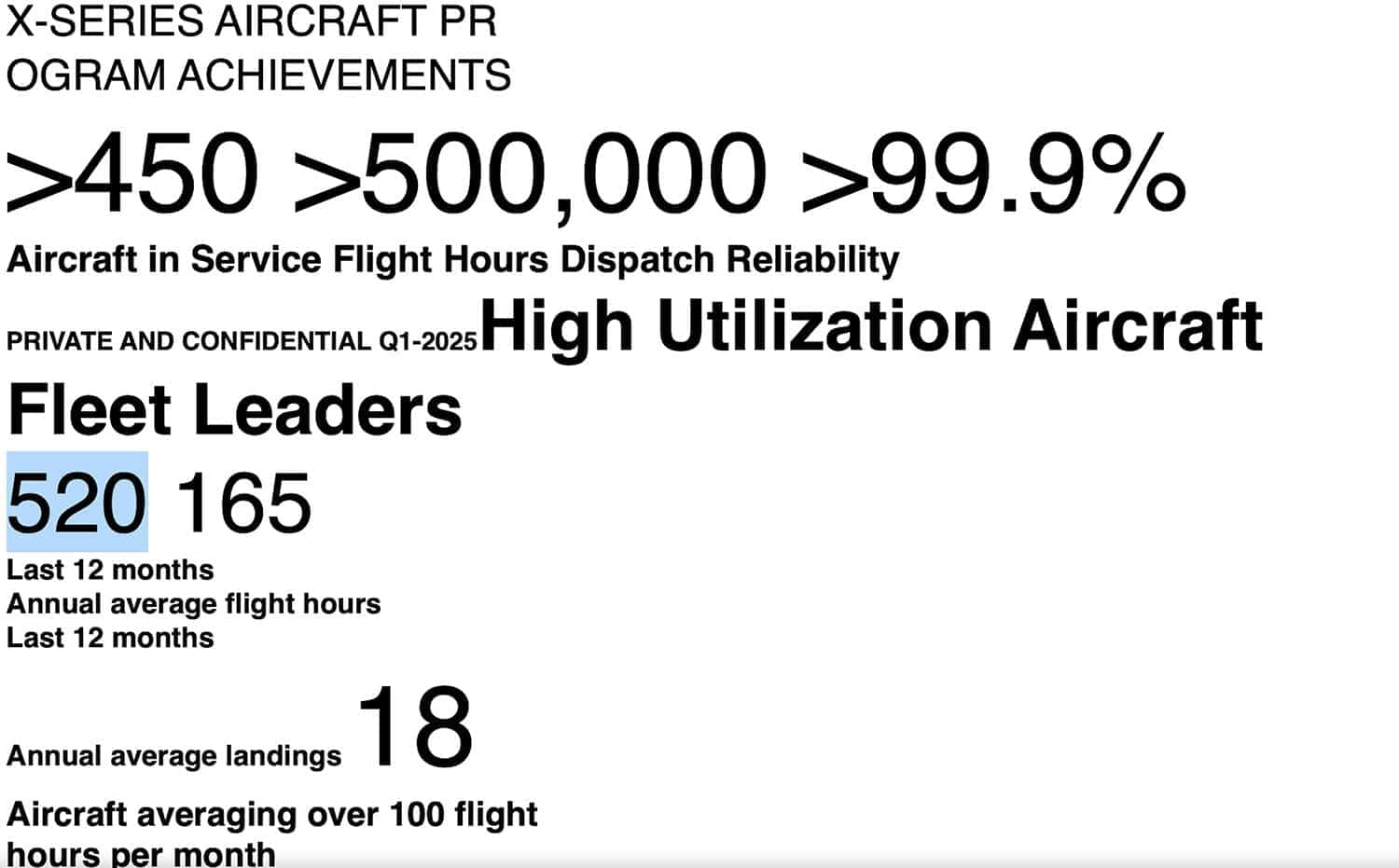
Tables, charts, images and graphic design destroy its value unless there is some sort of “context awareness”. Intelligent Context does this by using LLM-based parsing to extract structure and meaning from complex documents before the agent ever reasons over them.
With that in place, it’s a safer bet that the correct answer is given. And suppose that PDF holds information that should not be publicly available, a simple instruction to exclude those types of information can become a blanket rule across all internal PDFs that might be scraped for answers.
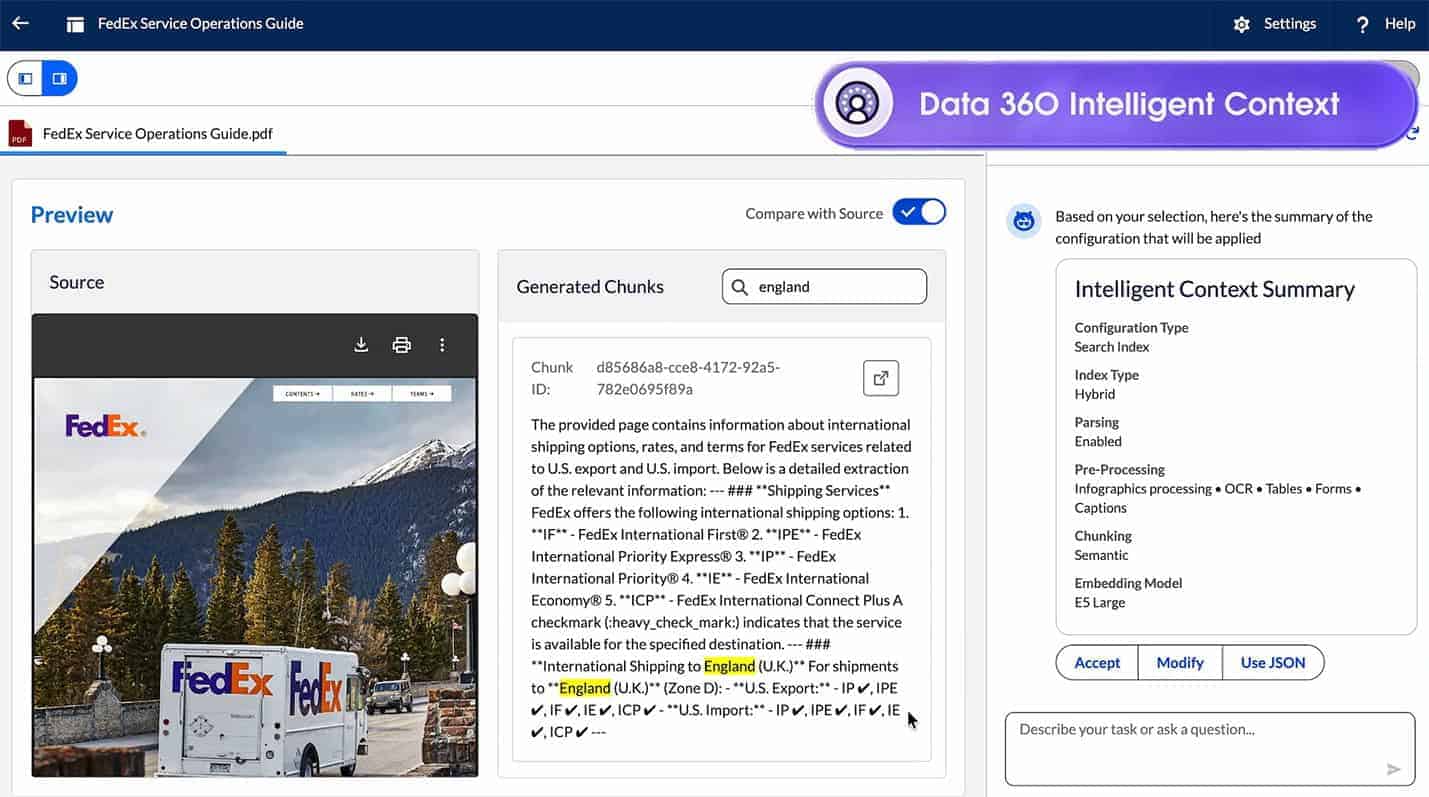
Intelligent Context in action, now in GA
Why Smartbridge loves Intelligent Context
Once again, Salesforce has created a way to do the hard things without feats of engineering. Low-code configuration comes into the picture, and the effort supports multiple types of content – PDFs, emails, images, etc. Teams can move faster without overcomplicating the architecture.
We also love it, because it works its way nicely into solving pain points common in many Smartbridge client orgs, such as our restaurant customers.

Consulting Partner

Managed Services Provider
Agentforce 360 Use Case
Putting it in Practice – A use case for Menu & Nutrition Context at a Restaurant
“What if I add cheese?”
On the restaurant website, a guest asks a chatbot how many calories are in a burger if they add cheese. Without context, the agent may answer using a generic calorie value or miss modifiers entirely.
With Intelligent Context, the agent can reason over the actual menu document, recognize optional add-ons, and calculate the updated nutrition accurately. That avoids guesswork, reduces misinformation, and builds trust with guests who care about dietary details.

Looking Forward
Our view is that Intelligent Context won’t always be a named feature. Over time, this capability will simply become the default way large language models index and reason over unstructured data, regardless of source. Teams won’t need to intervene nearly as much. The focus will shift from configuration to oversight—auditing accuracy, monitoring outcomes, and refining what “good” looks like.
Until then, enterprises still need a way to ground agents in business reality. Intelligent Context fills that gap today by helping agents reason with the right information instead of guessing.
Next, we’ll look at how these contextual insights show up in real interactions, specifically through Agentforce Voice, where accuracy, timing, and tone matter even more.