

Generative AI Consulting Services: What Enterprises Need
As Smartbridge has watched enterprises navigate the GenAI shift since 2024, we’ve noticed something critical.
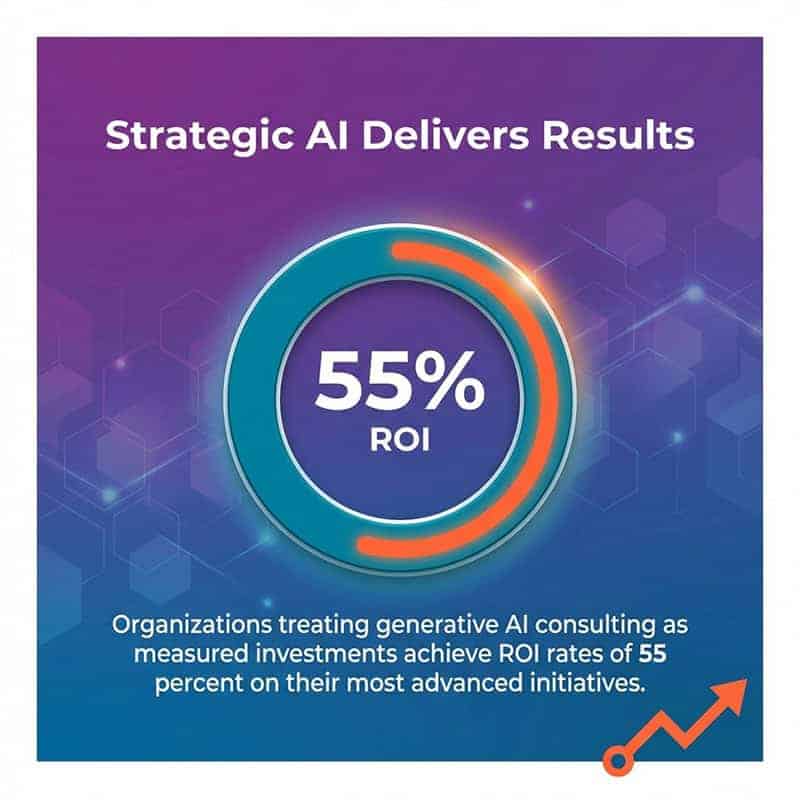
Organizations treating generative AI consulting services as measured investments achieve ROI rates of 55 percent on their most advanced initiatives, compared to just 5.9 percent for those taking ad hoc approaches.
That gap represents the difference between purposeful strategy and patchwork implementation.
Organizations that treat generative AI consulting as a measured investment achieve up to 55% ROI, far outpacing ad hoc approaches.
You saw this play out in 2025. Enterprise spending on generative AI reached $37 billion, representing a 3.2-fold increase from $11.5 billion in 2024. But spending alone doesn’t equal success.
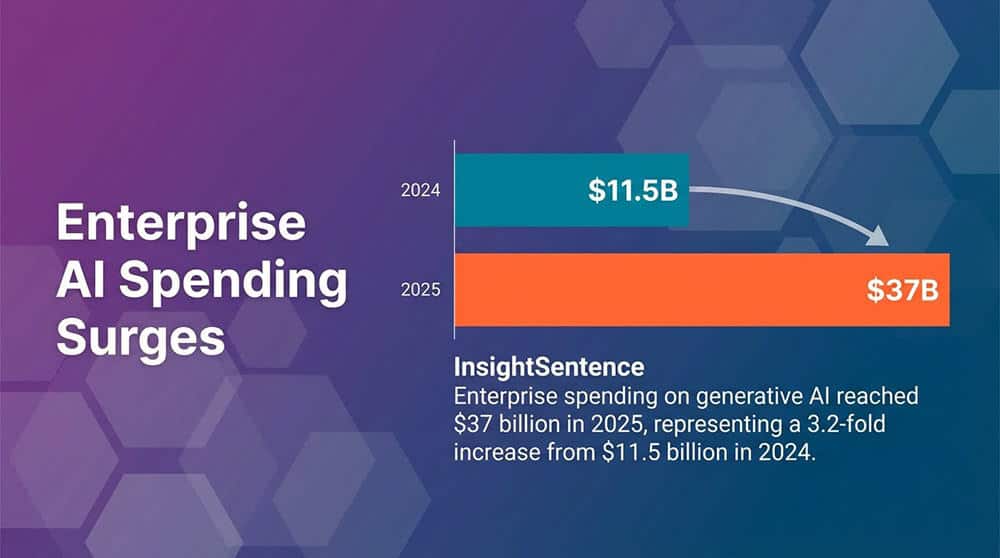
Enterprise AI spending surged to $37B in 2025—over 3x the 2024 level—yet outcomes depend on strategy, not spend alone.
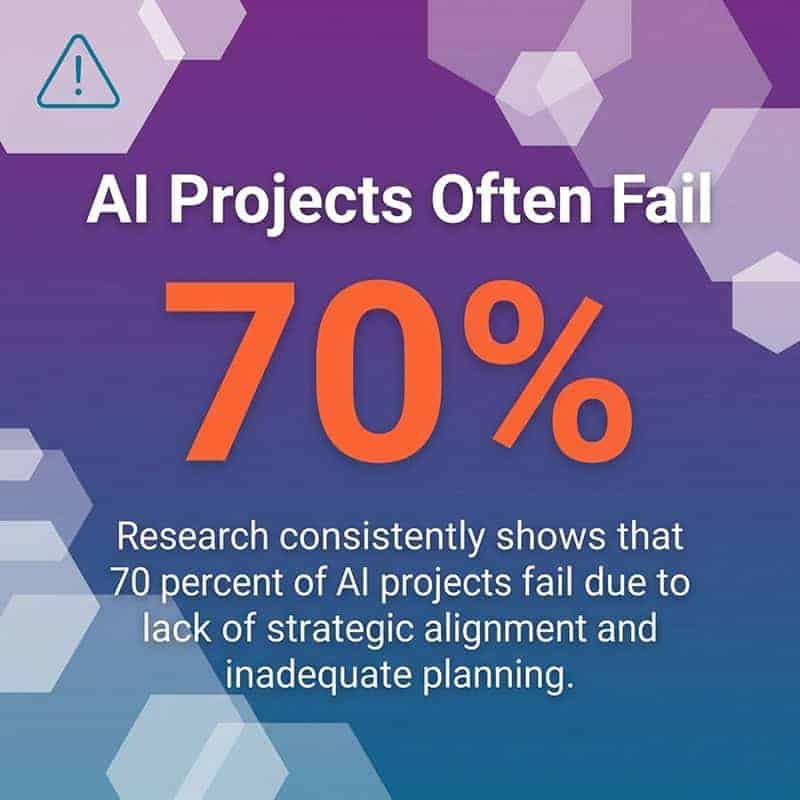
Research consistently shows that 70 percent of AI projects fail due to lack of strategic alignment and inadequate planning. The organizations that moved from pilots to production did so with expert guidance, clear roadmaps, and operational discipline.
Up to 70% of AI projects fail—most often due to weak alignment, poor planning, and missing governance.
This article shows you what actually drives successful generative AI implementations. We’ll work through strategic assessment, custom LLM development, integration approaches, and industry applications. These insights come from watching what moved the needle for enterprises across asset-intensive industries.
By the end, you’ll understand how generative AI consulting services bridge the gap between experimental pilots and production-ready systems. You’ll see why data foundations matter more than model selection, and how to build with purpose, not patchwork.
What Are Generative AI Consulting Services?
Generative AI consulting services help enterprises implement large language models and GenAI technologies in ways that deliver measurable business value. These aren’t technology-for-technology’s-sake implementations. They’re strategic partnerships focused on moving organizations from experimentation to operational dependency on AI systems.
The market reflects this shift. The AI consulting services market is valued at approximately $14.1 billion in 2026 and is projected to reach roughly $116.8 billion by 2035, representing a compound annual growth rate of 26.5 percent. That growth stems from genuine enterprise need, not hype.
A generative AI consultant brings three critical capabilities to the table. First, strategic roadmap development that aligns AI initiatives with business objectives. Second, technical implementation expertise spanning model selection, fine-tuning, and RAG architectures. Third, operational readiness guidance addressing governance, change management, and scaling challenges.
Here’s what separates effective consulting from vendor relationships. Consultants start with AI readiness assessments before recommending solutions. They prioritize use case identification based on business impact, not technical novelty. They build data foundations before deploying foundation models.
The most successful generative AI consulting engagements follow a consistent pattern. They begin with discovery and assessment, move through proof of concept development, and culminate in production deployment with ongoing optimization support. Each phase builds on the previous one, creating sustainable AI capabilities.
The Consulting Value Proposition
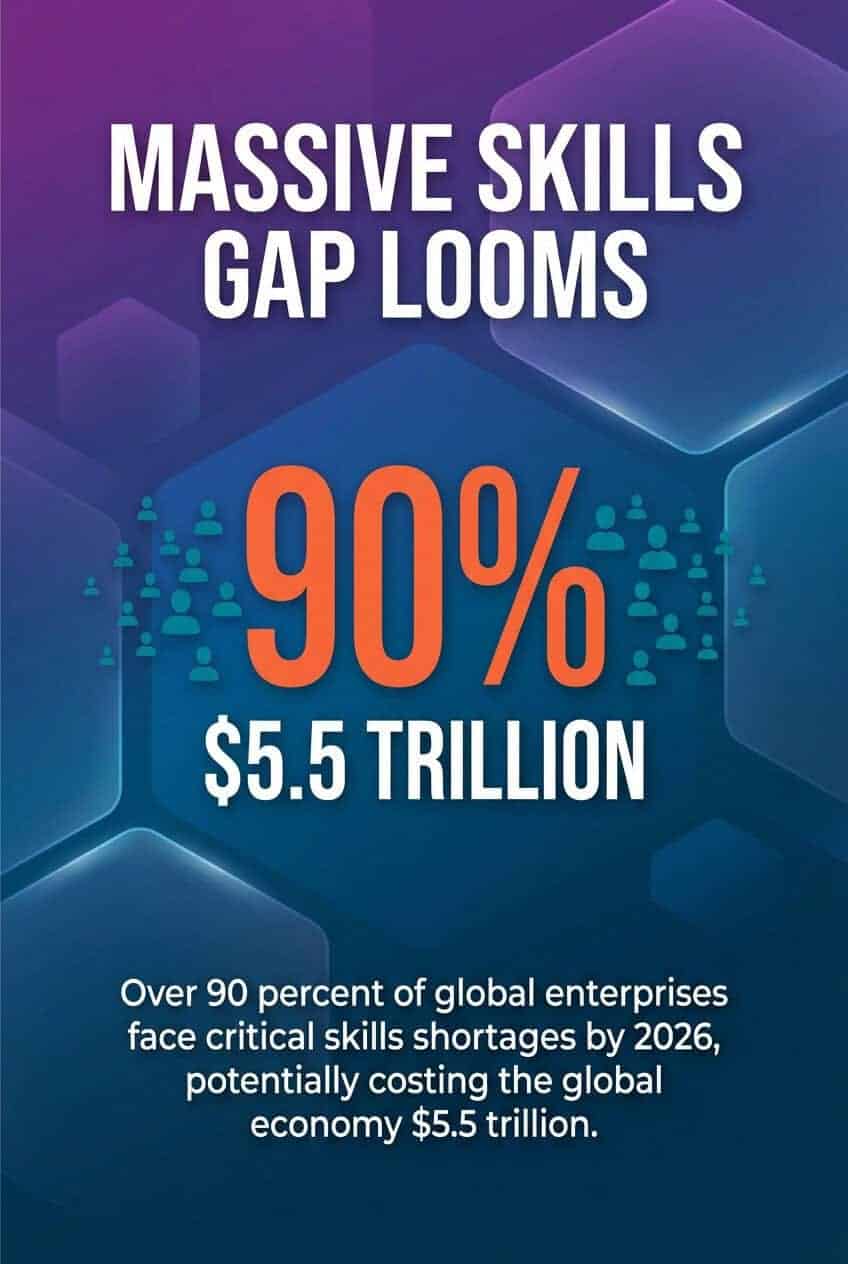
Generative AI consulting services address a fundamental challenge. Over 90 percent of global enterprises are projected to face critical skills shortages by 2026, with the skills gap potentially costing the global economy up to $5.5 trillion by 2026. Internal teams often lack experience with LLM fine-tuning, RAG implementation, or AI agent development.
By 2026, 90%+ of enterprises will face critical AI skills gaps—accelerating the need for expert consulting partnerships.
External expertise fills that gap faster than hiring and training internal resources. Consultants bring cross-industry patterns, implementation methodologies, and technical depth accumulated across dozens of deployments. They’ve already made the mistakes you’re about to encounter.
The value proposition extends beyond technical capabilities. Consultants navigate vendor landscapes, evaluate foundation model options, and architect solutions that integrate with existing enterprise systems. They bring objectivity unclouded by internal politics or sunk cost bias.
Strategic Versus Tactical Engagements
Strategic generative AI consulting focuses on enterprise-wide transformation. These engagements develop multi-year AI roadmaps, establish governance frameworks, and identify high-impact use cases across business units. They create the foundations for sustained competitive advantage through digital maturity.
Tactical consulting addresses specific implementation needs. Deploy a customer service AI agent. Build a RAG system for internal knowledge management. Fine-tune an LLM for industry-specific content generation. These focused engagements deliver faster time-to-value while building organizational AI capabilities.
Most enterprises need both. Strategic consulting sets direction and priorities. Tactical engagements prove value and build momentum. The best consulting relationships blend strategic vision with hands-on implementation support.
Core Generative AI Consulting Services We Offer
Our generative AI consulting services span eight core areas, each addressing distinct enterprise needs. These services work together as an integrated approach to AI adoption, not a menu of disconnected offerings.
Every engagement begins with understanding your current state and desired outcomes. We don’t start with solutions. We start with your business challenges, operational constraints, and competitive pressures. Technology recommendations follow business requirements, never the reverse.
AI Strategy and Roadmap Development
AI strategy development creates the blueprint for enterprise-wide GenAI adoption. We work with C-suite executives and business leaders to identify high-impact opportunities, assess organizational readiness, and sequence initiatives for maximum value.
The process starts with current state assessment. Where is AI already being used? What pilots have succeeded or failed? What data assets exist? What skills gaps need addressing? This foundation prevents redundant efforts and builds on existing capabilities.
Next comes use case identification and prioritization. We evaluate potential applications based on business value, technical feasibility, data availability, and strategic alignment. Not every use case deserves immediate investment. Some require data foundations first. Others depend on organizational readiness that doesn’t yet exist.
The deliverable is a multi-year AI strategy roadmap showing phased implementation, resource requirements, expected outcomes, and key milestones. This roadmap guides investment decisions and keeps teams focused on business value rather than technical novelty.
Generative AI Readiness Assessment
AI readiness assessment evaluates six critical dimensions before significant GenAI investment. Data maturity and quality determine what’s technically possible. Poor data quality costs companies nearly $12.9 million annually, making this assessment essential.
Technical infrastructure readiness examines cloud capabilities, compute resources, and integration architecture. Organizational readiness assesses skills, culture, and change management capacity. Governance maturity evaluates existing policies, risk management approaches, and ethical AI frameworks.
The assessment produces a readiness score across each dimension, identifies gaps requiring remediation, and recommends priority actions. Some organizations need data quality initiatives before AI deployment. Others require governance establishment or skills development.
This honest assessment prevents premature scaling. It’s better to invest three months building data foundations than spending six months on an AI initiative destined to fail due to data quality issues.
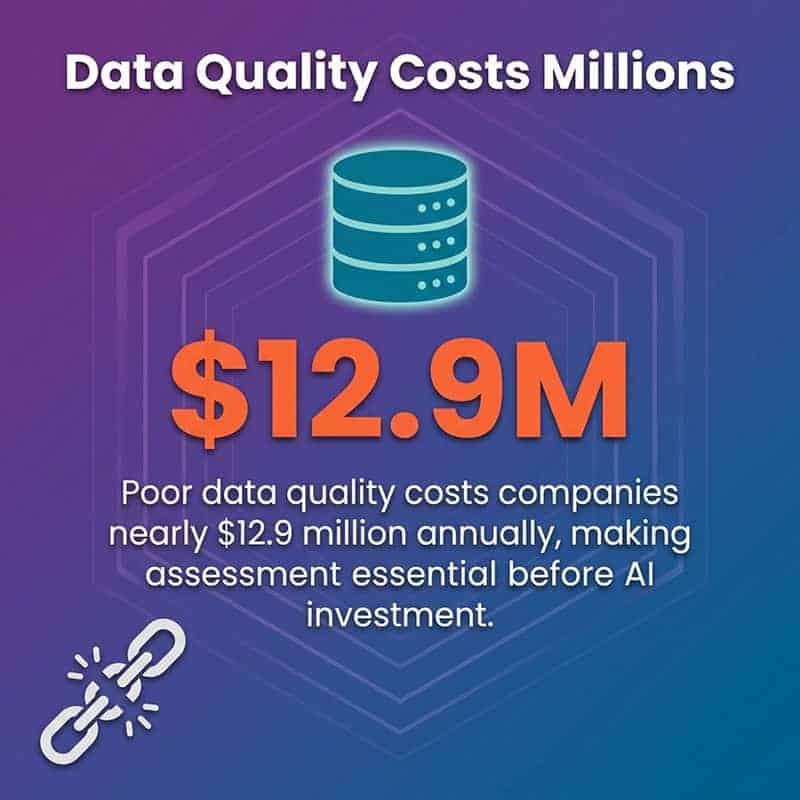
Poor data quality drains ~$12.9M per year per company—fix foundations before scaling GenAI.
Custom LLM Development and Fine-Tuning
Custom LLM development adapts foundation models for industry-specific applications. Financial services firms need models trained on regulatory documents and market analysis. Life sciences organizations require models understanding clinical terminology and research protocols. Manufacturing enterprises benefit from models trained on operational documentation and quality standards.
Fine-tuning adjusts pre-trained large language models using domain-specific datasets. This approach costs less than training models from scratch while delivering superior performance on specialized tasks. The process requires careful dataset curation, hyperparameter optimization, and evaluation methodology.
We guide organizations through foundation model selection, comparing capabilities, costs, and licensing terms. Choosing the right generative AI foundation for your enterprise requires understanding your specific use case requirements and operational constraints.
The custom LLM development process includes data preparation, model architecture selection, training infrastructure setup, fine-tuning execution, and performance validation. We establish model versioning, monitoring, and continuous improvement processes for production deployments.
RAG Implementation Services
Retrieval Augmented Generation combines the language capabilities of LLMs with your enterprise knowledge base. This architecture allows AI agents and copilots to provide accurate, current answers based on your documents, databases, and systems.
RAG implementation requires four key components. First, knowledge base preparation involving document ingestion, chunking strategies, and metadata tagging. Second, vector database selection and configuration for semantic search capabilities. Third, retrieval logic determining how relevant information gets surfaced. Fourth, generation quality monitoring ensuring accurate, relevant responses.
We architect RAG solutions addressing enterprise requirements like access control, audit trails, and source attribution. Users see which documents informed AI responses. Administrators track system usage and identify knowledge gaps requiring additional content.
RAG systems excel when current information matters more than static training data. Customer support scenarios, internal knowledge management, and research applications all benefit from this approach. The alternative is frequent model retraining, which costs significantly more.
AI Agent and Copilot Development
More than half of executives, specifically 52 percent, report their organizations are actively using AI agents. These intelligent automation solutions handle tasks ranging from customer service to data analysis to workflow orchestration.
AI agent development involves defining agent capabilities, designing conversation flows, integrating with backend systems, and establishing guardrails. Agents need clear scope. An agent handling customer service inquiries shouldn’t attempt complex technical troubleshooting beyond its training.
Copilot development creates AI assistants that augment human capabilities rather than replacing them. Sales copilots surface relevant customer information during calls. Clinical copilots suggest diagnosis options based on patient history. Manufacturing copilots recommend quality control adjustments based on sensor data.
Our development process emphasizes responsible AI principles. Agents include transparency mechanisms showing reasoning processes. They escalate to humans when confidence drops below thresholds. They maintain audit logs for compliance and improvement purposes.
of executives report their orgs are using AI Agents.
Data Preparation and Engineering for AI
Data preparation represents 60-80 percent of GenAI project effort. Organizations underestimate this work at their peril. The most advanced LLM won’t overcome training data that’s incomplete, inconsistent, or incorrectly labeled.
Our data engineering services address five critical areas. Data discovery identifies relevant sources across enterprise systems. Data quality assessment evaluates completeness, accuracy, consistency, and timeliness. Data cleansing remediates quality issues through automated and manual processes.
Data transformation converts source data into formats suitable for model training. This includes normalization, feature engineering, and augmentation techniques. Data governance establishes policies for data access, privacy, and ethical use.
We implement data pipelines automating ingestion, transformation, and delivery to AI systems. These pipelines include monitoring, error handling, and versioning capabilities. When source data changes, pipelines automatically update training datasets.
Model Selection and Evaluation Services
Model selection determines which foundation model best fits your use case and constraints. Factors include task type, performance requirements, latency constraints, cost considerations, licensing terms, and deployment environment.
We evaluate models across standardized benchmarks relevant to your applications. Natural language understanding tasks require different evaluation metrics than code generation or image analysis. Bias testing ensures models don’t perpetuate problematic patterns.
The evaluation process includes proof of concept testing with representative data. We measure accuracy, latency, cost per inference, and resource requirements. These empirical results guide selection better than vendor marketing claims.
Model evaluation continues post-deployment. We establish monitoring systems tracking prediction quality, drift detection, and user satisfaction. Models degrade over time as real-world data evolves. Continuous evaluation triggers retraining or model replacement decisions.
Responsible AI and Governance Implementation
Responsible AI implementation addresses ethical considerations, bias mitigation, transparency requirements, and regulatory compliance. Only 25 percent of organizations have fully implemented AI governance programs, creating significant risk exposure.
We establish AI governance frameworks defining roles, responsibilities, policies, and procedures. These frameworks address model development standards, testing requirements, approval processes, and monitoring obligations. They specify how to handle model failures, user complaints, and regulatory inquiries.
Bias testing evaluates whether models produce discriminatory outcomes across protected attributes. Fairness metrics quantify disparate impact. Mitigation techniques reduce bias through training data adjustments, algorithmic corrections, or post-processing interventions.
Explainability mechanisms help stakeholders understand AI decision-making. Some applications require detailed explanations satisfying regulatory requirements. Others need sufficient transparency for user trust without exposing proprietary logic.
Strategic AI Readiness Assessment and Planning
Now that you understand core consulting services, the strategic foundation determines whether those services deliver value or disappoint stakeholders. Assessment and planning separate successful GenAI implementations from expensive failures.
Organizations rush into implementation without understanding their readiness. They select models before assessing data quality. They deploy pilots before establishing governance. They scale solutions before validating business value. These sequences guarantee suboptimal outcomes.
The Six Dimensions of AI Readiness
Use Case Identification and Prioritization
Use case identification workshops bring together business leaders, process owners, and technical teams. We facilitate structured brainstorming exploring where GenAI could impact operations, customer experience, product development, or decision-making.
The output is a comprehensive use case inventory describing each opportunity’s business value, required capabilities, data needs, and implementation complexity. Not every idea makes the priority list. Some deliver marginal value despite significant effort. Others require capabilities your organization won’t have for years.
Prioritization balances four factors. Business value quantifies financial impact, efficiency gains, or competitive advantage. Technical feasibility assesses whether current technology and data support the use case. Organizational readiness evaluates whether people and processes can absorb the change. Strategic alignment confirms the use case advances enterprise priorities.
We plot use cases on a value-feasibility matrix. High-value, high-feasibility opportunities become immediate priorities. High-value, low-feasibility use cases require capability building before implementation. Low-value opportunities get deferred regardless of feasibility.
Building Your AI Strategy Roadmap
The AI strategy roadmap sequences initiatives across three horizons. Horizon one contains six to twelve-month initiatives delivering quick wins and building momentum. These prove value, develop skills, and secure stakeholder support for larger investments.
Horizon two spans one to two years, focusing on high-impact use cases requiring more substantial change. These initiatives might involve custom LLM development, enterprise-wide deployments, or significant process redesign. Success here positions AI as a competitive advantage.
Horizon three extends two to five years, encompassing transformational initiatives requiring major capability development. These might include AI-driven business model changes, industry-leading applications, or technology partnerships creating proprietary advantages.
Each roadmap phase includes initiative descriptions, success criteria, resource requirements, dependencies, risks, and expected outcomes. We identify capability-building initiatives enabling future phases. If horizon two requires advanced RAG capabilities, horizon one includes RAG proof of concept projects.
Understanding generative AI’s transformative potential for enterprises helps executives make informed roadmap decisions aligned with long-term digital maturity goals.
Defining Success Metrics and ROI Frameworks
Effective ROI measurement frameworks begin with step one: defining clear objectives and metrics aligned to business strategy. Generic efficiency metrics don’t demonstrate AI value to skeptical executives.
Financial metrics include cost reduction, revenue increase, and risk mitigation. An AI agent reducing customer service costs by $2 million annually shows clear financial value. A sales copilot increasing conversion rates by 15 percent demonstrates revenue impact.
Operational metrics track efficiency gains, quality improvements, and cycle time reduction. Manufacturing AI reducing defect rates by 30 percent delivers measurable quality value. Claims processing automation cutting cycle times from days to hours shows dramatic efficiency gains.
User adoption metrics indicate whether people actually use AI systems. Login frequency, feature utilization, and user satisfaction scores reveal whether deployments create value or gather dust. High technical performance means nothing if users bypass the system.
Strategic metrics connect AI initiatives to enterprise objectives. If competitive differentiation matters, track whether AI capabilities create customer value competitors can’t match. If innovation drives strategy, measure whether AI accelerates product development cycles.
Custom LLM Development and Fine-Tuning
With strategy and readiness established, custom LLM development transforms generic foundation models into industry-specific AI capabilities. This technical work separates proof of concepts from production-ready systems delivering sustained value.
Organizations face a build-versus-buy decision. Pre-trained foundation models handle general tasks adequately. Custom development makes sense when domain expertise creates competitive advantage, when data sensitivity prevents external API use, or when specialized performance requirements exceed generic model capabilities.
Foundation Model Selection Criteria
Foundation model selection starts with use case requirements. Natural language understanding tasks favor models trained on diverse text corpora. Code generation requires models trained on programming languages. Multimodal applications need models handling text, images, and other data types.
Performance benchmarks provide objective comparisons. Measure accuracy on representative tasks using your actual data. Latency requirements determine whether large models are viable. Cost per inference affects operating expenses at scale.
Deployment constraints narrow options. On-premises deployments require models running on available hardware. Edge deployments demand smaller models fitting resource-constrained devices. Privacy requirements might mandate models processing data locally without external API calls.
Licensing terms matter for commercial applications. Some foundation models permit commercial use freely. Others require licensing fees or restrict certain applications. Read license agreements carefully before investing development effort.
Data Preparation for Model Training
Training data quality determines model performance more than architecture choices or hyperparameter optimization. Garbage in, garbage out applies doubly to machine learning. Invest in data quality before spending compute resources on training.
Data collection aggregates training examples from enterprise sources. Customer service transcripts train support agents. Technical documentation trains code generation models. Historical decisions train recommendation systems. The data must represent scenarios the model will encounter in production.
Data cleaning removes duplicates, corrects errors, and standardizes formats. Inconsistent terminology confuses models. Missing values require imputation or exclusion decisions. Outliers might represent important edge cases or data quality issues.
Data labeling adds ground truth annotations models learn from. Supervised learning requires labeled examples showing correct outputs for given inputs. Label quality matters as much as data quality. Inconsistent labeling creates contradictory training signals.
Data augmentation increases training set size through synthetic examples. Paraphrasing expands text datasets. Data perturbation creates variations of existing examples. Augmentation improves model robustness but can’t compensate for fundamentally insufficient data.
Fine-Tuning Methodologies and Best Practices
Fine-tuning adapts pre-trained models using domain-specific data. This transfer learning approach leverages knowledge encoded in foundation models while specializing for your applications. The result performs better than models trained from scratch on limited data.
Full fine-tuning updates all model parameters using your training data. This approach offers maximum customization but requires substantial compute resources and large training datasets. It makes sense when you have extensive high-quality data and specialized requirements.
Parameter-efficient fine-tuning updates only a subset of model parameters, reducing compute requirements. Techniques like LoRA (Low-Rank Adaptation) achieve strong performance with fraction of the training cost. This approach suits organizations with limited compute budgets or smaller datasets.
Prompt engineering optimizes model behavior through carefully crafted input prompts rather than parameter updates. Few-shot learning provides example input-output pairs in prompts, guiding model responses without retraining. This zero-cost approach works surprisingly well for many applications.
Evaluation methodology validates fine-tuned model performance. Hold out test data unseen during training. Measure performance on metrics relevant to your use case. Compare against baseline foundation models and alternative approaches.
Model Optimization and Deployment
Model optimization reduces inference costs and latency without sacrificing accuracy. Quantization reduces numerical precision, shrinking model size and accelerating computation. Pruning removes less important model parameters. Distillation trains smaller student models mimicking larger teacher models.
Deployment architecture depends on use case requirements. Cloud deployment offers scalability and managed infrastructure. On-premises deployment provides data control and meets compliance requirements. Edge deployment enables offline operation and reduces latency.
Inference optimization accelerates prediction speed. Batching groups multiple requests for efficient processing. Caching stores frequent responses. Hardware acceleration uses GPUs or specialized AI chips for faster computation.
Monitoring infrastructure tracks model performance in production. Log prediction latency, throughput, and error rates. Monitor input distributions for drift indicating model degradation. Collect user feedback identifying quality issues.
Generative AI Implementation and Integration
Now comes the critical transition from development to production deployment. Implementation and integration bring GenAI capabilities into daily operations, connecting models to enterprise systems and user workflows. This phase determines whether AI delivers theoretical value or practical business impact.
Successful implementation requires more than technical deployment. It demands change management, user training, process redesign, and sustained stakeholder engagement. The best AI systems fail when organizations underestimate these human factors.
Proof of Concept to Production Migration
Proof of concept development validates technical feasibility and business value with minimal investment. These small-scale implementations test core assumptions before committing to full deployment. Success criteria should be specific and measurable.
The transition from PoC to production requires engineering rigor often absent in prototypes. Production systems need error handling, monitoring, security controls, scalability, and operational support. Code written for demos won’t survive production demands.
We establish production readiness criteria covering functionality, performance, security, compliance, documentation, and operational procedures. Systems must meet these standards before launch. Rushing production deployment creates technical debt requiring expensive remediation later.
Phased rollout reduces risk while building momentum. Start with pilot user groups providing feedback before broader deployment. Monitor closely during early phases, addressing issues quickly. Expand gradually as confidence grows.
Enterprise System Integration Approaches
GenAI integration connects models to data sources, business applications, and workflow systems. APIs provide programmatic interfaces between AI services and enterprise applications. Webhook integrations enable event-driven AI responses to business system triggers.
Data integration patterns determine how AI systems access required information. Real-time integration provides immediate data access but increases system coupling. Batch integration reduces coupling but introduces data latency. Hybrid approaches balance trade-offs.
We architect integration layers abstracting AI capabilities from consuming applications. This separation allows model updates without application changes. It enables A/B testing of different models behind consistent interfaces. It simplifies migration between AI providers.
Authentication and authorization mechanisms secure AI services. Role-based access control limits AI capabilities to authorized users. Audit logging tracks AI system usage for compliance and troubleshooting. Rate limiting prevents abuse and manages costs.
Change Management and User Adoption
Change management addresses human factors determining AI adoption success. Users resist systems disrupting familiar workflows or threatening job security. Early engagement, transparent communication, and demonstrated value overcome this resistance.
Training programs teach users how to interact with AI systems effectively. Prompt engineering training helps users craft effective LLM queries. Copilot training shows users how to leverage AI assistance efficiently. Training emphasizes augmentation over replacement.
Champions programs identify enthusiastic early adopters who advocate for AI adoption. These champions provide peer support, share success stories, and identify improvement opportunities. Their grassroots promotion proves more effective than executive mandates.
Feedback mechanisms capture user input driving continuous improvement. Regular surveys measure satisfaction and identify pain points. Usage analytics reveal which features provide value and which get ignored. This feedback guides prioritization of enhancements.
Ongoing Optimization and Model Management
Model management maintains AI system performance over time. Models drift as real-world data evolves beyond training distributions. Monitoring detects drift through statistical tests comparing current inputs to training data distributions.
Retraining incorporates new data, addressing concept drift and improving performance. Retraining frequency depends on how quickly your domain changes. Customer service models might need monthly updates. Financial forecasting models might require daily retraining.
A/B testing compares model versions or alternative approaches under real conditions. Route a percentage of traffic to each variant. Measure business metrics and user satisfaction. Deploy winners while retiring underperformers.
Model versioning tracks model lineage, training data, hyperparameters, and performance metrics. Version control enables rollback when new models underperform. It supports reproducibility and regulatory compliance.
Industry-Specific Generative AI Use Cases
GenAI impact varies dramatically across industries. Understanding sector-specific applications helps you identify relevant use cases and learn from organizations facing similar challenges. These examples show what’s working beyond the hype.
Navigating rising AI costs requires strategic approaches tailored to industry-specific operational constraints and value drivers. Generic implementations rarely deliver competitive advantage.
Life Sciences and Healthcare Applications
Pharmaceutical research teams use GenAI for molecule exploration and compound analysis. LLMs trained on chemical literature suggest candidate molecules for drug development. They predict drug interactions and side effects earlier in development cycles. This accelerates research timelines while reducing costly late-stage failures.
Clinical operations leverage AI copilots for documentation automation. Physicians dictate patient encounters while AI generates structured clinical notes. These systems reduce documentation burden, allowing providers to focus on patient care. They improve note quality through consistent terminology and complete capture.
MedTech manufacturers apply GenAI to device intelligence and service automation. Predictive maintenance models analyze device telemetry, forecasting failures before they occur. Customer service agents access AI-powered knowledge bases providing accurate technical guidance. Commercial teams use GenAI for personalized customer engagement.
Regulatory affairs departments deploy AI for document analysis and submission preparation. Models extract relevant information from trial data, draft regulatory filings, and identify compliance gaps. This automation reduces submission preparation time from months to weeks.

Manufacturing and Supply Chain Solutions
Quality control systems use GenAI for defect detection and root cause analysis. Computer vision models identify manufacturing defects missed by human inspectors. LLMs analyze quality data, suggesting process adjustments preventing future defects.
Predictive maintenance applications forecast equipment failures before production disruption. Models learn normal operational patterns from sensor data, flagging anomalies indicating impending failures. Maintenance teams receive specific repair recommendations, reducing downtime.
Supply chain optimization leverages GenAI for demand forecasting and inventory management. Models incorporate diverse signals including sales history, market trends, weather patterns, and economic indicators. They generate scenario analyses helping planners navigate uncertainty.
Technical documentation automation generates maintenance procedures, training materials, and safety guidelines. Engineers input specifications and GenAI produces comprehensive documentation in required formats. Updates propagate automatically when specifications change.
Retail, Hospitality & Restaurant Use Cases
Personalized product recommendations leverage GenAI to understand customer preferences beyond purchase history. Models analyze browsing behavior, demographic data, and product attributes. They generate natural language descriptions explaining why recommendations match customer interests.
Dynamic pricing optimization uses GenAI to adjust prices based on demand, competition, inventory levels, and customer segments. Models generate pricing strategies maximizing revenue while maintaining competitive positioning. They explain pricing decisions to merchandising teams.
Customer service automation handles inquiries about orders, returns, and product information. AI agents access order management systems, providing accurate status updates. They process returns and exchanges automatically, improving customer satisfaction while reducing support costs.
Content generation produces product descriptions, marketing copy, and social media content. Merchandising teams provide product specifications and brand guidelines. GenAI generates compelling copy in brand voice across multiple channels. Human editors review and refine output.

Professional Services Automation
Legal research automation helps attorneys find relevant cases, statutes, and precedents. GenAI summarizes legal documents, identifies key arguments, and suggests research directions. Junior attorneys complete research faster while senior attorneys focus on strategy.
Contract analysis tools review agreements, identify risks, and suggest revisions. Models trained on contract language flag unusual terms, missing provisions, and compliance issues. This automation accelerates contract review cycles.
Consulting firms use GenAI for proposal generation and knowledge management. Models access past proposals and project documentation, generating first drafts for new opportunities. Consultants spend less time on formatting and more on tailoring to client needs.
Accounting automation handles invoice processing, expense categorization, and financial analysis. GenAI extracts data from documents, reconciles transactions, and generates financial summaries. Accountants focus on strategic advisory rather than data entry.
Our Generative AI Consulting Methodology
With industry applications understood, our consulting methodology shows how we guide enterprises from initial engagement through production deployment and ongoing optimization. This structured approach reduces risk while accelerating time to value.
The methodology adapts to organizational context, digital maturity level, and specific objectives. Early-stage AI adopters need more foundational work. Organizations with existing AI capabilities move faster through initial phases. Every engagement follows the same core principles while customizing execution.
Phase One: Discovery and Assessment
Discovery begins with stakeholder interviews understanding business objectives, competitive pressures, and operational challenges. We meet with C-suite executives, business unit leaders, IT teams, and process owners. These conversations reveal strategic priorities and organizational dynamics.
Current state assessment evaluates existing AI initiatives, data assets, technical infrastructure, and organizational capabilities. We document what’s working, what’s stalled, and why. This prevents duplication while building on successful efforts.
Technical assessment examines data quality, system architecture, integration complexity, and security posture. We identify technical constraints requiring remediation before AI deployment. Infrastructure gaps get documented with remediation recommendations.
Opportunity identification workshops bring stakeholders together exploring potential GenAI applications. We facilitate structured brainstorming generating a use case inventory. Each opportunity includes business value description, technical requirements, and implementation complexity estimates.
The deliverable is a readiness assessment report and prioritized use case roadmap. This document shows where you are, where opportunities exist, what gaps need addressing, and recommended next steps. It provides the foundation for strategy development.
Phase Two: Strategy and Roadmap Development
Strategy development translates assessment findings into actionable plans. We work with leadership teams defining AI vision, success metrics, governance principles, and investment frameworks. These strategic decisions guide tactical implementation.
Use case prioritization applies value-feasibility analysis to the opportunity inventory. We evaluate each use case against business value, technical feasibility, data readiness, and strategic alignment. High-priority opportunities become roadmap initiatives.
Roadmap sequencing organizes initiatives across three horizons balancing quick wins with transformational change. We identify dependencies between initiatives. Data foundation projects precede applications requiring that data. Governance establishment precedes wide-scale deployment.
Resource planning estimates required budget, staff, technology, and timeline for each initiative. We identify skills gaps and recommend development or hiring strategies. Financial projections show expected costs and benefits over the roadmap period.
The strategy document includes vision statement, guiding principles, prioritized use cases, multi-year roadmap, resource requirements, governance framework, and success metrics. This becomes your blueprint for GenAI adoption.
Phase Three: Proof of Concept Development
PoC development validates technical feasibility and business value with limited investment. We select one or two high-priority use cases for rapid prototyping. These pilots prove concepts before committing to full production deployment.
Requirements definition specifies PoC scope, success criteria, data needs, and technical approach. Clear boundaries prevent scope creep. Measurable success criteria enable objective go/no-go decisions. We establish evaluation methodology upfront.
Data preparation collects and prepares training data for the PoC. We implement data quality improvements, create labeled datasets, and establish data pipelines. This work reveals data challenges requiring attention in production implementations.
Model development selects appropriate foundation models, implements fine-tuning or prompt engineering, and iterates toward success criteria. We document technical decisions, alternative approaches considered, and lessons learned for future initiatives.
Business validation tests the PoC with real users performing actual tasks. We collect feedback on usability, accuracy, and value delivered. Quantitative metrics measure performance against success criteria. Qualitative feedback identifies improvement opportunities.
Phase Four: Production Implementation
Production implementation transforms successful PoCs into enterprise-grade systems. We engineer production-ready code, implement security controls, establish monitoring, and integrate with enterprise systems. The technical work follows software engineering best practices.
User experience design creates intuitive interfaces for AI capabilities. We conduct usability testing with representative users, iterating based on feedback. The goal is AI systems people actually want to use, not just technically impressive implementations.
Change management prepares organizations for new AI-enabled workflows. We develop training materials, conduct user workshops, and establish support resources. Change champions receive additional preparation helping colleagues adopt new capabilities.
Pilot deployment rolls out to limited user groups before enterprise-wide launch. We monitor closely, addressing issues quickly. User feedback drives refinement. Pilot success builds confidence for broader deployment.
Full deployment expands access to all intended users. We continue monitoring system performance and user adoption. Support resources remain available as users gain experience. Feedback mechanisms capture improvement suggestions.
Phase Five: Optimization and Scaling
Optimization improves deployed systems based on production experience. We analyze usage patterns, performance metrics, and user feedback. A/B testing evaluates alternative approaches. Continuous improvement becomes organizational practice.
Model management maintains prediction quality as conditions change. We implement drift detection, establish retraining schedules, and version models. Performance monitoring catches degradation early, triggering remediation.
Scaling extends successful implementations to additional use cases, business units, or geographies. We replicate proven patterns while adapting to local context. Shared infrastructure and platforms reduce marginal deployment costs.
Capability building develops internal expertise reducing dependence on external consultants. We conduct knowledge transfer workshops, document methodologies, and mentor internal teams. The goal is self-sufficiency in AI development and operations.
Technology Stack and Model Expertise
Our technology partnerships and platform expertise enable us to guide you through complex vendor landscapes. We maintain deep knowledge of leading GenAI technologies while staying objective about which solutions fit your specific requirements.
The generative AI consulting market includes a diverse ecosystem of vendors, with Tier 1 vendors commanding 50-55 percent of the AI consulting services market share. Navigating this marketplace requires understanding vendor capabilities, limitations, and strategic direction.
Foundation Model Platforms
Microsoft Copilot and Azure OpenAI Service provide enterprise access to advanced LLMs with security, compliance, and integration capabilities. These platforms suit organizations already invested in Microsoft ecosystems. They offer strong integration with productivity tools, development platforms, and cloud infrastructure.
Official site: Azure OpenAI Service
Anthropic Claude emphasizes constitutional AI and safety-focused design. Organizations prioritizing responsible AI and reduced hallucination rates find Claude’s approach compelling. The platform excels at analysis tasks requiring nuanced understanding.

Official site: Anthropic Claude
Google Vertex AI provides access to Gemini models and managed machine learning infrastructure. Organizations leveraging Google Cloud Platform benefit from tight integration. Vertex AI’s MLOps capabilities support enterprise model management requirements.
Official site: Google Vertex AI
Open-source alternatives like Meta’s Llama models offer deployment flexibility and customization options. Organizations with strong technical teams and data sensitivity concerns choose open-source approaches. This path requires more internal capability but provides maximum control.
Official site: Meta Llama
Development and Deployment Infrastructure
Microsoft Azure provides cloud infrastructure supporting GenAI workloads. Azure Machine Learning offers experiment tracking, model versioning, and deployment automation. Managed compute resources scale to training and inference demands. Azure integration with enterprise systems simplifies connectivity.
Amazon Bedrock delivers foundation model access with AWS integration. Organizations using AWS infrastructure find Bedrock’s managed service approach attractive. It provides choice among multiple foundation models through unified interfaces.
Official site: Amazon Bedrock
Container orchestration platforms like Kubernetes enable portable AI deployments across cloud and on-premises environments. Containerization facilitates model versioning, scaling, and resource management. This approach suits organizations requiring deployment flexibility.
Enterprise Integration Platforms
Salesforce Agentforce embeds GenAI capabilities into CRM workflows. Sales and service teams access AI assistance within familiar interfaces. Comparing Copilot Studio and Salesforce Agentforce helps enterprises select the right platform for their needs.
Official site: Salesforce Agentforce
UiPath combines RPA with GenAI for intelligent automation. Document understanding capabilities extract information from unstructured content. Process mining identifies automation opportunities. These integrated capabilities accelerate enterprise-wide automation.
Microsoft Power Platform enables citizen developers to build AI-powered applications. Low-code development accelerates solution delivery. Integration with Dataverse and Microsoft 365 simplifies data access. This democratization of AI development extends capabilities beyond IT teams.
Data and Vector Database Technologies
Microsoft Fabric provides unified data platform supporting analytics and AI workloads. Organizations consolidating data infrastructure find Fabric’s integrated approach attractive. It supports data engineering, warehousing, and real-time analytics required for AI applications.
Pinecone delivers managed vector database services optimizing semantic search and RAG implementations. Its specialized architecture handles high-dimensional embeddings efficiently. Organizations building knowledge-intensive AI applications leverage vector databases for retrieval capabilities.
Databricks combines data lakehouse architecture with machine learning capabilities. Its unified platform supports data engineering, analytics, and AI development. Organizations with complex data environments benefit from Databricks’ flexibility and performance.
Monitoring and Governance Tools
Model monitoring platforms track prediction quality, drift, and performance degradation. We implement monitoring solutions capturing input distributions, output quality, and system health. Alert mechanisms notify teams when intervention becomes necessary.
Explainability tools generate human-understandable explanations for model predictions. These capabilities satisfy regulatory requirements while building user trust. Different techniques suit different model types and explanation needs.
Governance platforms enforce policies around model development, testing, approval, and deployment. They maintain audit trails documenting decisions and changes. Compliance reporting demonstrates adherence to regulatory requirements and internal standards.
Measuring Success and ROI
Now that implementation approaches and technology platforms are clear, measuring GenAI success determines whether investments deliver promised value. Organizations that can’t demonstrate ROI struggle to secure funding for expansion beyond initial pilots.
Measurement frameworks must balance short-term wins with long-term strategic value. Quick efficiency gains justify initial investments. Sustained competitive advantages drive continued commitment. Both matter for comprehensive ROI evaluation.
Defining Success Metrics Across Dimensions
Financial metrics quantify direct economic impact. Cost reduction measures decreased spending on labor, infrastructure, or operations. Revenue increase tracks additional sales attributed to AI capabilities. Cost avoidance captures risks prevented or problems detected before costly impacts.
Operational metrics evaluate efficiency and quality improvements. Cycle time reduction shows faster completion of processes. Throughput increase measures higher volume handling without proportional cost increases. Error rate reduction demonstrates quality improvements. These operational gains often translate to financial benefits.
User experience metrics assess how AI impacts customers and employees. Customer satisfaction scores indicate whether AI improves service quality. Employee satisfaction measures whether AI reduces frustration or improves work quality. Net Promoter Scores capture willingness to recommend AI-enhanced services.
Strategic metrics connect AI to competitive positioning. Market share changes show whether AI creates defensible advantages. Innovation velocity tracks whether AI accelerates new capability development. Customer retention improvements demonstrate value delivery.
Establishing Baseline and Target Performance
Baseline measurement captures current performance before AI implementation. Without baselines, you can’t demonstrate improvement. Establish measurement processes during PoC phases, not after deployment when memories have faded.
Target setting defines expected performance post-implementation. Targets should be ambitious yet achievable based on similar implementations. Overly conservative targets leave value unrealized. Unrealistic targets guarantee disappointment.
We establish measurement cadence appropriate to each metric. Some metrics update continuously. Others require periodic manual assessment. Automated data collection reduces measurement overhead while improving consistency.
Comparison groups enable causal attribution. A/B testing compares AI-enabled processes against current approaches. Control groups using traditional methods provide baseline performance. These comparisons isolate AI impact from other changes.
Calculating Total Cost of Ownership
TCO analysis captures all costs associated with GenAI implementations. Initial development costs include consulting fees, licensing, infrastructure, and internal labor. These one-time investments fund capability creation.
Ongoing operational costs include compute resources, model management, maintenance, and support. Cloud inference costs scale with usage. Model retraining consumes compute resources. Staff time supports ongoing operations. These recurring costs continue throughout system lifecycle.
Hidden costs often surprise organizations. Data quality remediation costs more than anticipated. Change management requires sustained effort. Technical debt from rushed implementations demands eventual remediation. Include contingency budgets for unexpected costs.
Cost allocation methodologies attribute expenses to benefit-receiving business units. Shared infrastructure costs get distributed based on usage or benefit metrics. Clear allocation prevents cost recovery surprises undermining business case.
ROI Calculation Frameworks
ROI calculation compares total benefits against total costs over defined periods. Simple ROI divides cumulative benefits by cumulative costs. Positive ROI indicates value creation. Higher ratios show stronger returns.
Payback period calculates how long benefits take to recover initial investment. Shorter payback periods reduce risk and enable faster reinvestment. Executives prefer initiatives with payback periods under two years.
Net present value accounts for money’s time value, discounting future benefits and costs. NPV analysis enables comparison across projects with different timelines and cash flow patterns. Positive NPV indicates value creation exceeding cost of capital.
Strategic value often resists quantification but matters greatly. Competitive positioning improvements, capability development, and market leadership have value beyond immediate financial returns. Balanced scorecards capture both quantitative and qualitative value dimensions.
Continuous Value Tracking and Optimization
Value tracking doesn’t end at deployment. We establish ongoing measurement processes monitoring whether benefits materialize as projected. Regular reviews identify optimization opportunities and address underperformance.
Quarterly business reviews present stakeholders with performance against targets, lessons learned, and recommended adjustments. These forums maintain executive visibility and support. They provide opportunities to celebrate successes and address concerns.
Value realization management actively drives benefit capture. Identifying potential benefits differs from achieving them. Organizations need discipline ensuring process changes, behavior shifts, and capability utilization actually occur. Value managers shepherd these organizational changes.
Portfolio optimization reallocates resources from lower-performing initiatives toward higher-value opportunities. Not every AI initiative succeeds equally. Dynamic resource management maximizes overall portfolio returns. Failed experiments get terminated quickly, freeing resources for better opportunities.
Getting Started With Generative AI Consulting
You now understand what separates successful GenAI implementations from disappointing pilots. The difference isn’t technology selection or model performance. It’s strategic alignment, operational discipline, and systematic execution.
Organizations treating generative AI consulting as partnership rather than vendor transaction achieve better outcomes. They engage consultants early in strategy development, not after failed internal attempts. They invest in assessments revealing gaps before committing to solutions. They follow structured methodologies rather than jumping to implementation.
Selecting the Right Consulting Partner
Consulting partner selection determines implementation success more than any other decision. Evaluate potential partners across multiple dimensions before engagement. Technical capabilities matter, but organizational fit and methodology alignment matter equally.
Domain expertise in your industry differentiates consultants who understand your context from generalists applying templates. Life sciences expertise means understanding regulatory requirements, clinical workflows, and research processes. Financial services expertise requires knowledge of compliance frameworks, risk management, and customer expectations.
Technical depth across LLMs, RAG architectures, AI agents, and integration patterns enables consultants to recommend optimal approaches. Ask about specific projects, challenges encountered, and solutions implemented. Generic responses suggest limited depth.
Methodology maturity indicates whether consultants follow structured approaches or improvise. Request methodology documentation. Understand how they manage projects, handle risks, and ensure quality. Mature methodologies reduce implementation risk.
Partnership orientation shows whether consultants focus on long-term client success or short-term revenue maximization. Do they recommend capability building or perpetual dependency? Do they transfer knowledge or hoard expertise? Partnership-oriented consultants create client self-sufficiency.
Engagement Models and Investment Levels
Assessment-only engagements deliver readiness evaluation and strategic recommendations without implementation commitment. These focused projects suit organizations early in GenAI exploration. Investment typically ranges from four to eight weeks, producing actionable roadmaps.
Strategy development engagements create multi-year AI roadmaps with detailed use case prioritization and resource planning. These projects involve executive workshops, technical assessments, and organizational readiness evaluation. Timeline spans eight to twelve weeks with ongoing advisory support.
Implementation partnerships include design, development, deployment, and optimization of specific GenAI capabilities. These engagements span three to nine months depending on complexity. Investment scales with scope, technical requirements, and integration complexity.
Managed services provide ongoing operation, monitoring, and optimization of deployed AI systems. Organizations lacking internal AI operations expertise leverage managed services maintaining system performance. This model shifts from project-based to subscription-based pricing.
Preparing Your Organization for Success
Executive alignment ensures leadership commitment to AI strategy and required investments. Conduct executive education sessions building understanding of GenAI capabilities and limitations. Secure explicit commitment to strategic priorities and resource allocation.
Data assessment identifies quality issues requiring remediation before AI implementation. Don’t wait for consultants to discover data problems. Conduct internal evaluation documenting data assets, quality levels, and accessibility. Begin remediation early.
Skills inventory reveals capability gaps requiring development or external support. Map current AI skills against requirements for priority use cases. Create development plans for internal teams. Identify where external expertise accelerates progress.
Governance preparation establishes decision-making frameworks, risk management approaches, and ethical guidelines before implementation. Don’t retrofit governance after deployment. Early establishment prevents future compliance headaches and enables confident scaling.
First Steps for Your AI Journey
Begin with assessment rather than jumping to implementation. Understand your readiness, identify high-value opportunities, and sequence initiatives strategically. This foundation prevents expensive mistakes and accelerates eventual deployment.
Select one or two focused use cases for initial proof of concept. Choose applications with clear business value, reasonable technical complexity, and available data. Prove concepts before scaling. Learn through contained experiments.
Invest in data foundations enabling future AI capabilities. Data quality, governance, and integration infrastructure support multiple use cases. These foundational investments create platforms for sustained AI adoption.
Build internal capabilities through learning-by-doing partnerships with consultants. Don’t outsource everything. Develop core competencies enabling eventual self-sufficiency. Knowledge transfer should be explicit consulting deliverable.
Approach generative AI consulting as a journey requiring patience and persistence. Quick wins build momentum. Strategic initiatives create competitive advantage. Both matter for sustained success in an era when AI capabilities increasingly separate market leaders from laggards.
Digital innovation is a journey, not a race. We’ll work with you to create the best roadmap for your destination. Contact our team to discuss your generative AI consulting needs and explore how we can help you build with purpose, not patchwork.