
Frontline Workforce Productivity and Safety in Oil and Gas Operations
Frontline teams are where oil and gas strategy becomes action. This post explores how digital tools, connected workflows, and AI-supported operations can improve productivity, safety, and reliability.
Oil and gas companies are being asked to do more with less, but the pressure is no longer limited to cost reduction. Operators and service providers are also expected to improve uptime, strengthen safety, integrate assets faster, respond to changing production conditions, and support emissions goals with more disciplined execution.
That puts a new level of importance on the people closest to the work.
Field operators, technicians, production chemists, dispatchers, maintenance crews, control room teams, and supervisors all sit at the point where strategy becomes action. They are the ones responding to alarms, approving work, inspecting assets, completing tickets, adjusting schedules, documenting field activity, and making judgment calls when conditions change.
For many organizations, the challenge is the amount of friction around the work, not the lack of effort.
Frontline teams often have to move between disconnected systems, paper-based processes, inconsistent data, manual approvals, and delayed reporting. Those gaps slow execution, create safety and compliance risks, and make it harder for leaders to understand what is happening across the operation in real time.
Frontline workforce productivity and safety is becoming a practical digital priority because it connects technology directly to field execution. The goal is to give teams better visibility, cleaner workflows, more reliable data, and intelligent support so they can act faster, safer, and with more confidence.
Across upstream, midstream, and oilfield services, this trend supports a broader industry shift toward efficiency, reliability, and digitalization.
Upstream
In upstream operations, productivity and safety are closely tied to how quickly teams can turn field data into operational decisions.
As we’ve covered in our post on getting more from existing oil wells, much of the near-term opportunity lies not in drilling new wells, but in optimizing what’s already in the ground. That optimization depends heavily on the frontline teams managing day-to-day production. Production teams need to understand well performance, respond to changing conditions, optimize chemical usage, protect asset integrity, and prioritize field activity. When workflows are manual or fragmented, engineers and field teams spend too much time collecting information, validating assumptions, and reconciling data instead of acting on it.
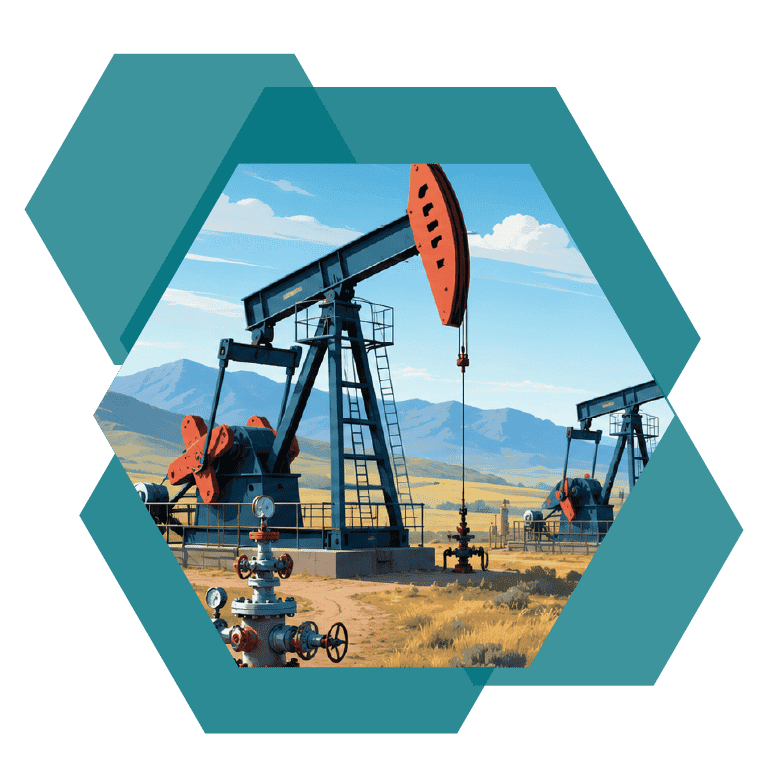
The challenge is that those teams are often operating with fragmented tools: some digital, some paper-based, some stuck in systems that don’t communicate with each other. Exceptions get caught late. Anomalies that could predict a pump failure or a chemical overdose go unaddressed because the data never made it to the right person in time.
Use Case: AI-Driven Chemical Dosing
Chemical dosing decisions affect production stability, flow assurance, equipment integrity, and operating cost. When teams rely on static dosing schedules or manual analysis, they may overuse chemicals, miss changing field conditions, or respond too late to performance issues.
An AI-enabled dosing approach helps teams use production data, operating conditions, and historical patterns to recommend more effective dosage levels. This supports better field decisions while helping reduce unnecessary chemical spend and protect asset integrity. Frontline teams will have to do fewer manual calculations, they can see clearer recommendations, and also have a faster response when conditions shift.
Use Case: AI-Assisted Field Anomaly Detection
Imagine a production technician conducting daily rounds across a multi-well pad. Traditionally, readings are logged manually and reviewed the next morning by an engineer back at the office. With AI-assisted anomaly detection connected to real-time sensor data, the technician’s mobile device surfaces alerts as they happen; flagging a pressure deviation on a rod pump or an unexpected fluid level drop before the issue escalates to a workover or a spill event. The technician doesn’t need to interpret the data themselves because the system does the pattern recognition and surfaces the right action.
This is a frontline workforce productivity and safety use case in the truest sense: the field operator becomes more effective and safer because the intelligence comes to them rather than requiring them to chase it.
Midstream
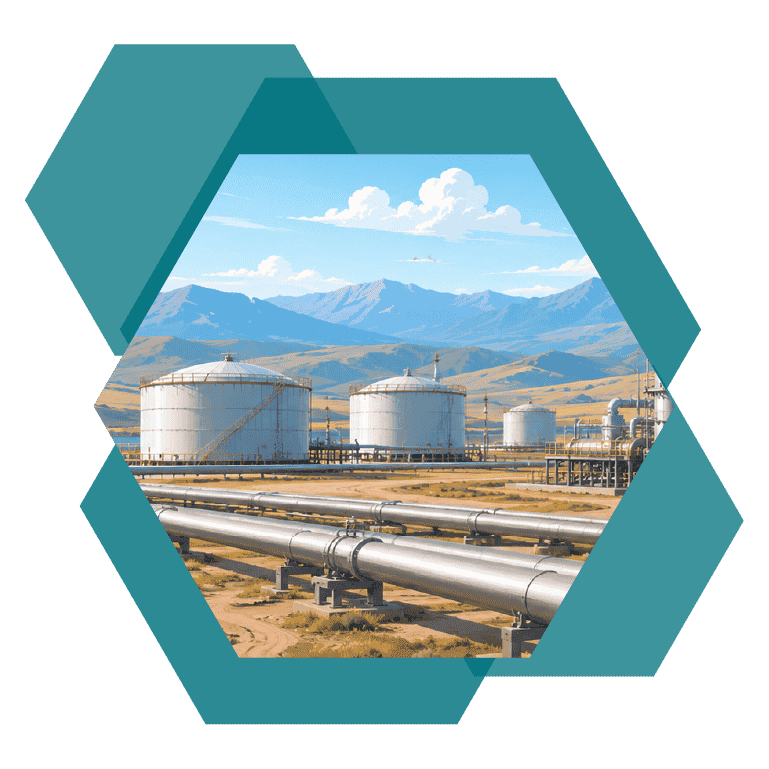
Midstream companies live and die by asset uptime. Pipelines, compressor stations, processing facilities… any significant interruption cascades quickly into revenue loss, regulatory exposure, and reputational risk. The people responsible for preventing that (the patrol techs, inspection crews, control room operators, and maintenance teams) are the first line of defense.
But in many midstream companies, those frontline workers are often managing information across SCADA systems, inspection records, maintenance platforms, field notes, compliance documents, and reporting tools. Each system may contain part of the operational picture, but frontline teams need the full picture to make effective decisions.
As we’ve noted in our thinking on human and AI collaboration in oil and gas operations, the most effective approaches are about giving field workers better information and better tools so they can make faster, safer decisions. A more connected digital foundation can help midstream teams identify risks earlier, prioritize work based on asset condition, and reduce the manual effort required to prepare for inspections, maintenance, and compliance activity.
Our broader oil and gas digital transformation guidance emphasizes the importance of purposeful technology strategies that address real operational challenges, including connected field operations, predictive maintenance, cybersecurity, cloud infrastructure, and data analytics. For midstream, those capabilities are especially important because reliability and safety depend on timely, trusted information.
Use Case: AI-Powered Shift Handover and Operational Continuity
Compressor station operators and control room technicians often manage handovers with minimal structured documentation. Critical context like a valve that’s been trending, a batch that’s running late, a permit that’s pending often lives in notebooks or in someone’s head. When the outgoing operator leaves, that context often leaves with them.
An AI-assisted shift handover tool aggregates operational data, flags open items, and generates a structured summary that the incoming crew can review and confirm in minutes rather than reconstructing over the course of an hour. This is support for them, ensuring frontline continuity and reducing the risk of missed handoffs that lead to equipment damage or safety incidents.
Oilfield Services
Oilfield services companies face a different version of the same challenge.
Their frontline teams are constantly coordinating crews, equipment, jobs, tickets, approvals, purchase orders, customer documentation, and billing activity. Execution happens in the field, but the impact carries all the way into revenue recognition and customer satisfaction.
When field workflows are disconnected, the results can be painful: delayed tickets, missed purchase order links, manual follow-ups, incomplete billing, equipment downtime, duplicated work, and limited visibility into job status.
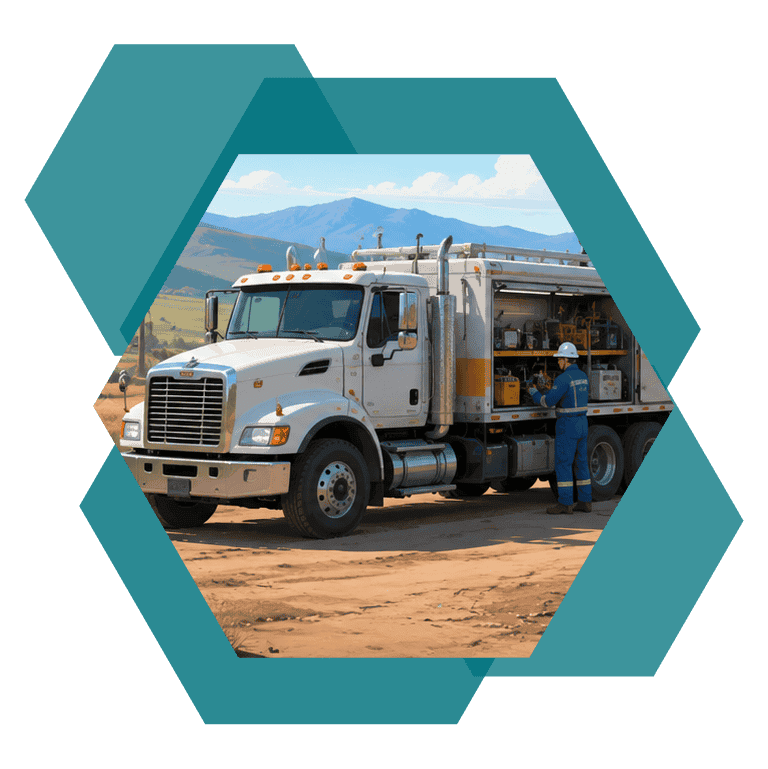
Our case study on strengthening revenue protection and operational control in a field operations platform is a strong example of how digital execution supports workforce productivity. The project focused on a mission-critical platform used for ticketing, purchase orders, field tracking, and billing workflows. The client needed to address process gaps, manual dependencies, and weak validation controls that created risks around revenue leakage, inefficiency, and limited traceability.
We introduced structured workflows, automation, validation mechanisms, and better lifecycle tracking. The result was stronger process discipline, reduced idle tickets, improved billing completeness, faster approval cycles, and better operational visibility.
For oilfield services teams, every job update, crew assignment, equipment movement, field ticket, approval, and invoice status matters. If the frontline process breaks down, revenue slows down. If the documentation is incomplete, billing gets challenged. If leaders lack visibility, crews and equipment may not be used effectively.
Our order-to-cash energy use case builds on this same idea. It focuses on improving transparency across field tickets, invoices, and payment status by reducing duplicate entry, integrating field ticketing and invoicing platforms, and using modern analytics to monitor unbilled labor, equipment, and anomalies.
When field teams have mobile-friendly workflows, automated validations, integrated ticketing, and clearer job visibility, they can complete work with fewer administrative delays. Operations teams can track status without chasing updates. Finance teams can reduce billing friction. Leadership can see where work, equipment, and revenue are getting stuck.
Oilfield services companies can also apply AI-driven workforce and equipment optimization to improve scheduling, utilization, and decision speed. By connecting availability, backlog, location, crew skills, equipment status, and job demand, teams can make better decisions about who goes where, what equipment is needed, and how to reduce idle time.
That supports a stronger order-to-cash process because the work is planned, executed, documented, approved, and billed with fewer gaps.
Why Frontline Productivity and Safety Needs a Connected Digital Foundation
Technology only creates value when it fits the way work actually happens.
For oil and gas organizations, that means frontline digital tools must be practical, reliable, and embedded into daily operations. A dashboard that looks good in a conference room but does not help a field supervisor make a faster decision will not move the needle. An AI recommendation that cannot be explained, audited, or challenged will not earn trust. A workflow that adds more clicks than clarity will be avoided.
Moving from Field Activity to Field Intelligence
The next stage of digital transformation in oil and gas will not be defined by isolated tools. It will be defined by how well organizations connect people, assets, data, and workflows across the operation.
Frontline teams already know where the friction exists. They know which processes require too many handoffs, which systems do not talk to each other, which approvals slow down work, and which data gaps create risk. The opportunity is to turn that operational knowledge into better digital execution.
We help energy companies modernize the systems, workflows, data foundations, and AI-enabled tools that support frontline teams. From production optimization and field operations platforms to workforce and equipment utilization, order-to-cash visibility, and human-centered AI, the focus is on building technology that improves how work gets done.
To have a conversation around how we can help, book a time on our calendars and we’ll be happy to chat!