

Digital Transformation in Oil & Gas: 2026 Strategy Guide
This guide examines the IT services and digital transformation strategies driving measurable results across the energy sector in 2026.
2026 marks a critical inflection point. The energy sector faces mounting pressure from operational complexity, volatile markets, and the urgent need to deliver more with less. The global digital oilfield market was valued at USD 24.47 billion in 2022 and is projected to reach USD 34.03 billion by 2028, signaling massive investment in IT services for the energy sector. But here’s what caught our attention: the companies succeeding aren’t chasing every new technology. They’re building purposeful strategies that address real operational challenges.

You saw the shift in three places. AI adoption supports a 20% increase in operational efficiency for companies integrating digital technologies. Cloud infrastructure is moving from experiment to essential. Cybersecurity is no longer optional for energy infrastructure. The common thread? Organizations that blend technology with operational discipline and domain expertise are pulling ahead.
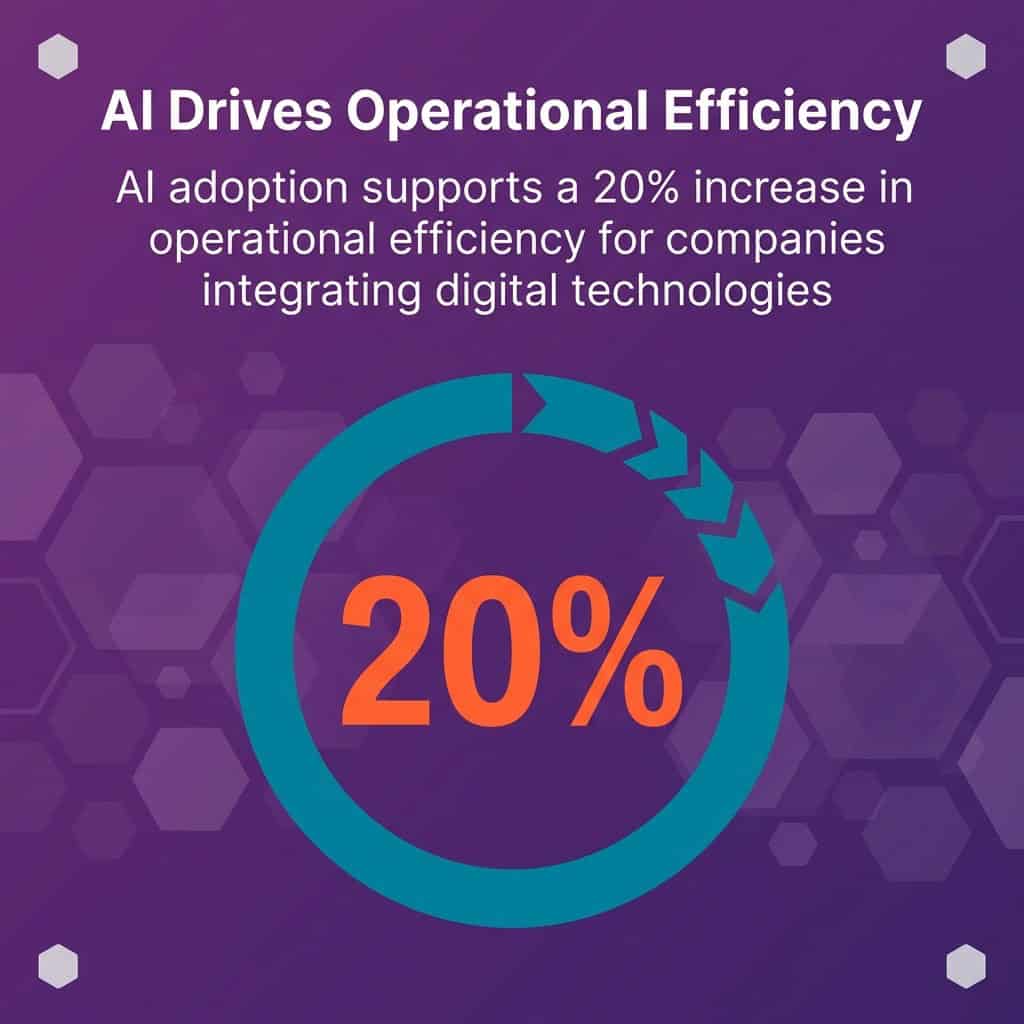
AI adoption is delivering ~20% operational efficiency gains for energy companies integrating digital technologies.
Digital maturity empowers you to outpace your competition by creating long-term efficiencies and delivering exceptional customer experiences. Let’s explore how to build with purpose, not patchwork.
Why IT Services Are Critical for the Energy Sector
The energy industry operates in a uniquely challenging environment. Oil and gas companies manage geographically distributed assets, from offshore platforms to remote pipelines. Utilities balance supply and demand across complex smart grid infrastructure. Renewable energy operations coordinate distributed generation from solar and wind farms.
Each segment faces distinct pressures. Exploration and production teams need real-time data from thousands of sensors. Refineries demand 24/7 uptime with zero tolerance for cyber incidents. Distribution networks require predictive maintenance to prevent costly failures.
Traditional IT approaches can’t keep pace. Disparate systems slow decision-making. Manual processes create bottlenecks. Legacy infrastructure limits agility.
This is where specialized IT services for the energy sector make a measurable difference. Managed IT services provide the operational backbone, ensuring systems stay available and secure. Cloud infrastructure enables scalability without massive capital investment. Data analytics transforms raw sensor data into actionable intelligence.
The business case is compelling. Companies investing in digital transformation report improved operational efficiency, reduced downtime, and better regulatory compliance. They can respond faster to market changes. They identify equipment failures before they occur.
But technology alone doesn’t create value. The most successful energy companies blend IT services with strong operational discipline and deep domain expertise. They understand that digital maturity is a journey, not a race.
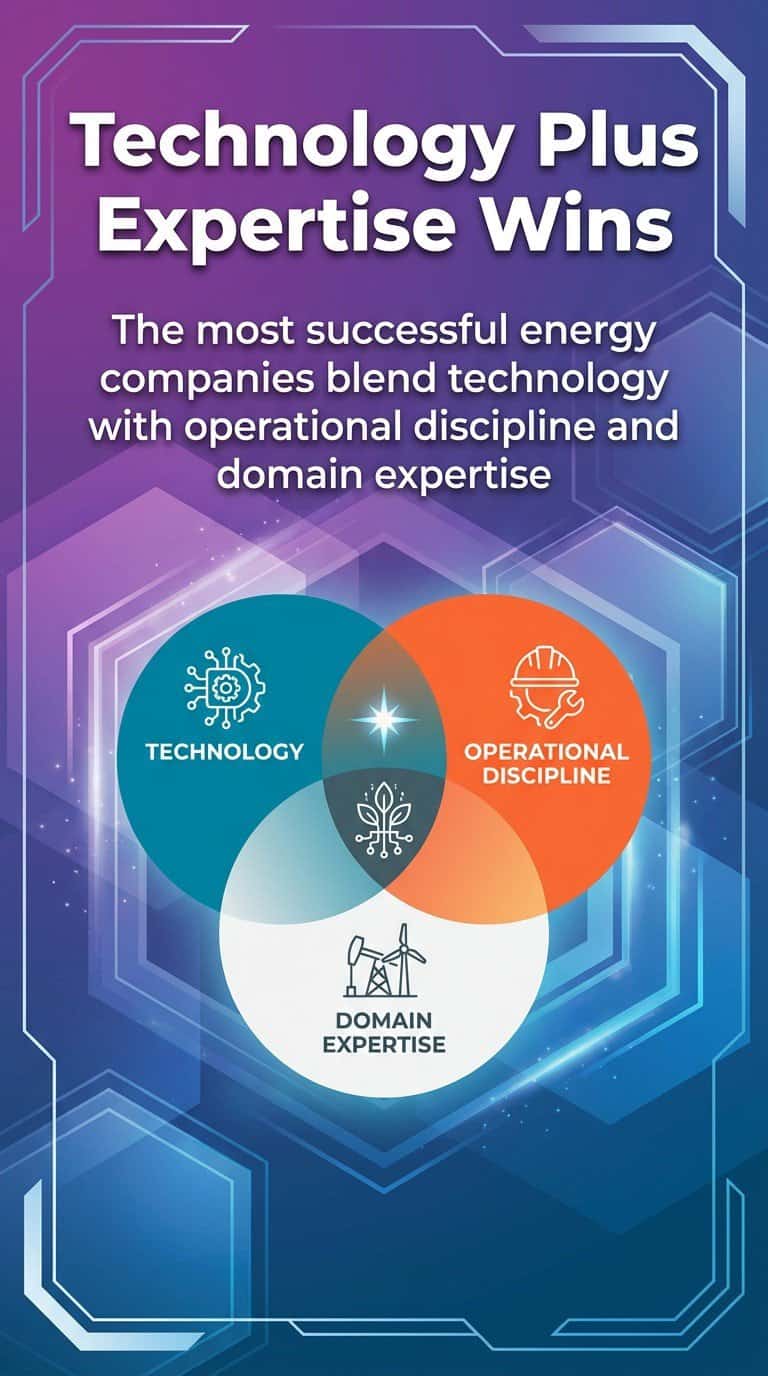
Winning formula: Blend technology with operational discipline and domain expertise.
Comprehensive Managed IT Services for Energy Companies
Now that you understand why IT services matter, let’s examine what comprehensive support looks like for energy operations.
Infrastructure Management and 24/7 Monitoring
Energy companies can’t afford downtime. A single hour of production loss costs millions. Refineries operate continuously. Distribution networks serve millions of customers.
Managed IT services provide round-the-clock infrastructure monitoring and support. Network operations centers track system performance in real time. They identify anomalies before they become failures. When issues arise, response teams resolve them immediately.
This approach extends beyond traditional IT systems. Modern managed services monitor operational technology alongside information technology. SCADA systems, distributed control systems, and industrial IoT devices all receive the same vigilant oversight.
The result? Energy companies gain operational stability without building massive internal IT teams. They access specialized expertise on demand. They maintain focus on core business operations.
Service Desk and End-User Support
Field technicians troubleshooting equipment need instant access to technical documentation. Engineers designing new facilities require specialized software. Commercial teams depend on CRM and ERP systems.
Comprehensive managed IT services deliver multi-tiered support for diverse user populations. Help desks resolve routine issues quickly. Specialized support teams handle complex technical challenges. Self-service portals enable users to find answers independently.
For oil and gas companies with remote operations, this support model proves essential. Technicians on offshore platforms or in distant fields can’t wait days for IT help. They need immediate resolution to maintain productivity.
Asset and Patch Management
Energy companies operate thousands of endpoints across distributed locations. Servers, workstations, mobile devices, and industrial controllers all require regular updates and security patches.
Managed IT services automate this complexity. Patch management systems ensure security updates deploy consistently across all environments. Asset tracking provides visibility into hardware and software inventory. Lifecycle management keeps equipment current and secure.
This disciplined approach prevents the patchwork that plagues many organizations. Systems stay current. Vulnerabilities get addressed promptly. Compliance requirements stay met.
With managed IT services establishing operational stability, energy companies can focus on strategic initiatives like cloud migration and digital transformation.
Cloud Infrastructure and Migration Solutions
Cloud infrastructure represents the next logical step after establishing solid managed IT services. Global IT spending in oil and gas was USD 16.0 billion in 2024, projected to reach USD 25.91 billion by 2033, with significant portions directed toward cloud modernization.
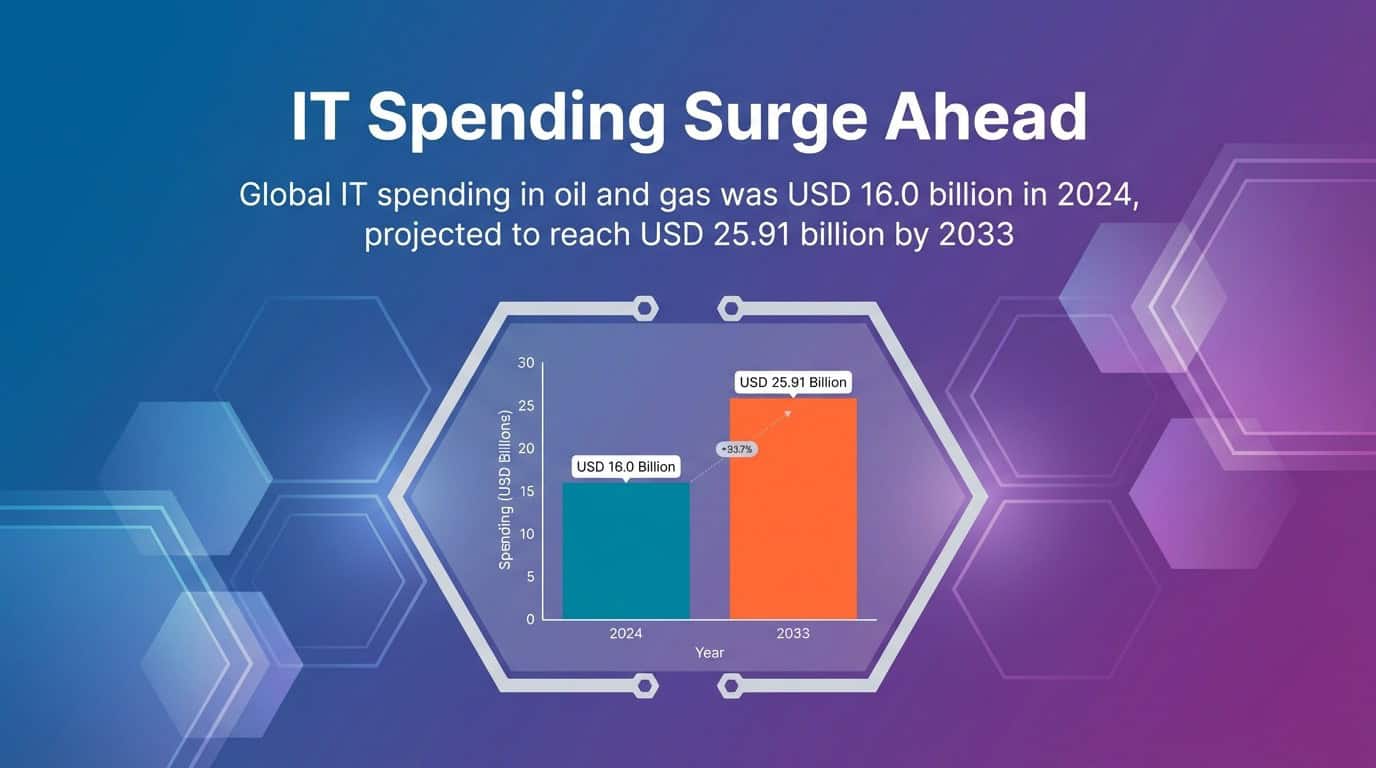
Cloud modernization surge: Oil & gas IT spending projected from USD 16.0B (2024) to USD 25.91B (2033).
Strategic Cloud Migration for Energy Operations
Legacy systems dominate energy sector IT landscapes. Decades-old applications run critical operations. Data resides in siloed on-premises systems. Infrastructure ages beyond optimal performance.
Cloud migration addresses these challenges systematically. But energy companies can’t simply “lift and shift” without careful planning. Production systems demand continuity. Regulatory requirements constrain data storage. Operational technology often requires specialized integration.
Successful cloud strategies for the energy sector balance modernization with operational reality. Hybrid cloud architectures connect on-premises SCADA systems with cloud-based analytics. Multi-cloud approaches prevent vendor lock-in while optimizing cost.
The migration journey typically follows a phased approach. Non-critical applications move first, establishing cloud capabilities and building team confidence. Production systems migrate later, with comprehensive testing and failover planning.
Cloud-Native Analytics and Big Data Processing
Energy companies generate massive data volumes. Sensors monitor equipment performance. Production systems track output. Distribution networks measure consumption patterns.
Cloud infrastructure provides the scalability needed for big data analytics. Platforms like Azure ML enable advanced analytics without massive capital investment. Data lakes store structured and unstructured information. Machine learning models identify patterns humans miss.
Real-world applications include predictive maintenance for critical assets, production optimization across fields, and demand forecasting for utilities. The cloud’s elastic compute capacity handles peak processing loads without overprovisioning.
Edge Computing for Distributed Operations
Remote oil and gas facilities often lack reliable connectivity. Offshore platforms operate far from data centers. Pipeline monitoring stations span vast distances.
Edge computing brings cloud capabilities to these distributed locations. Local processing handles time-sensitive decisions. Data gets filtered and aggregated before transmission. Operations continue even during connectivity disruptions.
This hybrid approach combines edge and cloud infrastructure strategically. Critical control systems run locally. Analytics and machine learning leverage cloud resources. Data synchronizes when bandwidth allows.
With cloud infrastructure enabling scalability and analytics, the next critical requirement becomes protecting these systems from evolving cyber threats.
Cybersecurity and Threat Protection for Energy Infrastructure
Energy infrastructure represents a prime target for cyber attacks. Nation-state actors, criminal organizations, and hacktivists all threaten operations. The consequences extend beyond financial loss to physical safety and national security.
OT and SCADA Security for Critical Systems
Operational technology networks control physical processes. SCADA systems manage pipelines, refineries, and distribution grids. These systems weren’t designed with modern cybersecurity in mind.
Protecting OT environments requires specialized approaches. Network segmentation isolates critical control systems from IT networks. Industrial firewalls monitor and filter traffic between zones. Anomaly detection identifies unusual patterns in control system behavior.
Security for energy infrastructure must balance protection with operational requirements. Updates can’t disrupt production. Security controls must account for legacy protocols. Physical and cyber security need integration.
Threat Detection and Incident Response
Advanced persistent threats target energy companies with sophisticated campaigns. Attackers study systems patiently, looking for vulnerabilities. Traditional security tools often miss these subtle intrusions.
Modern cybersecurity for the energy sector employs multiple detection layers. Security information and event management (SIEM) systems correlate data across IT and OT environments. Threat intelligence feeds provide early warning of emerging attacks. Security operations centers monitor continuously for suspicious activity.
When incidents occur, response capabilities prove critical. Incident response teams investigate rapidly. Containment procedures limit damage. Recovery processes restore operations securely.
Compliance and Regulatory Alignment
Energy companies face extensive regulatory requirements. NERC CIP standards govern utilities. Pipeline operators comply with TSA directives. International operations navigate multiple jurisdictions.
Cybersecurity programs must demonstrate compliance continuously. Regular audits verify controls. Documentation proves due diligence. Risk assessments identify gaps.
Automated compliance tools help manage this complexity. They track requirements across regulations. They collect evidence for audits. They flag non-compliant configurations.
Effective cybersecurity establishes the foundation for safely leveraging advanced analytics and artificial intelligence across energy operations.
Data Analytics and Business Intelligence for Energy Operations
Data forms the foundation for digital transformation in the energy sector. Companies spent 2025 cleaning, organizing, and building the infrastructure needed to scale AI safely. Now that foundation supports powerful analytics capabilities.
Real-Time Operational Analytics
Energy operations generate continuous data streams. Well sensors report pressure and temperature. Refineries track dozens of process variables. Distribution systems monitor voltage and frequency.
Real-time analytics transforms this data into operational intelligence. Dashboards provide instant visibility into performance. Automated alerts flag abnormal conditions. Operators make informed decisions faster.
Modern platforms integrate data from multiple sources. Production systems connect with maintenance records. Financial systems join operational metrics. Commercial platforms incorporate market data.
This unified view enables holistic optimization. Companies identify inefficiencies across the value chain. They coordinate activities between departments. They respond quickly to changing conditions.
Predictive Maintenance and Asset Optimization
Equipment failures disrupt operations and create safety risks. Traditional maintenance approaches either react to failures or schedule preventive work based on time intervals.
Predictive maintenance uses data analytics to forecast failures before they occur. Machine learning models analyze sensor data, maintenance history, and operating conditions. They identify patterns preceding equipment problems.
The business impact is substantial. Maintenance teams schedule work during planned downtime. They order parts before failures occur. They extend asset life through optimized operating parameters.
Asset optimization extends beyond maintenance. Analytics identify underperforming equipment. They recommend operating adjustments that improve efficiency. They support capital planning with data-driven insights.
Production Optimization and Reservoir Management
Oil and gas companies constantly seek to maximize production while managing costs. Reservoir behavior changes over time. Well performance varies. Market conditions fluctuate.
Advanced analytics enables sophisticated production optimization. Reservoir models incorporate geological data, production history, and real-time measurements. Machine learning algorithms identify optimal production strategies. Simulation tools evaluate different scenarios.
For utilities, similar analytics optimize generation and distribution. Load forecasting predicts demand patterns. Distributed energy resource management coordinates renewable generation. Grid analytics identify efficiency opportunities.
With analytics extracting value from data, IoT technologies expand the scope and scale of what’s possible across energy operations.
[Explore Smartbridge’s Oil & Gas data & AI use case library here.]
IoT and Connected Asset Management
The Internet of Things connects previously isolated equipment and processes. Sensors monitor conditions. Controllers adjust operations. Connected systems coordinate across facilities.
Field Operations and Remote Monitoring
Energy companies operate assets in remote and challenging locations. Offshore platforms sit miles from shore. Pipelines cross deserts and mountains. Wind farms occupy isolated ridges.
IoT enables remote monitoring and management of these distributed operations. Connected sensors report equipment status continuously. Camera systems provide visual verification. Environmental monitors track conditions.
Field technicians access real-time information through mobile devices. They receive automated work orders when sensors detect problems. They view equipment history and technical documentation on-site. They report completion status immediately.
This connectivity transforms field operations. Companies reduce truck rolls by diagnosing remotely. They dispatch technicians with the right parts and information. They verify work completion without physical inspection.
Connected Equipment and Predictive Intelligence
Modern energy equipment ships with embedded sensors and connectivity. Compressors report vibration and temperature. Transformers monitor load and condition. Pumps track flow and pressure.
This connected equipment generates rich data for predictive intelligence. Analytics identify degradation patterns. Machine learning predicts remaining useful life. Automated systems adjust operations to prevent failures.
Equipment manufacturers increasingly offer connected service models. They monitor equipment remotely. They provide predictive maintenance services. They optimize performance based on operational data.
Smart Grid and Distributed Energy Resources
Utilities face increasing complexity as distributed energy resources proliferate. Rooftop solar, battery storage, and electric vehicles all impact grid operations. Traditional centralized control models struggle with this complexity.
IoT enables smart grid capabilities that manage distributed resources effectively. Smart meters provide granular consumption data. Grid sensors monitor voltage and frequency across distribution networks. Controllers coordinate distributed generation and storage.
Demand response programs leverage IoT to balance supply and demand. Utilities signal connected devices during peak periods. Smart thermostats adjust temperatures. Industrial loads shift consumption. Electric vehicle charging schedules optimize grid impact.
These IoT capabilities must be tailored to specific energy sector segments, each with distinct operational requirements and challenges.
Industry-Specific Solutions: Oil & Gas, Utilities, and Renewables
While core IT services apply broadly across the energy sector, each segment requires specialized solutions that address unique operational challenges.
Upstream Oil & Gas: Exploration and Production
Exploration and production operations span from seismic analysis through drilling and production. Each phase demands specialized IT support.
Seismic data processing requires massive compute capacity. Cloud infrastructure provides the scalability for complex geological modeling. Data management systems organize petabytes of subsurface data.
Drilling operations need real-time data integration. Sensors monitor downhole conditions. Surface systems control drilling parameters. Analytics optimize drilling performance and reduce non-productive time.
Production optimization combines reservoir modeling with real-time well performance data. Artificial lift systems adjust based on conditions. Enhanced oil recovery projects coordinate injection and production across fields.
Midstream and Downstream: Processing and Distribution
Refineries and processing plants represent some of the most complex industrial operations. Hundreds of process variables require continuous monitoring and control. Safety and environmental compliance demands precision.
Advanced process control systems optimize operations within tight constraints. They maximize yields while meeting product specifications. They minimize energy consumption and emissions.
Pipeline operations require sophisticated SCADA systems. Leak detection monitors pressure patterns. Flow optimization coordinates pump stations. Corrosion monitoring predicts maintenance needs.
Terminal and storage operations need inventory management systems. Tank monitoring tracks volumes and quality. Logistics systems coordinate shipments and deliveries. Compliance systems manage regulatory reporting.
Utilities and Smart Grid Operations
Electric utilities face the energy transition’s full impact. They integrate renewable generation while maintaining reliability. They manage bidirectional power flows. They coordinate distributed energy resources.
Outage management systems combine real-time grid monitoring with customer information. They detect outages automatically. They optimize crew dispatch. They communicate restoration status to customers.
Meter data management platforms handle data from millions of smart meters. They enable time-of-use pricing. They support demand response programs. They detect theft and meter malfunctions.
Distributed energy resource management systems coordinate solar, storage, and demand response. They optimize resource dispatch. They provide grid services through aggregated resources. They enable virtual power plant capabilities.
Renewable Energy: Solar, Wind, and Storage
Renewable energy operations bring unique IT requirements. Generation varies with weather. Forecasting drives economic optimization. Assets span large geographic areas.
Solar farm management systems monitor panel performance across thousands of trackers. They detect underperforming equipment. They optimize cleaning schedules. They coordinate inverter operations.
Wind farm SCADA systems control turbine operations based on conditions. They maximize generation while protecting equipment. They coordinate across wind farms to provide grid services.
Energy storage systems require sophisticated control algorithms. They optimize charging and discharging based on market signals. They provide frequency regulation and voltage support. They maximize asset value through multiple revenue streams.
Across all these industry-specific applications, compliance and governance requirements shape IT service delivery.
Compliance, Governance, and Regulatory Support
Energy companies navigate complex regulatory environments. Requirements span operational safety, environmental protection, cybersecurity, financial reporting, and market conduct. IT services must support compliance systematically.
Regulatory Compliance Automation
Manual compliance processes struggle to keep pace with expanding requirements. Forms require data from multiple systems. Deadlines arrive relentlessly. Documentation demands grow continuously.
Compliance automation tools streamline regulatory reporting. They collect required data from source systems automatically. They validate information against regulatory rules. They generate reports in required formats.
The benefits extend beyond efficiency. Automated systems reduce errors. They maintain audit trails. They provide consistent processes across the organization.
For cybersecurity compliance, automation tools map controls to regulatory requirements. They collect evidence continuously. They identify gaps before audits. They track remediation activities.
Data Governance and Quality Management
Regulatory reporting depends on data quality. Inaccurate data creates compliance risk. Inconsistent definitions cause confusion. Poor governance undermines trust.
Data governance programs establish ownership and accountability. They define data standards. They implement quality controls. They track lineage from source to report.
Master data management systems maintain consistent reference data across systems. Customer information stays synchronized. Asset data remains current. Organizational hierarchies stay aligned.
Quality metrics track data accuracy, completeness, and timeliness. Automated validation rules catch errors at entry. Data stewards investigate and resolve issues. Continuous monitoring maintains quality over time.
Audit Readiness and Documentation
Energy companies face regular audits from regulators, customers, and internal teams. Audits require extensive documentation and evidence of compliance.
IT services support audit readiness through systematic documentation. Configuration management systems track changes. Access logs record user activities. Control evidence gets collected continuously.
When audits occur, response teams access needed documentation quickly. They demonstrate controls operate effectively. They provide evidence of management oversight. They address findings systematically.
This disciplined approach builds trust with regulators. It demonstrates commitment to compliance. It reduces audit duration and disruption.
Building Your Digital Transformation Roadmap
Digital transformation in the energy sector isn’t a race. It’s a purposeful journey that requires strategic planning, operational discipline, and sustained commitment.
Start with a clear-eyed assessment of your current digital maturity. Where do your systems support operations effectively? Where do gaps create risk or limit performance? What capabilities would deliver the most value?
Build your roadmap around business priorities, not technology trends. Focus on solutions that address real operational challenges. Invest in data foundations before rushing into AI. Ensure cybersecurity protects critical infrastructure. Create integrated systems, not patchwork solutions.

Build your roadmap around business priorities — not shiny technology trends.
The most successful energy companies blend technology with operational discipline and domain expertise. They move deliberately from pilots to production. They build teams with the right skills. They establish governance that sustains progress.
Your first step today: evaluate your managed IT services foundation. Do you have the stability and security needed for transformation? Can your infrastructure scale? Are your data foundations solid?
We’ll work with you to create the best roadmap for your destination. Digital maturity empowers you to outpace your competition through long-term efficiencies and exceptional operational performance.
Explore how digital transformation strategies proven in adjacent extractive industries can accelerate your energy sector initiatives. See how companies are modernizing ERP systems to cloud platforms for improved agility. Learn about specific transformation use cases in oil and gas operations that delivered measurable results.
Ready to build with purpose, not patchwork? Let’s chart your path to digital excellence in energy operations.