
Midstream Oil & Gas Digital Transformation: Data, AI, and Smarter Operations
Midstream oil and gas companies manage complex networks of pipelines, processing facilities, and storage assets, but disconnected data can make operations harder to manage. See how digital enablement, advanced analytics, and AI can improve asset reliability, operational visibility, and decision-making across the midstream value chain.
Midstream oil and gas operations connect production with the markets that depend on it. From gathering and processing to transportation and storage, the industry relies on extensive networks of pipelines, compressor stations, processing facilities, and terminals to keep energy moving.
Managing these operations requires more than physical infrastructure. Every day, midstream operators generate enormous amounts of information about pipeline pressures, equipment performance, product volumes, transportation schedules, and asset conditions. The challenge is making that data useful.
Critical information often sits in disconnected systems, making it difficult to see what is happening, anticipate problems, or make timely decisions. As infrastructure ages, operational demands increase, and regulatory requirements become more complex, those gaps can create significant challenges.
Digital transformation in midstream oil and gas offers an opportunity to connect these systems, improve operational visibility, and turn existing data into more informed decisions. With modern data platforms and AI, operators can get more from their existing assets.
Understanding Midstream Oil & Gas Operations
Midstream sits between upstream exploration and production and downstream refining and distribution. Its primary responsibility is gathering, processing, transporting, and storing crude oil, natural gas, and natural gas liquids (NGLs).
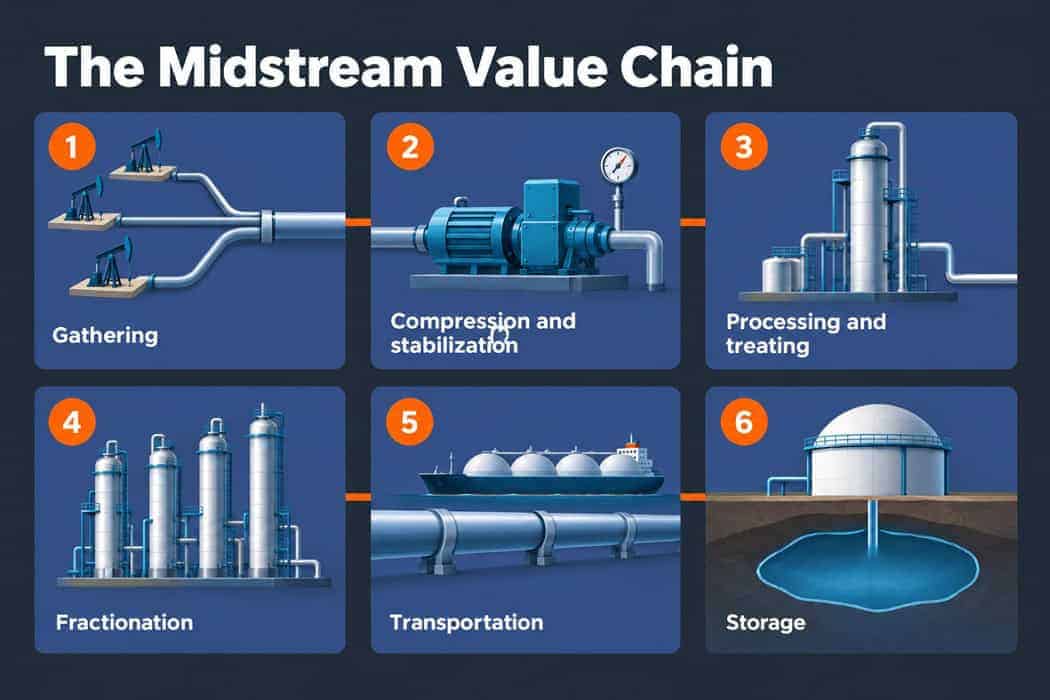
The midstream value chain generally includes gathering and compression, gas processing and treating, NGL fractionation, transportation through pipelines and other modes, and storage at terminals or underground facilities.
Each part of this network produces valuable operational data. Compressor stations monitor pressure and equipment performance, pipelines generate flow and measurement data, processing plants track product quality, and storage facilities maintain inventory records.
When this information is connected, operators can better understand how individual assets affect performance across the entire network.
Why Data Management Is a Challenge in Midstream Oil & Gas
Midstream operators have invested heavily in systems that monitor equipment, manage maintenance, track product movements, and support regulatory reporting.
However, many of these technologies were implemented independently over time, creating fragmented data environments.
A typical organization may rely on:
Each platform serves an important purpose, but connecting the information across them can be difficult.
For example, a pipeline operator might receive an alert about declining pressure in a compressor station. Understanding the cause and potential impact may require checking equipment history, reviewing maintenance records, analyzing flow data, and coordinating with scheduling teams.
When those systems do not communicate, employees must manually assemble the information before determining what action to take.
These disconnected workflows create several problems: delayed decisions, inconsistent reporting, duplicate data entry, limited visibility across assets, and difficulty identifying patterns that could indicate future issues.
A connected data foundation helps address these challenges by making trusted operational information available across departments and applications.
Where Data Analytics and Digital Enablement Can Improve Midstream Operations
Improving Pipeline Visibility and Capacity Planning
Pipeline capacity is one of the most important operational considerations for midstream companies.
Operators must balance incoming production volumes with available pipeline capacity, processing capabilities, scheduled maintenance, and delivery commitments. A disruption at one facility can affect transportation and scheduling across multiple connected assets.
The Permian Basin offers a clear example of the importance of capacity planning. Natural gas production has periodically exceeded available transportation capacity, contributing to negative prices at the Waha Hub. The U.S. Energy Information Administration has documented the connection between production growth, transportation constraints, and regional gas prices.
Although analytics cannot create additional physical capacity, it can help operators understand existing constraints and make better use of available infrastructure.
By connecting SCADA data, pipeline measurements, scheduling systems, and maintenance information, operators can develop a more complete view of network performance.
Advanced analytics can support:
Instead of relying on separate reports from different teams, operations leaders can use shared dashboards to evaluate system conditions and make coordinated decisions.
Using Predictive Maintenance to Improve Asset Reliability
Midstream operations depend on equipment that must perform consistently across large geographic areas.
Compressors, pumps, valves, processing equipment, and other critical assets can create significant disruptions when they fail unexpectedly. A compressor outage, for example, may restrict gas flow and affect connected gathering or processing operations.
Traditional maintenance strategies often rely on scheduled inspections, fixed service intervals, or repairs after equipment problems occur. Advanced data analytics can help teams move toward condition-based and predictive maintenance.
By combining historical maintenance records with operating information such as temperature, pressure, vibration, and equipment run time, operators can identify patterns associated with declining performance. Machine learning models can analyze these patterns and flag conditions that warrant further inspection.
This approach can help maintenance teams:
The value becomes even greater when predictive insights connect directly to maintenance workflows.
For example, when analytics identifies abnormal compressor behavior, the information can support an inspection recommendation, provide relevant equipment history, and help maintenance planners determine the next appropriate action.
For more on this approach, see our article on reliability and resilience across oil and gas assets and networks.
Improving Measurement Accuracy and Volume Reconciliation
Accurate measurement is essential throughout midstream operations. As crude oil, natural gas, and NGLs move through gathering systems, pipelines, processing plants, and storage facilities, operators must track everything.
However, measurement information frequently comes from different technologies and systems. Meter readings, tank measurements, field tickets, and scheduling records may use different formats, update at different intervals, or require manual reconciliation. These inconsistencies make it difficult to establish a reliable view of product movements.
Modern data integration and analytics can improve measurement processes by bringing this information into a consistent reporting environment. Automated data pipelines can consolidate readings from multiple sources, apply validation rules, and identify discrepancies requiring investigation.
For example, analytics can compare measured receipt volumes against deliveries and inventory changes to flag unexplained differences. Instead of manually reviewing every transaction, employees can focus on exceptions. This can improve volume reconciliation, inventory accuracy, reporting consistency, and traceability.
Just as importantly, a governed data environment helps ensure that teams across operations, scheduling, and reporting are working with consistent information.
Strengthening Pipeline Integrity, Safety, and Compliance
Pipeline safety and regulatory compliance remain major priorities for midstream operators. Organizations must manage inspection records, maintenance activities, incident information, and operational data to support compliance with applicable requirements from agencies such as the Pipeline and Hazardous Materials Safety Administration (PHMSA).
Many operators also manage cybersecurity requirements affecting their operational technology environments. The challenge is that relevant information may be spread across asset databases, inspection systems, maintenance applications, and field documentation.
A modern data strategy can make this information easier to access, validate, and report. For example, connecting pipeline inspection results with GIS records, maintenance histories, and operational measurements can help integrity teams evaluate potential risks and prioritize follow-up activities.
Digital workflows can also improve how organizations document inspections, track corrective actions, and maintain auditable records. Analytics can support safety and compliance teams through more consistent reporting, improved visibility into overdue activities, and earlier identification of potential concerns.
These technologies support existing integrity management and safety procedures. They do not replace required inspections, approved monitoring systems, or engineering judgment.
Connecting Field Operations and Maintenance Workflows
Midstream infrastructure often extends across hundreds or thousands of miles, creating coordination challenges between field personnel, control rooms, maintenance teams, and operational leadership.
Even when employees have access to modern software, workflows may still depend on phone calls, spreadsheets, emails, and manually entered information.
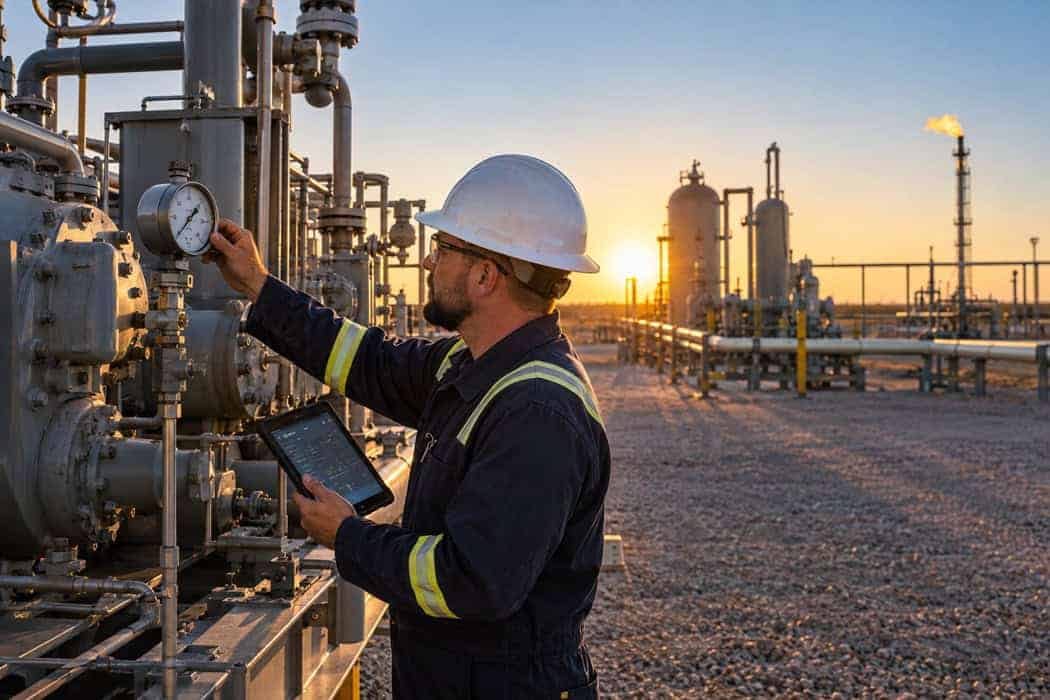
Consider a field technician responding to an equipment issue. They may need to locate equipment documentation, confirm previous repairs, record inspection results, and communicate findings to a centralized maintenance team.
When those activities happen across disconnected systems, response times can increase, and important information may be delayed or lost.
Mobile applications, workflow automation, and integrated asset management systems can make these processes more efficient. Technicians can access relevant asset records, submit inspection results, and update maintenance activities directly from the field. That information can then become available to planners and operational leaders without duplicate manual entry.
Connecting field and enterprise workflows also gives organizations better visibility into workforce activity, maintenance backlogs, equipment availability, and recurring operational issues.
Improving Environmental Monitoring and Reporting
Environmental performance is another area where connected data can make a difference. Midstream facilities must monitor and manage operational conditions that may affect methane emissions, energy consumption, and environmental compliance.
Relevant data can come from equipment sensors, facility monitoring systems, inspections, maintenance records, and environmental reporting applications. When this information remains fragmented, teams may spend significant time collecting and validating data before they can analyze performance. Integrating these sources creates opportunities for more consistent environmental reporting and better visibility into operational trends.
Analytics can help identify unusual operating conditions, evaluate equipment performance, and support investigations into potential emissions sources.
Automating portions of the data collection and reporting process can also reduce manual effort while improving documentation and traceability.
The Role of AI in Midstream Oil & Gas Operations
As midstream companies strengthen their data foundations, artificial intelligence creates opportunities to move beyond traditional dashboards and historical reporting.
AI and machine learning can help identify patterns across large operational datasets, predict potential equipment problems, and provide additional context for complex decisions.
Several applications are particularly relevant to midstream operations.
Anomaly detection: AI models can analyze historical and current operating conditions to identify unusual pressure, temperature, flow, or equipment performance patterns. These insights can help teams investigate emerging problems before they become more disruptive.
Predictive analytics: Machine learning can support forecasts for equipment maintenance needs, pipeline throughput, and processing or storage requirements based on historical patterns and changing operating conditions.
AI-assisted operational insights: AI assistants can help employees search approved technical documentation, summarize maintenance histories, and retrieve relevant operational information without manually reviewing multiple systems.
Intelligent workflow automation: AI can assist with classifying inspection findings, summarizing exception reports, and routing information to the appropriate teams for review.
These applications are most effective when supported by accurate, accessible, and well-governed data. They also require appropriate human oversight, particularly when insights relate to safety-critical infrastructure or operational control.
The goal is to give employees better information and reduce the time spent searching for it, allowing them to focus on decisions that require their expertise.
Building a Stronger Data Foundation for Midstream Operations
Many midstream companies already have the information needed to improve operational performance. The larger challenge is connecting it, maintaining its quality, and making it accessible to the people and systems that need it.
Building a stronger data foundation does not necessarily require replacing existing operational technology.
Instead, organizations can extend the value of current investments by integrating data from legacy applications, industrial historians, SCADA environments, maintenance platforms, and enterprise systems.
Cloud data platforms and modern integration technologies can help consolidate information for reporting, analytics, and AI while maintaining appropriate security boundaries between operational and enterprise environments.
Technologies such as Microsoft Fabric, Azure, and Power BI can support data integration, governed analytics, and operational dashboards when they fit an organization’s existing architecture. However, technology selection is only part of the process.
Operators also need consistent asset identifiers, reliable timestamps, clearly defined business metrics, data ownership, and processes for addressing incomplete or inaccurate records.
For example, pressure data alone provides a limited view of an operating condition. When connected to a specific asset, location, maintenance history, and operating context, that information becomes far more useful for analysis.
A strong foundation helps organizations create that context across the business. With accurate and accessible data, teams can spend less time reconciling reports and more time identifying operational improvements.
A Practical Roadmap for Midstream Digital Transformation
Digital transformation initiatives are more effective when they begin with a specific operational challenge rather than a broad technology implementation. For midstream operators, that might involve reducing compressor downtime, improving pipeline capacity visibility, automating measurement reconciliation, or simplifying compliance reporting.
A practical approach includes five steps:
Starting with a focused use case gives organizations an opportunity to demonstrate value before extending the approach across more facilities and processes.
Moving Midstream Operations Forward With Data and AI
Midstream oil and gas companies operate complex infrastructure where equipment reliability, accurate measurement, and coordinated decision-making are essential.
The information needed to improve these areas often already exists. The opportunity is to connect it across systems and turn it into insights that employees can use.
With stronger data foundations and practical AI, midstream operators can improve visibility, support more proactive maintenance, simplify reporting, and make better use of existing infrastructure.
Explore our Data & Analytics for Energy and Oil & Gas services to see how we can help your organization connect its data and improve operational performance.