
Intelligent Automation: Building Your Roadmap
Organizations spend millions on intelligent automation pilots. 95% of enterprise generative AI pilots deliver no measurable profit and loss impact (according to MIT research). The disconnect is the missing strategic framework that connects automation investments to business outcomes.

95% of enterprise GenAI pilots show no P&L impact — why strategy matters more than tooling.
Most enterprises approach intelligent automation consulting as a technology purchase rather than a strategic capability build. They pilot RPA tools, test AI models, and experiment with machine learning.
Yet they struggle to scale beyond individual use cases.
The organizations that actually achieve measurable business value from intelligent automation treat consulting services differently. They build purposeful roadmaps that align automation strategy with operational reality, workforce readiness, and digital maturity goals.
This comprehensive guide examines how intelligent automation consulting creates value through structured implementation approaches. You’ll see what separates successful enterprise deployments from expensive experiments, how RPA and AI work together in production environments, and the methodology required to move from pilots to production at scale.
We’ll examine the technologies behind intelligent automation, the business benefits organizations achieve, industry-specific applications, and the implementation process consulting partners use to deliver measurable results.
What Intelligent Automation Consulting Actually Delivers
Intelligent automation consulting combines robotic process automation, artificial intelligence, machine learning, and natural language processing into cohesive business solutions. The consulting component provides strategic guidance and implementation expertise that organizations need to transform manual workflows into automated operations.
The market reflects genuine business demand. The intelligent process automation market is worth USD 17.88 billion in 2026 and is growing at a compound annual growth rate of 15.98% to reach USD 37.54 billion by 2031. Organizations invest because they need consulting services that translate technology capabilities into operational improvements.

Intelligent process automation market growth: $17.88B (2026) to $37.54B (2031) at 15.98% CAGR.
Intelligent automation consulting services analyze existing business processes, identify automation opportunities, design solutions, and guide implementation through production deployment. Consultants assess workflow complexity, evaluate technology fit, and create roadmaps that prioritize initiatives based on ROI potential and organizational readiness.
The Consulting Value Beyond Technology Implementation
Technology vendors sell platforms and licenses. Intelligent automation consulting delivers strategic frameworks that determine which processes to automate, how to sequence implementation, and what governance structures ensure sustainable operations.
Consulting services provide process discovery methodologies that reveal automation opportunities hidden in day-to-day operations. They bring change management expertise that addresses workforce concerns and builds user adoption. They establish governance frameworks that manage bot lifecycles, monitor performance, and maintain compliance as automation scales across the enterprise.
The consulting engagement creates organizational capabilities that persist after implementation completes. Teams learn how to assess new automation opportunities, design solutions, and manage deployed automation solutions independently.
Where Organizations Need Expert Guidance Most
Most enterprise teams understand their business processes deeply but lack expertise in automation technologies, implementation methodologies, and scaling strategies. Consulting services fill these knowledge gaps.
Organizations struggle most with process selection and prioritization. Teams identify hundreds of potential automation candidates but lack frameworks to evaluate complexity, estimate ROI, or sequence implementations logically. Intelligent automation consultants bring proven assessment methodologies and industry benchmarks that guide these decisions.
The technical integration challenges require specialized expertise. Connecting RPA platforms to legacy systems, integrating AI models with existing workflows, and building data pipelines that feed machine learning algorithms demand skills most internal teams haven’t developed. Consulting partners provide this technical depth while transferring knowledge to internal staff.
RPA and Intelligent Automation: Understanding the Technology Evolution
Robotic process automation accounted for 42.84% of the intelligent process automation market share in 2025. RPA remains the foundation, but intelligent automation builds capabilities that traditional RPA can’t deliver alone.

RPA remains the backbone — 42.84% of IPA market share in 2025.
The distinction matters because organizations often start with basic RPA and later discover its limitations when scaling to more complex workflows.
Traditional RPA: Rule-Based Task Execution
Robotic process automation executes predefined rules to complete repetitive digital tasks. RPA bots follow explicit instructions: click this button, copy this data, paste into that field, submit the form.
Traditional RPA excels at high-volume, rules-based processes with structured data. It automates invoice processing when invoices follow standard formats. It handles employee onboarding workflows when forms contain predictable fields. It manages data entry when source systems provide consistent outputs.
The technology operates at the user interface layer, interacting with applications the same way humans do. This approach enables rapid deployment without modifying existing systems or building custom integrations.
But RPA alone can’t handle exceptions, interpret unstructured data, or make decisions requiring judgment. When an invoice arrives in an unexpected format, basic RPA stops and flags for human review.
Intelligent Automation: Adding Cognitive Capabilities
Intelligent automation extends RPA with artificial intelligence, machine learning, and natural language processing. These cognitive technologies enable automation to handle variability, interpret context, and make informed decisions.
Machine learning models classify documents by type and extract data from varied formats. Natural language processing interprets customer inquiries and routes them appropriately. Computer vision reads handwritten forms and scanned documents. Decision models evaluate scenarios and recommend actions based on learned patterns.
The combination transforms automation from task execution into process intelligence. Systems process unstructured emails, interpret customer intent, analyze sentiment, make approval recommendations, and learn from outcomes to improve performance over time.
A manufacturing organization using intelligent automation doesn’t just automate purchase order entry. The system reads supplier emails in various formats, extracts relevant details regardless of layout, validates information against historical patterns, flags anomalies for review, and routes approvals based on risk assessment.
Why the Architecture Difference Matters for Consulting Engagements
Organizations approaching automation consulting with RPA expectations often underestimate the technical complexity, data requirements, and governance needs intelligent automation demands.
Traditional RPA implementations focus on process mapping and bot configuration. Intelligent automation consulting requires data strategy, model training, integration architecture, and continuous improvement frameworks.
The data requirements differ significantly. RPA works with data as it appears in existing systems. Intelligent automation needs clean, structured training data to build effective AI models. Poor data quality undermines machine learning accuracy and limits automation value.
Consulting engagements must address these foundational requirements before implementing intelligent automation solutions. Organizations that skip data preparation work find their AI pilots perform poorly and fail to scale.
Core Technologies Powering Intelligent Automation Solutions
Intelligent automation consulting services integrate multiple technology layers into cohesive solutions. Understanding these components helps organizations evaluate consulting proposals and set realistic implementation expectations.
Robotic Process Automation Platforms
Modern RPA platforms provide the orchestration layer that coordinates automation across systems. Leading platforms include UiPath, Automation Anywhere, and Blue Prism.
These platforms offer visual development environments for building automation workflows, orchestrators for managing bot deployments, and analytics dashboards for monitoring performance. Enterprise platforms include governance features, security controls, and integration capabilities required for production deployments.
The platform choice influences implementation speed, scaling capabilities, and long-term operational costs. Intelligent automation consultants guide platform selection based on organizational requirements, technical environment, and strategic objectives.


Artificial Intelligence and Machine Learning Models
AI and machine learning add decision-making and pattern recognition capabilities to automation workflows. Document classification models route incoming files to appropriate processes. Predictive models forecast demand and optimize inventory. Recommendation engines suggest next best actions based on historical outcomes.
Organizations deploy pre-trained models for common tasks like sentiment analysis or language translation. Custom models address industry-specific requirements like fraud detection in financial services or quality prediction in manufacturing.
Cloud platforms including Azure AI, Google Cloud AI, and AWS Machine Learning provide managed services that simplify model deployment and scaling.
Machine learning success depends heavily on data quality and quantity. Consulting engagements assess data readiness and create preparation roadmaps before model development begins.
Natural Language Processing for Unstructured Content
Natural language processing enables systems to interpret human language in emails, documents, chat conversations, and voice interactions. NLP powers chatbots that handle customer inquiries, analyzes support tickets to identify common issues, and extracts key information from contracts and legal documents.
Modern NLP capabilities include entity extraction, intent classification, sentiment analysis, and text summarization. These functions automate tasks previously requiring human interpretation and judgment.
A healthcare organization using NLP automation processes clinical notes to extract diagnosis codes, medication details, and treatment plans. The system routes information to appropriate billing systems, flags potential errors, and maintains audit trails for compliance.
Process Mining and Discovery Tools
Process mining tools analyze system logs to reveal how work actually flows through an organization. These solutions create visual process maps showing every variation, exception, and bottleneck in current operations.
Tools like Celonis and UiPath Process Mining, provide data-driven insights that guide automation strategy.
Process mining eliminates guesswork about which processes to automate first. The tools quantify process frequency, identify high-volume variations, measure cycle times, and calculate potential automation ROI based on actual operational data.
Consulting engagements use process mining during discovery phases to build fact-based business cases and prioritize automation initiatives objectively.
Business Benefits Driving Intelligent Automation Adoption
Organizations invest in intelligent automation consulting to achieve specific business outcomes. Seventy-five percent of executives say automation now delivers a decisive competitive edge in their industry. The benefits extend beyond simple cost reduction to transform operational capabilities.

Automation now confers a decisive competitive edge for 75% of executives.
Cost Reduction and Operational Efficiency Gains
Automated systems can operate at 60–80% less cost than human labor for equivalent tasks, reducing the cost of repetitive tasks by up to 75% compared to manual execution. These savings compound across enterprise operations.
A financial services organization automating loan processing reduces per-transaction costs while increasing throughput. The same staff handles significantly higher volumes without proportional cost increases.
Efficiency improvements appear in reduced processing time, fewer errors requiring rework, and elimination of manual handoffs between systems. Automated workflows complete in minutes what previously required hours or days of human effort.
The cost benefits extend to capacity creation. Teams freed from repetitive tasks redirect effort to higher-value activities like customer relationship building, strategic analysis, and process improvement initiatives.
Accuracy Improvements and Error Reduction
Manual data entry generates errors. Humans transpose numbers, skip fields, misread handwriting, and make inconsistent decisions when tired or rushed.
Intelligent automation eliminates these consistency issues. Bots execute processes identically every time, following exact rules without deviation. Machine learning models apply learned patterns consistently across thousands of decisions.
A healthcare organization using intelligent automation for claims processing sees dramatic reductions in billing errors, faster reimbursement cycles, and improved compliance with coding requirements. The accuracy improvements reduce costly rework and improve revenue cycle performance.
Enhanced Customer Experience Through Faster Response
Customers expect rapid responses and 24/7 service availability. Intelligent automation delivers both without proportional cost increases.
Automated systems process customer requests immediately rather than queuing for next-day handling. Chatbots powered by NLP provide instant answers to common questions. Document processing automation completes applications and claims faster than manual review cycles allow.
A retail organization automating order processing provides real-time order confirmation, immediate inventory availability checks, and instant shipping estimates. Customer satisfaction improves while operational costs decline.
Scalability Without Proportional Resource Growth
Traditional operations scale linearly. Doubling transaction volume requires roughly doubling staff. Intelligent automation breaks this constraint.
Automated processes handle volume fluctuations without adding resources. Peak periods don’t require temporary staff hiring and training. Seasonal demand spikes get absorbed by existing automation infrastructure.
A tax preparation firm using intelligent automation processes ten times the document volume during tax season without hiring seasonal staff. The system scales to demand automatically.
Compliance and Audit Trail Improvements
Regulated industries face strict documentation requirements for process compliance. Intelligent automation creates comprehensive audit trails automatically.
Every automated transaction generates detailed logs showing inputs received, decisions made, rules applied, and outputs produced. These records satisfy regulatory requirements and simplify compliance audits.
The consistency of automated processes reduces compliance risk. Bots never skip required validation steps, always apply current rules, and flag exceptions requiring human review before proceeding.
Common Use Cases Across Business Functions
Intelligent automation consulting addresses specific business challenges across departments. Understanding common applications helps organizations identify relevant opportunities.
Finance and Accounting Automation
Finance teams automate invoice processing, expense report validation, account reconciliation, and financial close processes. Intelligent automation extracts data from invoices regardless of format, validates against purchase orders and contracts, routes for appropriate approvals, and posts transactions to accounting systems.
Month-end close processes that previously required days of manual reconciliation complete in hours with automated data gathering, variance analysis, and exception reporting. Controllers gain faster access to accurate financial data for decision-making.
Accounts payable automation reduces processing costs, captures early payment discounts, and prevents duplicate payments. The system learns vendor patterns and flags anomalies for fraud prevention.
Human Resources Process Automation
HR departments automate employee onboarding, benefits enrollment, time and attendance processing, and compliance documentation. New employee onboarding workflows coordinate across multiple systems, ensure all required forms complete, and track progress automatically.
Resume screening automation applies machine learning to evaluate candidate qualifications against job requirements, reducing recruiter workload and accelerating hiring cycles. The technology identifies qualified candidates hiring teams might otherwise miss.
Employee inquiry chatbots powered by NLP answer common questions about benefits, policies, and procedures instantly. HR staff focus on complex issues requiring human judgment while automation handles routine information requests.
Customer Service and Support Automation
Customer service organizations deploy intelligent automation for inquiry routing, ticket classification, response generation, and case management. NLP-powered systems interpret customer inquiries, determine intent, extract key information, and route to appropriate resolution paths.
Virtual agents handle common requests completely, escalating only complex issues requiring human expertise. Customers receive immediate responses for simple inquiries while agents focus on situations requiring empathy and creative problem-solving.
Automated case management tracks inquiry status across systems, sends proactive updates to customers, and ensures service level agreements are met consistently.
Supply Chain and Operations Automation
Supply chain teams automate demand forecasting, inventory optimization, order processing, and shipment tracking. Machine learning models analyze historical patterns and external signals to predict demand more accurately than manual forecasting methods.
Automated replenishment systems monitor inventory levels, calculate optimal order quantities, generate purchase orders, and track deliveries without human intervention. The automation reduces stockouts while minimizing excess inventory carrying costs.
Shipment tracking automation monitors carrier systems, alerts customers proactively about delivery status, and escalates exceptions requiring attention. Supply chain visibility improves without adding operational overhead.
Regulatory Compliance and Risk Management
Compliance teams use intelligent automation for regulatory reporting, policy enforcement, audit support, and risk assessment. Automated systems gather required data from multiple sources, validate completeness, format reports according to regulatory specifications, and submit on schedule.
Transaction monitoring systems analyze activities continuously, applying rules engines and machine learning models to identify suspicious patterns requiring investigation. The automation scales compliance monitoring without proportional staff increases.
Policy compliance automation validates transactions against current regulations before processing, preventing violations rather than detecting them after occurrence. Audit preparation becomes simpler with comprehensive automated documentation.
Industry-Specific Intelligent Automation Applications
Different industries face unique challenges that intelligent automation consulting addresses through specialized solutions. Process requirements vary significantly across sectors, demanding industry-specific expertise from consulting partners.
Healthcare and Life Sciences Automation
The healthcare workflow automation market is projected to reach 35 billion dollars by 2028. Healthcare organizations automate clinical documentation, claims processing, patient scheduling, and prior authorization workflows.
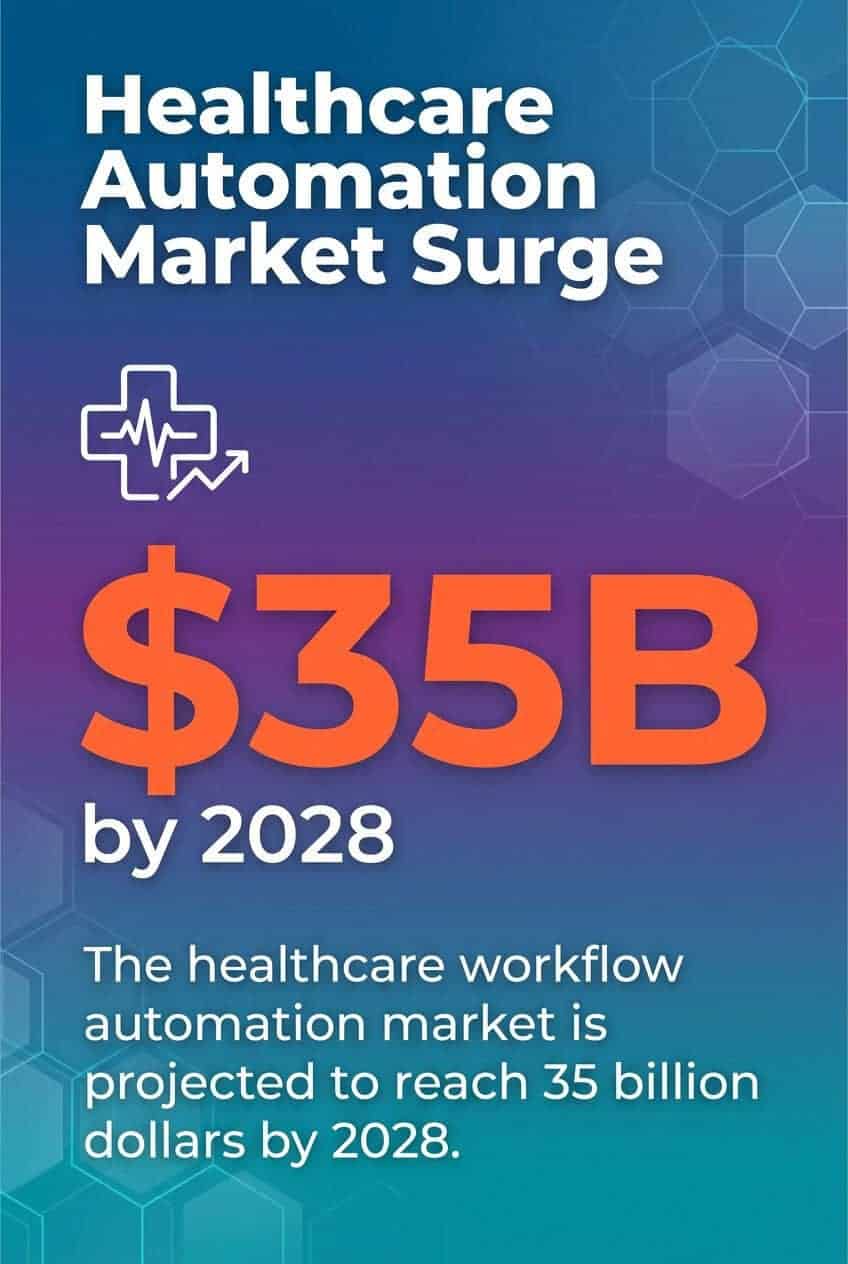
Healthcare workflow automation poised to hit $35B by 2028.

Claims processing automation extracts data from clinical notes, applies coding rules, validates against payer requirements, and submits claims electronically. The accuracy improvements reduce claim denials and accelerate reimbursement.
Prior authorization processes that previously required days of phone calls and fax exchanges complete in hours through automated eligibility verification, clinical criteria checking, and electronic submission to payers.
Patient scheduling automation considers provider availability, patient preferences, appointment types, and resource requirements to optimize schedule utilization while improving patient access.
Financial Services and Banking Automation
Financial institutions automate loan processing, account opening, fraud detection, and regulatory reporting. Know Your Customer workflows validate identity documents, screen against sanctions lists, assess risk profiles, and compile compliance documentation automatically.
Loan underwriting automation gathers financial data, validates income and assets, calculates debt ratios, applies credit policies, and generates approval recommendations. Processing time drops from weeks to days or hours.
Fraud detection systems analyze transaction patterns in real-time, comparing against learned behaviors to identify anomalies requiring investigation. Machine learning models improve detection accuracy continuously as they process more transactions.
Manufacturing and Supply Chain Automation
Manufacturing organizations automate production scheduling, quality control, maintenance planning, and supply chain coordination. Quality inspection automation uses computer vision to identify defects faster and more consistently than manual visual inspection.
Predictive maintenance systems analyze sensor data from production equipment, identifying patterns that precede failures. Maintenance schedules optimize around actual equipment condition rather than fixed time intervals, reducing unplanned downtime.
Production scheduling automation balances customer demand, material availability, equipment capacity, and workforce schedules to optimize throughput while meeting delivery commitments.
Retail and E-commerce Automation
Retailers automate inventory management, price optimization, customer service, and order fulfillment. Demand forecasting models analyze sales history, promotional calendars, weather patterns, and market trends to predict product demand at store level.
Dynamic pricing automation adjusts prices based on competitive intelligence, inventory levels, and demand signals to optimize revenue and margin simultaneously.
Order fulfillment automation coordinates across warehouses, manages picking and packing workflows, optimizes shipping methods, and tracks deliveries end-to-end. Customer visibility improves while operational costs decline.
The Intelligent Automation Implementation Process
Successful intelligent automation consulting follows structured methodologies that reduce implementation risk and improve outcomes. The approach determines whether automation delivers value or becomes an expensive experiment.
Discovery and Process Assessment Phase
Implementation begins with comprehensive process discovery. Consulting teams analyze current workflows, document process variations, identify pain points, and quantify improvement opportunities.
Process mining tools reveal actual process flows from system data. Stakeholder interviews capture tribal knowledge about exceptions and workarounds. Time studies quantify effort spent on different activities.
The assessment evaluates automation readiness across multiple dimensions: process stability, data quality, system accessibility, business rules clarity, and volume justification. Processes scoring high on these factors become priority candidates.
Consultants build detailed business cases for recommended automation opportunities, projecting ROI based on volume data, effort reduction estimates, error cost savings, and implementation investment requirements.
Solution Design and Architecture Planning
Solution design translates process requirements into technical specifications. The design phase determines which technologies to deploy, how components integrate, what data flows between systems, and how automation fits within existing architecture.
Consultants design for production operations from the start, addressing scalability, reliability, security, and governance requirements. The architecture includes monitoring capabilities, error handling procedures, and disaster recovery provisions.
Data strategy becomes critical during design. Teams map data sources, define transformation rules, establish quality standards, and create validation procedures that ensure automation receives reliable inputs.
Development and Testing Cycles
Development follows agile methodologies with iterative cycles that deliver working automation incrementally. Initial releases automate core workflows with manual exception handling. Subsequent releases add complexity as the solution matures.
Testing includes unit testing of individual automation components, integration testing across systems, user acceptance testing with business stakeholders, and performance testing under production-like volumes.
Change management activities run parallel to development. Training materials get created, user documentation develops, support procedures establish, and communication plans prepare the organization for automation deployment.
Deployment and Hypercare Support
Production deployment follows phased rollout strategies that minimize disruption risk. Pilot deployments process subset of transactions while manual processes continue in parallel. Performance monitoring validates automation accuracy and reliability before expanding scope.
Hypercare support provides intensive assistance during initial production period. Consultants remain closely engaged, addressing issues quickly, tuning performance, and building organizational confidence in the automation.
Success metrics track during deployment to validate business case assumptions. Volume processed, error rates, processing times, and user satisfaction get measured against baseline and target performance.
Optimization and Continuous Improvement
Automation value increases through continuous optimization after initial deployment. Performance data reveals improvement opportunities. User feedback identifies enhancement requests. Business process changes require automation updates.
Machine learning models require ongoing tuning as data patterns evolve. Training data gets refreshed. Model performance gets monitored. Retraining cycles maintain accuracy as business conditions change.
Governance frameworks manage the growing automation portfolio, tracking bot performance, scheduling maintenance windows, managing version updates, and ensuring security compliance as the automation footprint expands.
Critical Success Factors for Automation Initiatives
Despite substantial investment, only 35% of digital transformation initiatives achieve their objectives according to comprehensive BCG analysis of over 850 companies. Understanding what separates successful implementations from failed pilots helps organizations improve their odds.
Executive Sponsorship and Strategic Alignment
Successful automation initiatives require active executive sponsorship. Leaders must champion automation strategy, allocate resources, resolve organizational conflicts, and hold teams accountable for results.
Strategic alignment ensures automation investments support broader business objectives rather than pursuing technology for its own sake. Automation roadmaps connect to digital transformation goals, operational improvement targets, and competitive positioning strategies.
Without executive commitment, automation initiatives stall when facing organizational resistance, competing priorities, or resource constraints. Sponsors provide the authority needed to drive change across functional boundaries.
Change Management and Workforce Enablement
Organizations that involve at least 7 percent of employees in transformation initiatives double their chances of delivering positive excess total shareholder returns. Workforce engagement determines automation adoption success.
Change management addresses employee concerns about job security, builds automation literacy, and demonstrates how automation enhances rather than replaces human work. Communication emphasizes capacity creation for higher-value activities rather than headcount reduction.
Training programs build organizational capability to work effectively with automation. Employees learn to monitor bot performance, handle exceptions, and identify new automation opportunities as processes evolve.
Data Quality and Governance Foundations
Poor data quality undermines intelligent automation value. Machine learning models trained on inaccurate data make poor decisions. RPA bots processing inconsistent inputs generate errors requiring manual correction.
Organizations must establish data governance before scaling automation. Data quality standards define acceptable inputs. Validation procedures catch problems early. Master data management ensures consistency across systems.
The data foundation work often requires significant effort before automation deployment begins. Teams spend months cleaning data, standardizing formats, and establishing quality controls. This foundational investment determines automation success.
Realistic Expectations and Phased Rollout
Organizations expecting immediate transformation from automation pilots set themselves up for disappointment. Most organizations begin to see measurable automation ROI within the first 6–12 months of implementation.
Phased approaches deliver value incrementally while building organizational capability. Initial automation addresses straightforward processes with clear ROI. Success builds confidence and funding for more complex initiatives.
Pilot programs validate technology fit and organizational readiness before committing to enterprise-wide deployment. Learning from controlled implementations reduces risk when scaling across the organization.
How to Choose an Intelligent Automation Consulting Partner
Selecting the right consulting partner significantly impacts automation initiative outcomes. Organizations need partners who bring technical expertise, industry knowledge, and proven implementation methodologies.
Evaluating Technical Capabilities and Platform Expertise
Assess consulting partners’ depth of experience with relevant automation platforms. Partners should demonstrate expertise with RPA tools, AI/ML platforms, process mining solutions, and integration technologies required for your environment.
Look for certifications from major platform vendors indicating formal training and partnership status. Review case studies showing successful implementations of technologies you plan to deploy.
Technical capabilities extend beyond platform knowledge to solution architecture, integration design, and cloud infrastructure expertise. Partners should architect solutions that scale efficiently and integrate smoothly with existing systems.
Industry Experience and Domain Knowledge
Industry-specific expertise accelerates implementation and improves solution quality. Partners familiar with your sector understand common processes, regulatory requirements, and industry-specific challenges without extensive education.
Review consulting partners’ experience in your industry through client references, published case studies, and consultant backgrounds. Industry veterans bring proven approaches adapted to sector-specific requirements.
Domain knowledge particularly matters in regulated industries like healthcare, financial services, and manufacturing where compliance requirements shape automation design significantly.
Implementation Methodology and Change Management Approach
Evaluate consulting partners’ implementation methodologies for structure, repeatability, and risk management. Mature methodologies include defined phases, quality gates, governance frameworks, and change management integration.
Change management capabilities often determine implementation success more than technical expertise. Partners should demonstrate approaches for building stakeholder buy-in, training users, and managing organizational resistance.
Ask how partners handle knowledge transfer to build internal capability. Successful engagements leave organizations able to maintain automation independently rather than creating ongoing consulting dependency.
Proof of Measurable Business Results
Request evidence of measurable outcomes from previous engagements. Look for specific metrics: process cycle time reductions, error rate improvements, cost savings, customer satisfaction gains, and ROI achievement.
Strong consulting partners provide client references willing to discuss their experiences. Direct conversations with previous clients reveal implementation challenges, partnership dynamics, and results achieved.
Be skeptical of partners promising unrealistic results or guaranteed ROI without thorough discovery. Honest partners acknowledge that outcomes depend on organizational factors beyond their control.
Overcoming Common Implementation Challenges
Every intelligent automation initiative encounters obstacles. Anticipating common challenges helps organizations prepare appropriate responses.
Addressing the Talent and Skills Gap
50 percent of businesses cite lack of skilled professionals as the biggest barrier to AI adoption. Organizations struggle to find talent with automation expertise, creating implementation bottlenecks.
Build internal capability through structured training programs. Identify employees with aptitude for automation work and invest in their development. Create career paths that retain automation talent as expertise grows.
Partner relationships supplement internal teams during capability building. Consulting engagements should include knowledge transfer activities that develop internal expertise progressively.
Managing Legacy System Integration Complexity
Enterprise environments include decades-old legacy systems never designed for automation integration. These systems lack APIs, use outdated protocols, and require specialized knowledge to access.
RPA provides user interface automation that works with legacy systems without modification. The approach enables automation deployment faster than custom integration development requires.
For complex integrations, consider modernization initiatives that expose legacy functionality through modern APIs. The investment enables automation while improving overall architecture flexibility.
Scaling Beyond Initial Pilot Success
Many organizations successfully pilot automation but struggle to scale beyond initial use cases. Pilots often succeed despite poor practices that prevent enterprise deployment.
Establish governance frameworks before scaling. Define standards for development, testing, deployment, and operations. Create center of excellence structures that share best practices and provide support to business units.
Platform architecture must support enterprise scale from the start. Development environments, orchestration infrastructure, and monitoring capabilities designed for pilots create bottlenecks during expansion.
Balancing Innovation Speed with Risk Management
Organizations face pressure to deploy automation quickly while managing implementation risk appropriately. The tension creates friction between innovation teams and risk management functions.
Establish risk-based governance that applies controls proportional to impact. High-risk processes affecting customers or compliance require rigorous testing and approval. Lower-risk internal workflows can deploy with lighter governance.
Sandbox environments enable rapid experimentation while protecting production systems. Teams test automation approaches safely before committing to production deployment.
The Future of Intelligent Automation Consulting
Digital transformation spending globally reached 1.85 trillion U.S. dollars in 2022, projected to reach almost 4 trillion dollars by 2027 growing at 16.2% CAGR. Intelligent automation represents a growing share of this investment as organizations recognize its strategic importance.
Cloud-Native Automation Architectures
Cloud deployments captured a 53.90% share in 2025, rising with a 22.7% CAGR as businesses shifted from capital expenditure to operational expenditure models. Cloud-native approaches provide scalability, flexibility, and cost efficiency that on-premises deployments struggle to match.
Modern automation platforms deploy entirely in cloud environments, eliminating infrastructure management overhead. Organizations pay for automation capacity as consumed rather than provisioning for peak demand.
Cloud platforms provide managed AI services that simplify machine learning deployment. Pre-trained models accelerate implementation. Auto-scaling handles volume fluctuations automatically.
AI-Powered Process Discovery and Optimization
Process mining tools increasingly incorporate AI to identify automation opportunities automatically. Machine learning analyzes process data to recommend optimal automation candidates based on volume, complexity, and ROI potential.
These tools simulate automation impact before implementation, predicting cycle time improvements, capacity gains, and cost reductions with greater accuracy than manual estimation methods.
Continuous process intelligence monitors automation performance in production, identifying optimization opportunities and recommending adjustments as business conditions change.
Generative AI Integration with Automation Workflows
Generative AI technologies add content creation capabilities to automation solutions. Systems generate customer communications, summarize documents, create reports, and draft responses without human authoring.
The integration enables automation of knowledge work previously requiring human judgment and creativity. Customer service automation generates personalized responses rather than selecting from templates. Document processing summarizes key points rather than just extracting data.
Organizations must address data privacy, content accuracy, and liability considerations as generative AI becomes embedded in business processes. Governance frameworks evolve to manage these new capabilities responsibly.
Building Your Intelligent Automation Roadmap
Organizations ready to pursue intelligent automation need strategic roadmaps that sequence initiatives logically, build capability progressively, and deliver value incrementally.
Your roadmap starts with honest assessment of current state. Where do manual processes create bottlenecks? Which workflows generate the most errors? What customer pain points stem from slow processing? These questions identify automation opportunities with clear business value.
Prioritize based on implementation feasibility and business impact. Quick wins build momentum and funding for complex initiatives. Balance easy automations with strategic processes that transform customer experience or operational efficiency.
Establish governance and technical foundations before scaling. Data quality standards, development practices, security controls, and monitoring capabilities determine long-term success. Organizations that skip foundational work face technical debt that limits automation value.
Build internal capability while leveraging consulting expertise. Training, documentation, and knowledge transfer activities create organizational independence. The goal is sustainable automation capability, not permanent consulting dependency.
Measure what matters. Track metrics tied to business objectives: cost per transaction, cycle time, error rates, customer satisfaction. Celebrate improvements. Share success stories across the organization. Build momentum for continued investment.
The most successful organizations treat intelligent automation as a strategic capability, not a technology project. They invest in platforms, people, and processes that enable continuous improvement. They create cultures that embrace automation as workforce augmentation rather than replacement.
Your roadmap reflects your organization’s unique context, challenges, and objectives. Partner with consultants who understand your industry, respect your operational reality, and commit to building your long-term capability. The journey requires patience, discipline, and strategic focus.
Organizations that approach intelligent automation consulting with clear strategy, realistic expectations, and commitment to foundational work achieve meaningful business transformation. Those chasing quick wins without strategic discipline accumulate expensive pilots that never scale.
Build with purpose. The next era of intelligent automation belongs to organizations that combine technology capabilities with operational discipline, change management, and strategic vision.