
Franchise & Multi-Unit Restaurant Management Software Guide
Managing a restaurant franchise network takes more than a long list of software features. Learn how to evaluate integrations, test restaurant-specific capabilities and choose a platform that gives headquarters and multi-unit operators reliable data to manage growth.
For a restaurant brand, the right franchise management software ties royalties, POS sales, food-safety audits and franchisee performance into one set of numbers. Judge vendors on integration before you compare module lists. Franchise management software is the central system a franchisor runs its network on. It handles franchisee recruiting, onboarding, training, brand-standard audits, royalties and performance tracking across every location.
The people running the stores have changed. VetMyFranchise reports that as of 2025, 19.3% of franchisees operate more than one unit. Those multi-unit operators control 58.8% of franchise locations across all sectors. A platform built only for headquarters leaves the operators who run most stores without the data they need.
Franchise Software Covers the Franchise Lifecycle and Stops at the POS
Franchise management software manages the relationship between franchisor and franchisee, from first lead to ongoing performance review. The usual scope is franchise development, onboarding, training, compliance audits, royalty management, franchisee support and network reporting.
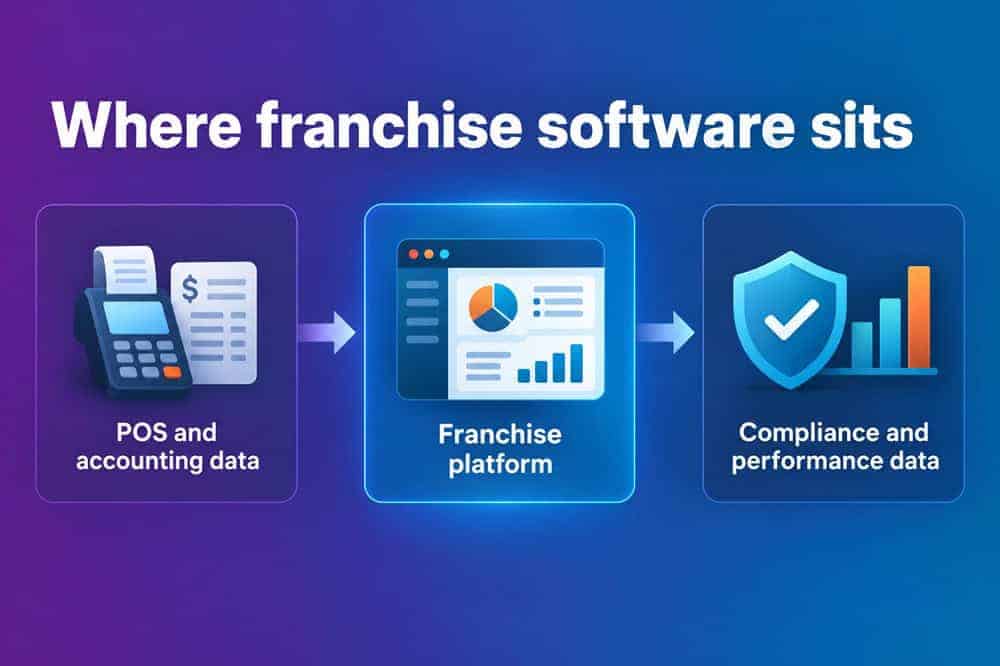
The systems that run a shift usually live elsewhere. POS, inventory, labor scheduling and payroll sit in connected systems. Food cost control, for example, belongs in POS-integrated restaurant inventory software that feeds your franchise platform rather than in a royalty module.
That boundary shapes your RFP. When a vendor claims to do everything, ask which capabilities are native and which depend on partner integrations. For IT, the franchise platform becomes both a consumer of POS and accounting data and a publisher of compliance and performance data. Map those flows before the first demo.
Thin Margins and High Turnover Make Frankenstein Tools Expensive
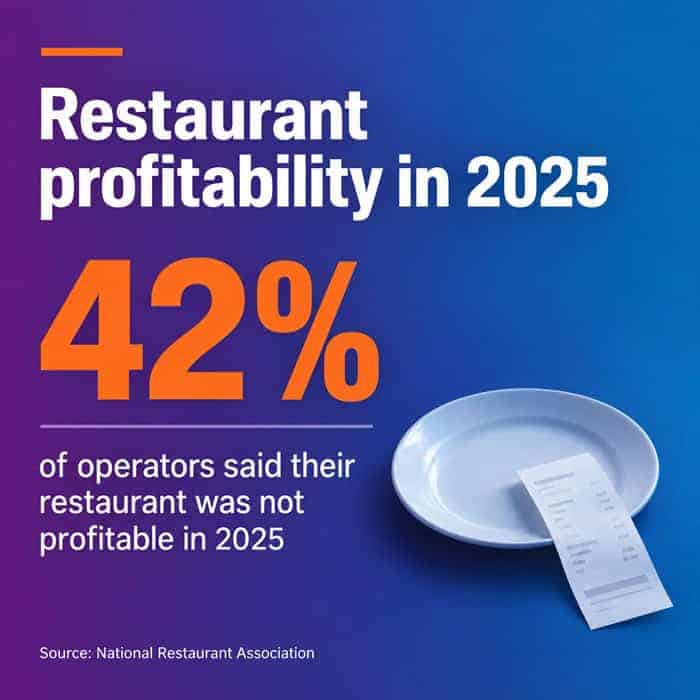
Restaurant networks outgrow spreadsheets because every manual handoff costs money in an industry with very little margin to spare. In the National Restaurant Association’s operator research, 42% of operators said their restaurant was not profitable in 2025. More than 9 in 10 named food, labor, insurance, energy and swipe fees as major challenges.
Turnover adds a second cost. The Bureau of Labor Statistics put the average monthly quits rate in accommodation and food services at 4.2% in 2025, a figure that includes hotels. St. Louis Fed data show the seasonally adjusted rate at 4.3% in March 2026. Every departure restarts training, certification and system access for a new hire.
The mishmashed pattern is familiar. Royalties live in a spreadsheet, audits arrive as emailed PDFs, training sits in a standalone LMS and franchisee questions land in a shared inbox. Each tool may work fine alone. None of them agree on how many stores are open, who runs them or what they sold last week.
Where a network breaks depends on its stage. An emerging franchisor can often run on an all-in-one platform plus accounting software. An enterprise, multi-brand or master franchise structure needs agreement-level data, access rules by brand and region, and links to ERP and BI. At that size, the franchise platform becomes one piece of a wider above-store operations stack that runs from BI to ERP. Build with purpose, not patchwork, by naming the system of record for each data set before you name a vendor.
Every Core Module Needs a Restaurant-Specific Test
Module lists look alike across vendors, so they won’t separate a shortlist. The restaurant-specific test for each module will. Run the checks below in every demo.
| Module | Restaurant-Specific Test |
|---|---|
| Franchise development CRM | Tracks candidates from inquiry to signed agreement by territory |
| Onboarding and store opening | Opening checklist tied to build-out, permit and training dates |
| Training LMS | Role-based certifications, including food safety, with expiry alerts |
| Field audits and brand standards | Food-safety inspection templates that work on a phone |
| Royalty management | Calculates fees from POS sales at each agreement’s rate |
| Helpdesk and intranet | Routes franchisee tickets and posts updates by brand |
| Marketing and brand assets | Versioned library of approved menus and local campaigns |
| Ordering and supply | Approved-vendor data flows in from your supply systems |
| Reporting and dashboards | KPIs by store, operator, brand and region from one data set |
Lead Management and Onboarding Set the Pace of Growth
The franchise development CRM is the franchisor’s sales pipeline for new franchisees. It should score leads and track disclosure and signing milestones. Then it should hand a signed franchisee straight into onboarding without rekeying. In February, the International Franchise Association projected that more than 12,000 new franchise businesses would open in the U.S. in 2026. Each opening runs through a checklist spanning construction, licensing, hiring and training. A missed task delays revenue.
Audits Are Where Brand Standards Meet Public Health
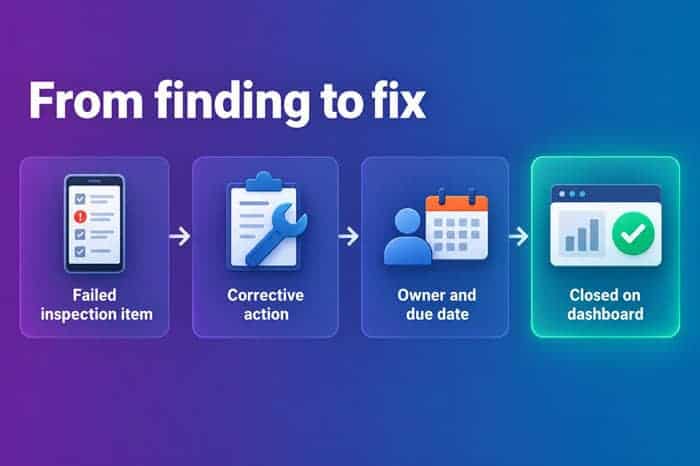
Food-safety audits carry more weight in restaurants than in most franchise sectors. The CDC estimates that 48 million people in the U.S. get sick from foodborne illness each year. In a demo, check that a failed inspection item creates a corrective action with an owner and a due date. Then confirm the dashboard shows it closing. A finding that only gets recorded protects nobody.
Support, Marketing and Reporting Keep the Network Aligned
Helpdesk, intranet and brand asset modules decide whether franchisees find answers without calling headquarters. Reporting proves the rest are working. Ask whether store KPIs, audit scores and royalty status come from one data model or from separate reports stitched together. Separate reports drift. One data model means less guesswork in every operator review.
Royalty Tracking Is Now a Compliance Question
Royalty calculation now carries legal exposure. FTC staff guidance issued in July 2024 says charging franchisees fees not disclosed in the franchise disclosure document (FDD) is unlawful. The FDD is the document franchisors must give prospective franchisees before they sign, and it lists every fee.
Regulatory roles matter here. The FTC both writes and enforces the Franchise Rule, which sets those disclosure requirements. On July 12, 2024, it also issued a policy statement on non-disparagement, goodwill and confidentiality clauses in franchise agreements. Morgan Lewis notes that the statement passed on a 3–2 vote. It was issued as guidance, not as an amendment to the Franchise Rule. Guidance doesn’t change the rule’s text. It does show franchisors how the agency reads it.
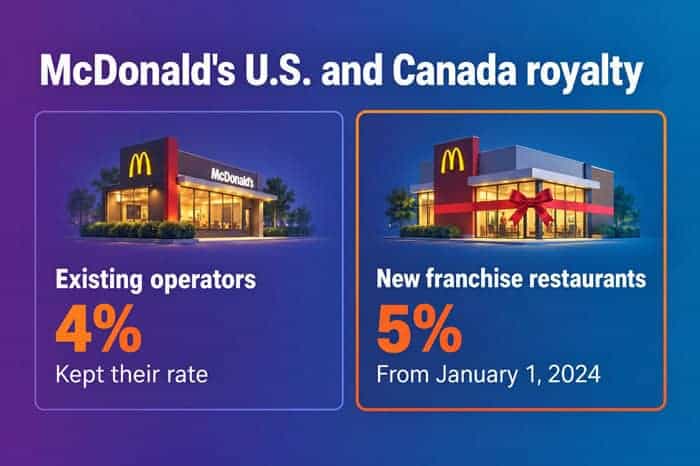
Rates also change over time. Press reports of an internal message say McDonald’s raised its U.S. and Canada royalty from 4% to 5% for new franchise restaurants starting January 1, 2024. It was the company’s first increase in nearly 30 years, and existing operators kept their rate.
That single decision created two royalty populations in one system. Brands that grow through acquisition or multi-brand deals collect many more variants. Your royalty engine therefore needs per-agreement rates with effective dates and every fee mapped to an FDD line. It should calculate from POS-reported sales and automate invoicing and collections. It also needs an audit trail of every rate change.
Franchisees Need Their Own Benefits or Adoption Stalls
Franchise platforms succeed when franchisees get something back for the data they enter. The table compares what each side gains from a well-run system.
| Area | Franchisor Gains | Franchisee Gains |
|---|---|---|
| Visibility | Network-wide KPIs by brand and region | All owned stores in one view |
| Compliance | Consistent audits and closed findings | Clear standards before inspectors arrive |
| Onboarding | Faster, repeatable store openings | New hires certified sooner |
| Local Operations | Brand-approved local marketing | Local CRM and POS data in context |
| Admin | Automated royalty billing | Fewer manual sales reports |
| Support | Ticket trends that reveal training gaps | Faster answers from headquarters |
The franchisee column carries more weight every year. Franchise Times counted 33,635 restaurants owned by the 200 largest U.S. restaurant franchisees in 2025, with $57.4 billion in combined revenue.
The largest of them shows the multi-brand reality. MMCG’s 2026 franchise market report lists Flynn Group at $4.938 billion in 2025 revenue. Its portfolio includes 1,321 Pizza Huts, 460 Applebee’s, 358 Arby’s, 340 Wendy’s and 307 Taco Bells. An operator at that scale answers to five franchisors, each with its own portal, audit format and reporting calendar.
If your platform makes a franchisee like that rekey data, expect spreadsheets on the side. The same friction shows up when franchisees buy stores and have to integrate acquired QSR locations into their own technology.
Integrations Decide Whether Your Dashboards Tell the Truth
Make direct POS, accounting and payroll feeds a pass-fail requirement. A dashboard built on uploaded sales files will soon disagree with your royalty invoices.
Ask these integration questions in every demo:
Expect competition for budget. In a 2026 National Restaurant Association survey reported by Restaurant Business, 8 in 10 operators said technology gives them a competitive advantage. Yet 60% said their 2026 tech spending focuses on customer experience. Back-office modernization has to win its share on measurable progress. Reconciled royalties are the easiest proof point to show a CFO.
Talk to a Smartbridge expert about the data and analytics behind your franchise platform, or explore our insights for multi-unit restaurant operators.
The right franchise management software connects your network’s data and makes daily work easier for the people who use it. Start by defining which systems own your records, then test how each platform handles POS integrations, agreement-specific royalties and corrective actions from food-safety audits. Give franchisees a clear benefit, from fewer manual reports to a single view of their stores. These priorities will help you choose a platform that supports reliable reporting, consistent standards and future growth.