

Boomi vs MuleSoft: Enterprise Integration Comparison
Choosing the right platform can be a complex process, but it’s essential for ensuring that your integration project is successful. In this article, we’ll compare two popular integration platforms, Boomi and MuleSoft, to help you determine which one is right for your business.
Organizations choosing an integration platform as a service (iPaaS) face a decision that shapes their digital maturity for years to come. Build with purpose, not patchwork.
Boomi and MuleSoft represent two distinct approaches to enterprise integration. Boomi emphasizes low-code accessibility and rapid deployment. MuleSoft, from Salesforce, focuses on API-led connectivity and developer-first architecture.
The right choice depends on your organization’s technical resources, integration complexity, and strategic roadmap. This comparison examines platform architecture, API management capabilities, data integration features, scalability, and total cost of ownership to help you make an informed decision.

Platform Architecture: Low-Code vs Developer-First Approaches
The fundamental difference between Boomi and MuleSoft lies in their architectural philosophy.
Boomi’s AtomSphere platform operates as a cloud-native iPaaS built around low-code integration. The platform uses a visual interface where business analysts and citizen developers can build integration flows without extensive coding knowledge. Boomi operates over 75,000 agents in production environments, demonstrating real-world deployment scale.
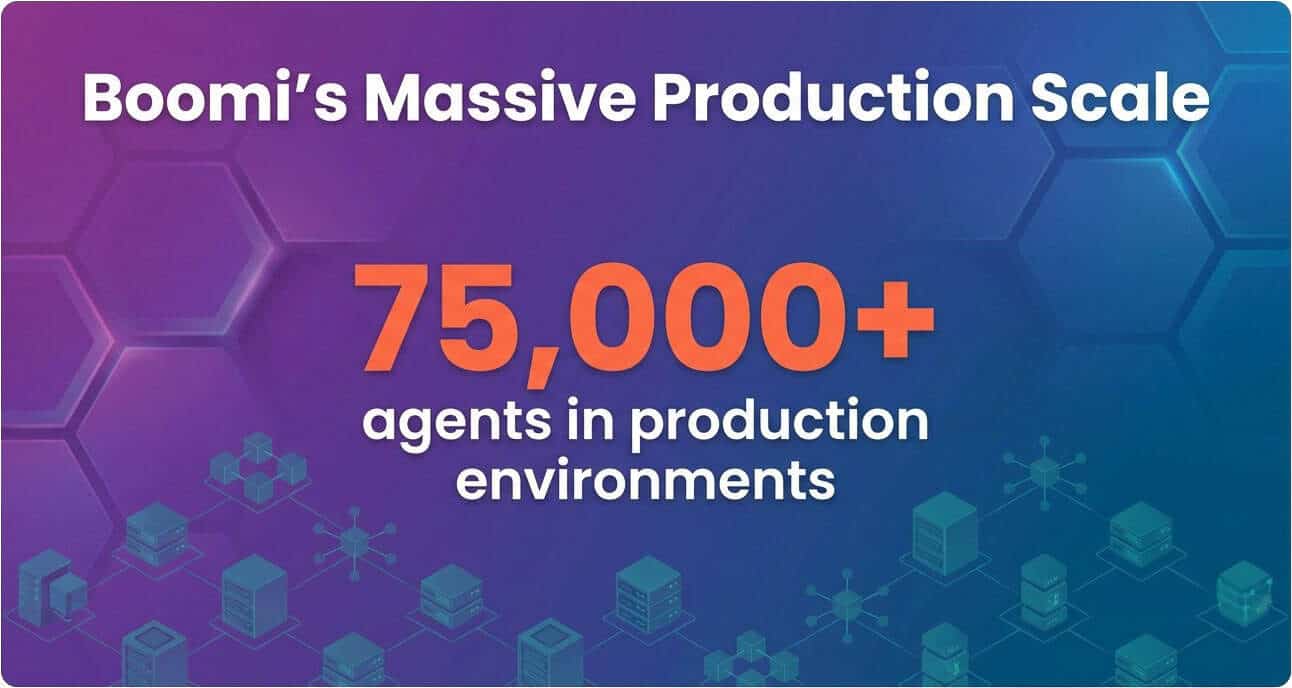
Boomi operates over 75,000 agents in production environments, demonstrating real-world deployment scale.
MuleSoft’s Anypoint Platform takes an API-led connectivity approach. The architecture centers on reusable APIs that form a connected network of applications, data, and devices. Development requires technical expertise, particularly with MuleSoft’s proprietary DataWeave transformation language.
DataWeave appears in approximately 90% of Mule flows, making it essential knowledge for MuleSoft developers. This code-first approach offers precise control but demands specialized skills.
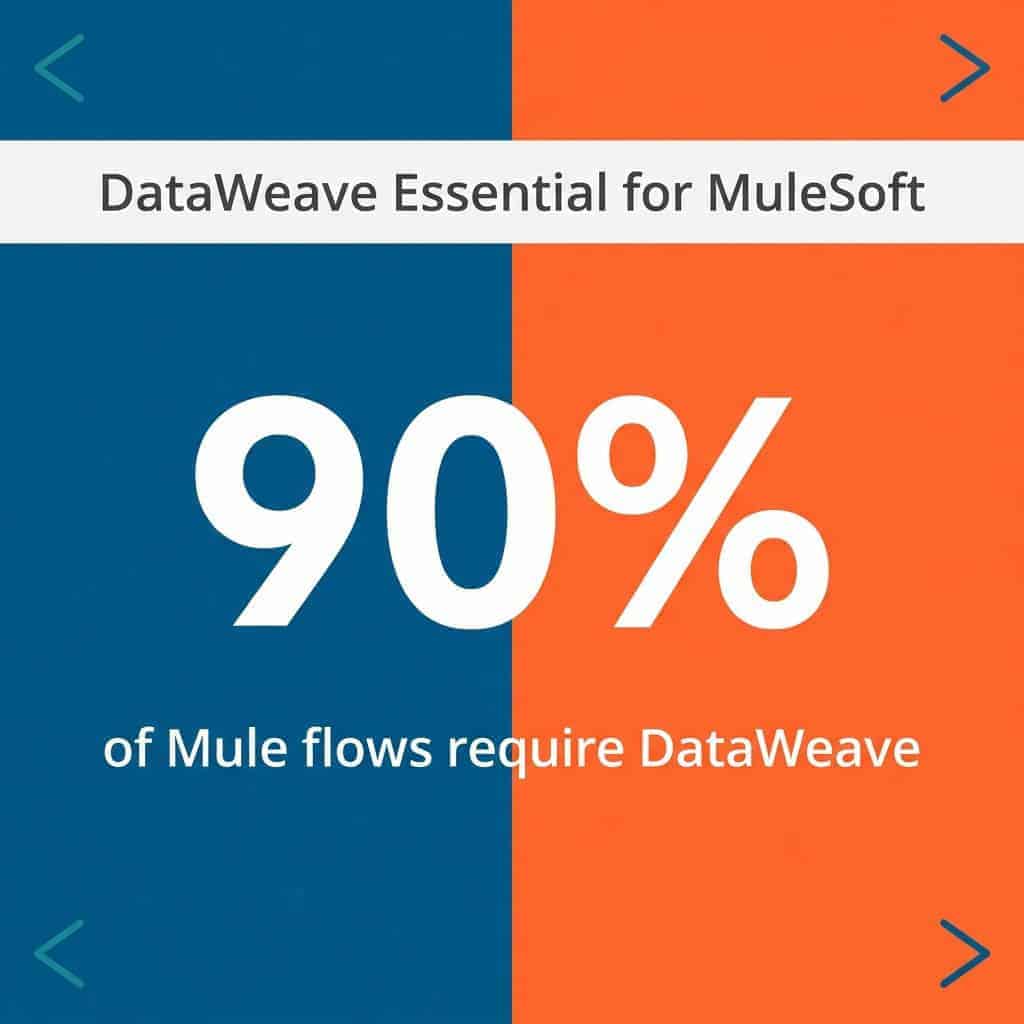
DataWeave powers roughly 90% of Mule flows, underscoring its importance for MuleSoft developers.
Deployment models differ significantly. Boomi provides a fully managed cloud service with minimal infrastructure overhead. MuleSoft offers CloudHub for managed deployment, but also supports on-premises and hybrid deployment through Runtime Fabric and standalone Mule runtimes.
The architecture choice determines who can build integrations, how quickly you can deploy, and what technical resources you’ll need long-term.
API Management Capabilities Analysis
API management separates serious integration platforms from basic connectors.
MuleSoft’s API management forms the core of its value proposition. Anypoint Platform includes comprehensive API lifecycle management: design, security, deployment, monitoring, and governance. The platform enforces API contracts, manages versioning, and provides developer portals for API consumption.
API-led connectivity creates reusable integration assets. System APIs connect to data sources, process APIs implement business logic, and experience APIs serve specific channels. This layered approach reduces integration complexity over time.
Boomi offers API management through its API Control Plane. The platform creates, deploys, and manages APIs with built-in security and monitoring. The approach is more streamlined than MuleSoft’s comprehensive suite, trading some advanced features for faster implementation.
Both platforms handle authentication, rate limiting, and API analytics. MuleSoft provides more granular control over API governance and policy enforcement. Boomi emphasizes rapid API creation from existing integration processes.
Organizations with sophisticated API strategies benefit from MuleSoft’s depth. Teams prioritizing speed and simplicity find Boomi’s API management sufficient for most enterprise needs.
Security and Governance Features
Security implementations reflect each platform’s architectural priorities.
MuleSoft embeds security at every layer: API policies enforce authentication and authorization, encryption protects data in transit and at rest, and runtimrity isolates applications. The platform supports SAML, OAuth, and custom security schemes.
Boomi provides role-based access control, secure connectors, and compliance certifications including SOC 2, ISO 27001, and GDPR. The platform’s unified governance model makes it easier to enforce consistent policies across all integrations.
Both platforms meet enterprise security requirements. MuleSoft offers more customization options. Boomi provides faster security implementation through standardized approaches.
Data Integration and Transformation Capabilities
Data integration complexity determines which platform architecture serves you better.
Boomi’svisual data mapping handles most enterprise integration scenarios. The platform includes pre-built connectors for common transformations, data quality rules, and Master Data Hub for data governance. Teams implement data integration flows through drag-and-drop interfaces with minimal coding.
The Master Data Hub deserves special attention. It provides a single source of truth for critical business entities, managing data quality, governance, and synchronization across systems. This capability addresses a common enterprise challenge: maintaining consistent data across disparate applications.
MuleSoft’s DataWeave transformation language offers more power at the cost of complexity. DataWeave handles complex data transformations, including nested structures, aggregations, and conditional logic. Developers write transformation scripts that provide precise control over data manipulation.
Real-time data integration capabilities differ in implementation. Boomi uses event-driven architecture with real-time data synchronization. MuleSoft implements real-time integration through API calls and message queuing with sophisticated error handling and transaction management.
Organizations with complex transformation requirements benefit from DataWeave’s capabilities. Teams needing rapid deployment across standard integration patterns achieve faster results with Boomi’s visual approach.
Pre-Built Connectors and Ecosystem
Connector libraries determine how quickly you can integrate your specific applications.
Boomi serves more than 30,000 customers worldwide, including over a quarter of the Fortune 500. This customer base drives extensive connector development for popular enterprise applications, cloud services, and databases.
The Boomi AtomSphere Marketplace provides pre-built connectors, integration processes, and best-practice templates. Customers share and reuse integration patterns, accelerating implementation for common scenarios.
MuleSoft’s Anypoint Exchange offers similar capabilities with a focus on API-first connectors. The platform includes MuleSoft-certified connectors, community-built connectors, and templates for common integration patterns.
Both ecosystems cover major enterprise applications: Salesforce, SAP, Oracle, Microsoft Dynamics, and cloud platforms. Specialized connectors for industry-specific applications vary by platform based on customer demand.

Scalability and Performance Considerations
Integration platform scalability determines whether your architecture supports growth or becomes a bottleneck.
Boomi’s cloud-native architecture scales automatically based on workload demands. The platform distributes processing across multiple Atoms (runtime engines) that can be deployed in various configurations: cloud, on-premises, or hybrid.
Atom deployment flexibility allows organizations to process data where it resides. This hybrid integration pattern reduces latency for on-premises applications while leveraging cloud scalability for peak loads.
MuleSoft scales through vCore allocation in CloudHub or horizontal scaling with on-premises deployments. The platform handles high-volume processing with sophisticated load balancing and clustering capabilities.
Performance characteristics reflect architectural differences. Boomi optimizes for ease of scaling with minimal configuration. MuleSoft provides granular performance tuning for demanding workloads but requires more technical expertise to optimize.
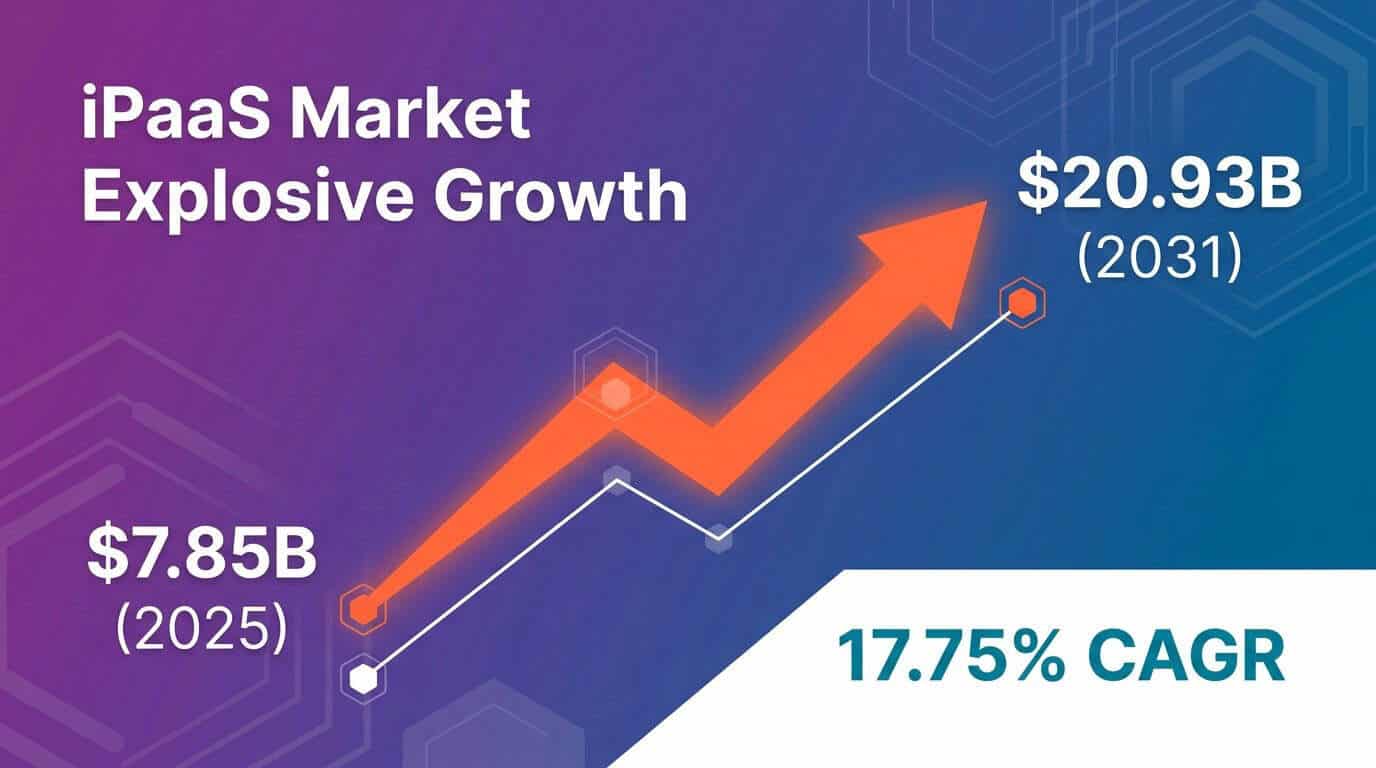
Both platforms handle enterprise-scale integration volumes. The global iPaaS market is expected to grow from USD 7.85 billion in 2025 to USD 9.24 billion in 2026, reaching USD 20.93 billion by 2031 at a compound annual growth rate of 17.75 percent, indicating strong market demand for scalable integration platforms.
Enterprise vs SMB Suitability
Platform complexity should match organizational capabilities.
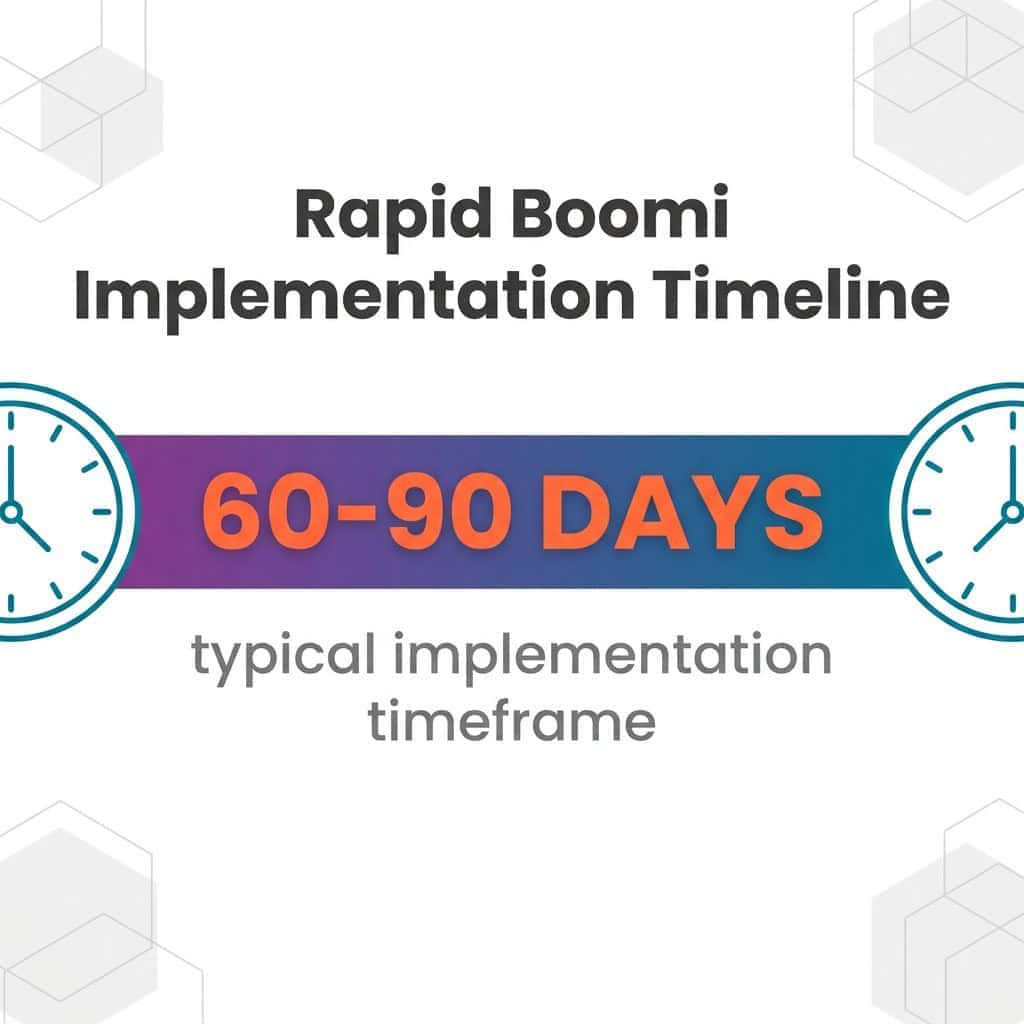
Mid-market organizations typically find faster value with Boomi. Boomi implements solutions typically within a 60-90 day timeframe, enabling rapid digital transformation initiatives.
Large enterprises with complex integration requirements benefit from Mulesoft’s comprehensive capabilities. MuleSoft was acquired by Salesforce in 2018 for $6.5 billion, marking the largest integration acquisition ever recorded, demonstrating the platform’s enterprise value proposition.
The Salesforce acquisition integrated MuleSoft deeply into the Salesforce ecosystem, creating advantages for organizations heavily invested in Salesforce products.
Ease of Use: Technical Complexity Comparison
The learning curve determines implementation speed and ongoing operational costs.
Boomi’s low-code interface reduces the technical barrier to entry. Business analysts with domain expertise can build integration flows after brief training. The visual development environment uses intuitive concepts: shapes represent components, lines show data flow, and configuration panels set parameters.
Citizen developers handle many integration scenarios without IT intervention. This democratization of integration reduces backlog and enables faster business response times.
MuleSoft requires developer expertise. Teams need Java knowledge, API design principles, and DataWeave proficiency. The Anypoint Platform provides powerful capabilities but demands investment in specialized skills.
Developer costs for MuleSoft range from $120,000 to $180,000 annually, reflecting the specialized expertise required. Organizations must factor ongoing staffing costs into their total cost of ownership calculations.
Developer experience tools partially offset complexity. Anypoint Studio provides an Eclipse-based IDE with debugging, testing, and deployment capabilities. The development environment supports experienced developers working on complex integrations.
Training requirements differ substantially. Boomi certification programs focus on platform-specific knowledge. MuleSoft training requires foundational programming skills plus platform-specific expertise.
Implementation Timeframes
Time to value matters when business demands outpace IT capacity.
Boomi’s rapid deployment model suits organizations needing quick wins. Standard integration scenarios deploy in weeks using pre-built connectors and templates. The low-code approach enables parallel development across multiple integration projects.
MuleSoft implementations take longer upfront. MuleSoft typically requires 6-12 months for implementation, reflecting the time needed for proper API design, development, testing, and deployment.
This longer timeline creates more durable architecture. Properly designed API-led connectivity reduces future integration costs by creating reusable assets. The upfront investment pays dividends for organizations with ongoing integration needs.
Pricing Structure and Total Cost of Ownership
Integration platform costs extend far beyond license fees.
Boomi uses subscription pricing based on connections and transaction volumes. The model provides predictable costs that scale with usage. Pricing starts lower than MuleSoft, making it accessible for mid-market organizations.
MuleSoft’s pricing centers on vCore allocation and API transaction volumes. MuleSoft’s pricing model begins with vCore allocation starting around $80k annually. Enterprise deployments easily exceed $200,000 annually before considering implementation and staffing costs.
Total cost of ownership includes hidden factors that significantly impact budget.
| Cost Component | Boomi Considerations | MuleSoft Considerations |
|---|---|---|
| Platform Licensing | Subscription based on connections | vCore allocation plus transaction fees |
| Implementation | 60-90 day typical timeline | 6-12 month typical timeline |
| Staffing Requirements | Business analysts and citizen developers | Specialized developers at $120k-180k annually |
| Training Costs | Platform-specific certification | Programming foundation plus platform training |
| Ongoing Maintenance | Managed service reduces overhead | Infrastructure management for on-premises deployments |
Boomi’s total cost of ownership advantages come from reduced staffing requirements and faster implementation. Organizations achieve ROI sooner with lower ongoing operational costs.
MuleSoft’s higher costs purchase greater capabilities. Enterprises with complex integration requirements, sophisticated API strategies, and available technical resources justify the investment through long-term architectural benefits.
Hidden Cost Factors
Budget planning must account for costs beyond initial licensing.
Infrastructure costs vary by deployment model. Boomi’s fully managed cloud service eliminates infrastructure overhead. MuleSoft’s on-premises deployment requires server hardware, network capacity, and ongoing infrastructure management.
Professional services accelerate implementation but add substantial costs. Both platforms offer partner networks with certified consultants. Hourly rates for MuleSoft specialists typically exceed Boomi consultants, reflecting the technical complexity difference.
Maintenance and upgrade costs appear over time. Boomi handles platform updates transparently in its managed service. MuleSoft requires more active management of runtime versions, dependency updates, and migration planning.
Monitoring, Analytics, and Observability
Integration platforms must provide visibility into what’s working and what’s failing.
Boomi includes centralized monitoring through the AtomSphere platform. Dashboards show integration health, transaction volumes, error rates, and performance metrics. Alerts notify administrators of failures or performance degradation.
The unified monitoring experience simplifies operations. A single interface tracks all integrations regardless of deployment location. This centralization reduces the operational burden on IT teams.
MuleSoft’s Anypoint Monitoring provides deeper analytics at the cost of complexity. The platform tracks API performance, identifies bottlenecks, and correlates issues across distributed integrations. Custom dashboards visualize business metrics alongside technical performance.
Advanced observability features include distributed tracing, log aggregation, and custom alerting. These capabilities support sophisticated troubleshooting for complex integration scenarios.
Both platforms integrate with enterprise monitoring tools. Organizations using AI-powered monitoring and analytics can leverage platform APIs to incorporate integration metrics into broader operational dashboards.
Strategic Considerations for Platform Selection
Platform selection should align with your digital maturity roadmap.
Organizations beginning their integration journey benefit from Boomi’s accessible approach. The low-code platform enables rapid progress while building integration competency across business and IT teams. Boomi is a 12-time Gartner Magic Quadrant Leader for iPaaS, demonstrating sustained platform maturity and market recognition.
Enterprises with sophisticated technology strategies should evaluate MuleSoft’s API-led architecture. The platform supports complex integration patterns, microservices architectures, and comprehensive API governance. Organizations already invested in Salesforce particularly benefit from native integration between platforms.
Consider your integration roadmap over three to five years. Will your integration complexity increase or remain relatively stable? Do you plan to expose APIs to external partners or customers? Will your team develop specialized integration expertise or rely on accessible tools?
The answers guide platform selection based on strategic fit rather than initial cost or feature checklists.
Industry-Specific Considerations
Certain industries have specific integration requirements that favor one platform.
Healthcare and life sciences organizations often require HIPAA compliance, HL7 integration, and FDA validation. Both platforms support these requirements, but integration with specialized healthcare systems varies by connector availability.
Financial services need robust security, audit trails, and regulatory compliance. MuleSoft’s comprehensive security features and detailed logging support stringent compliance requirements. Boomi provides necessary compliance certifications with simpler implementation.
Manufacturing and supply chain operations benefit from real-time data integration and hybrid deployment models. Enterprise-scale data migration and infrastructure modernization requires careful platform evaluation based on existing system architecture.
Choose Boomi when you need rapid deployment, accessible integration tools, and predictable costs. The platform excels for organizations with standard integration requirements, limited technical resources, and pressure to deliver quick business value.
Choose MuleSoft when you require sophisticated API management, complex data transformations, and long-term architectural flexibility. The platform justifies higher costs for enterprises with demanding integration requirements and available technical expertise.
Neither platform is universally superior. Context determines fit.
Successful integration strategies combine the right platform with operational discipline and clear business objectives. Understanding the total economic impact of integration platforms requires evaluating both direct costs and strategic value over time.
We’ll work with you to evaluate your integration requirements, assess your technical capabilities, and create the best roadmap for your destination. Digital maturity comes from purposeful platform selection aligned with business strategy.
Your integration platform shapes how quickly you respond to market changes, deliver customer value, and operate efficiently. Choose with purpose, not just procurement criteria. Real-world integration implementations demonstrate that platform selection impacts outcomes for years.