

Microsoft and LinkedIn’s 2026 Work Trend Index Annual Report: Highlights and Insights
Microsoft and LinkedIn’s 2026 Work Trend Index Annual Report explores how AI agents are reshaping work, leadership, and organizational design. We’ll cover key findings from the report and share our perspective as a team helping organizations put AI into practice.
Highlights from Microsoft’s 2026 Work Trend Index Annual Report
The 2026 Work Trend Index Annual Report from Microsoft and LinkedIn focuses on a major change in the workplace: as AI and agents take on more execution, people have more room to direct work, make decisions, and own outcomes.
The report makes it clear that AI adoption is about redesigning how work gets done, how teams use agents, and how organizations create the right conditions for AI to drive real business value.
Here are a few highlights from the report, along with our insights and recommendations:
Key Highlight 1
AI is Expanding Individual Potential
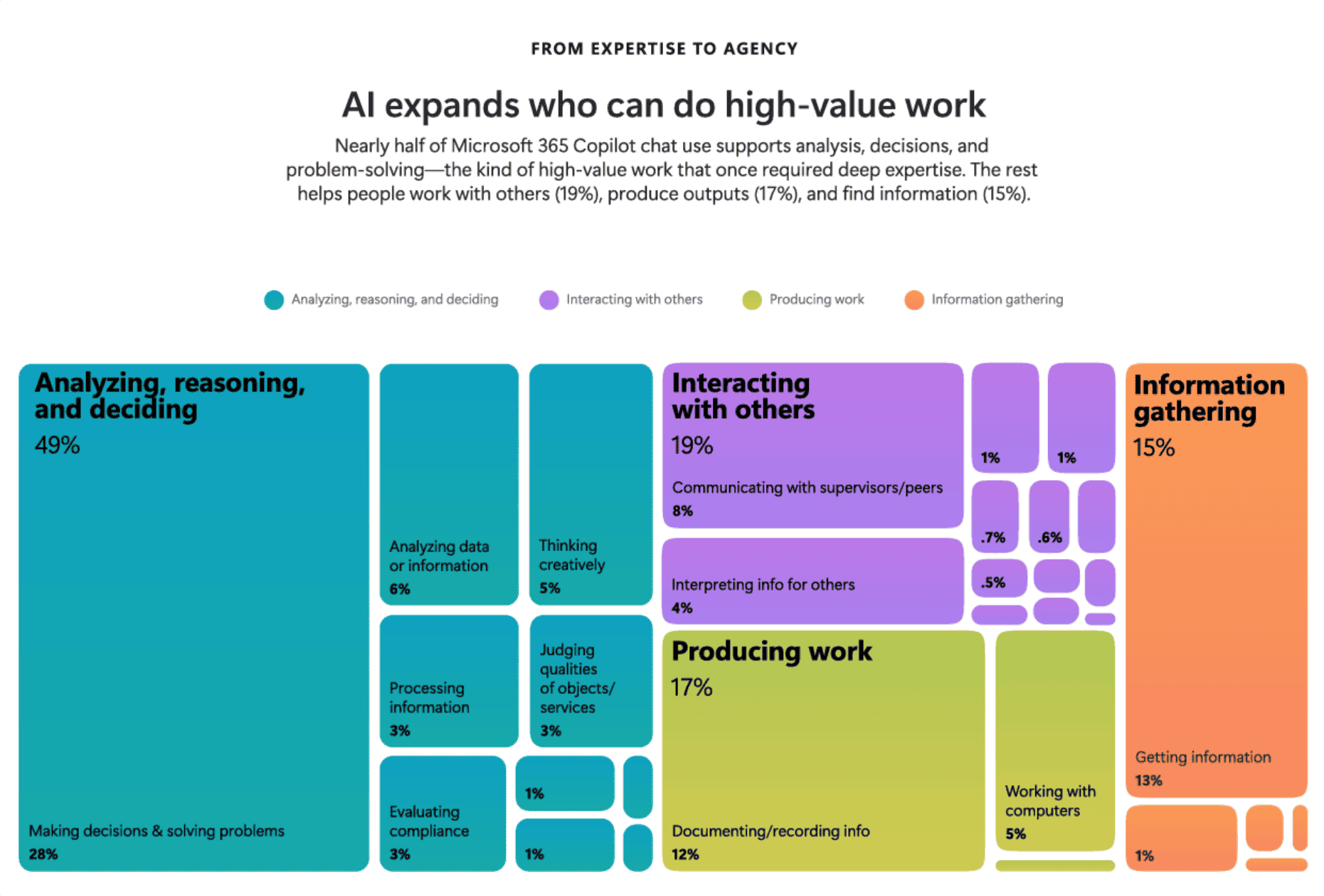
Microsoft’s research shows that AI is helping employees take on higher-value work. A privacy-preserving analysis of more than 100,000 Microsoft 365 Copilot chats found that 49% of conversations supported cognitive work, including analysis, problem-solving, evaluation, and creative thinking.
The report also found that 66% of AI users say AI has allowed them to spend more time on high-value work, and 58% say they are producing work they could not have produced a year ago.


Key Highlight 2
Human Judgment is Becoming More Important
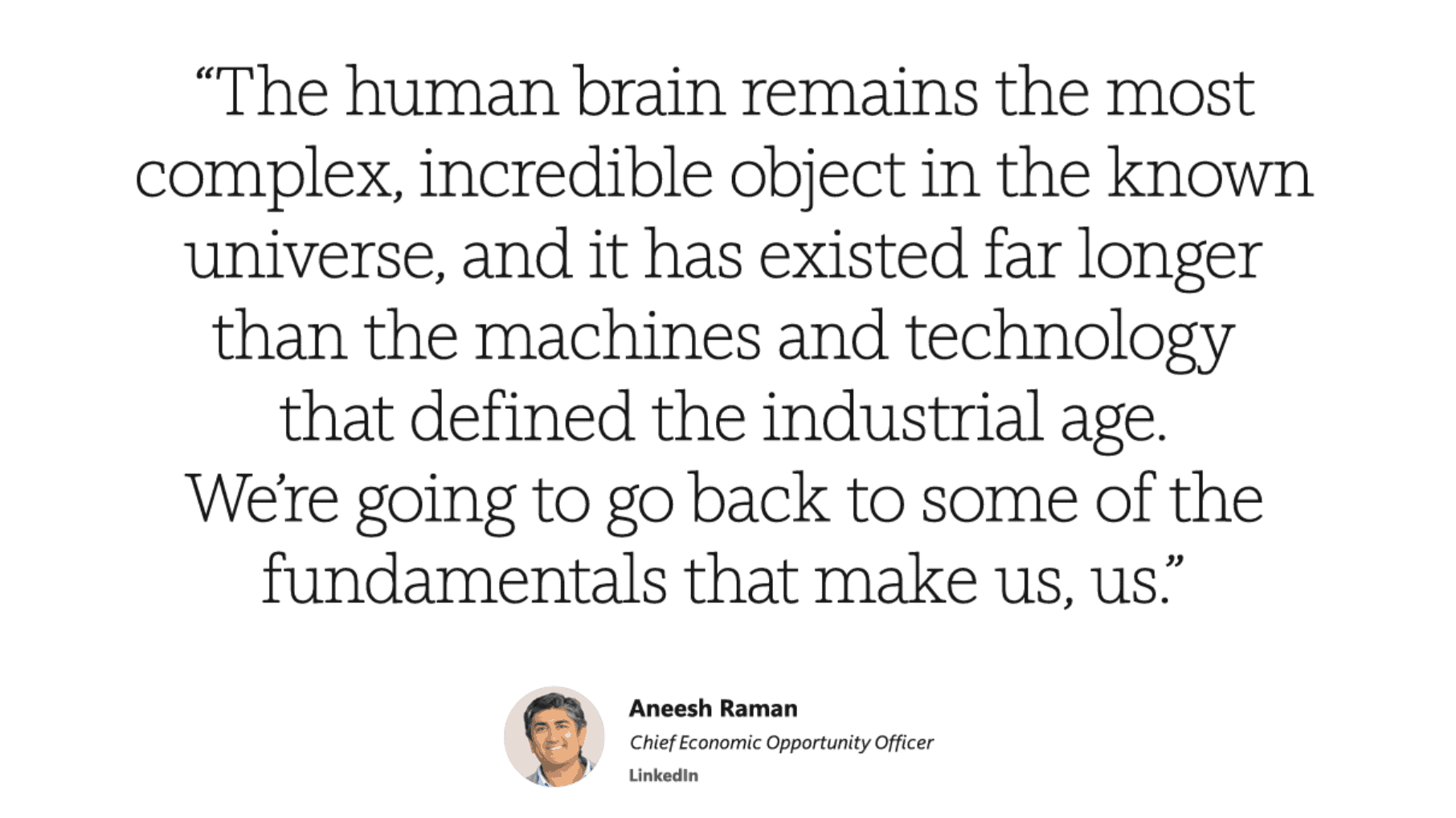
As AI handles more execution, human judgment becomes even more critical. Microsoft found that AI users ranked quality control of AI output and critical thinking as the top human skills that become more important as AI takes on more work.
The report also notes that 86% of AI users treat AI output as a starting point, not a final answer. Their role is shifting from producing every piece of work manually to evaluating, refining, and taking responsibility for the final outcome.
Key Highlight 3
Workers Are Ready, But Organizations Are Not Always Keeping Up
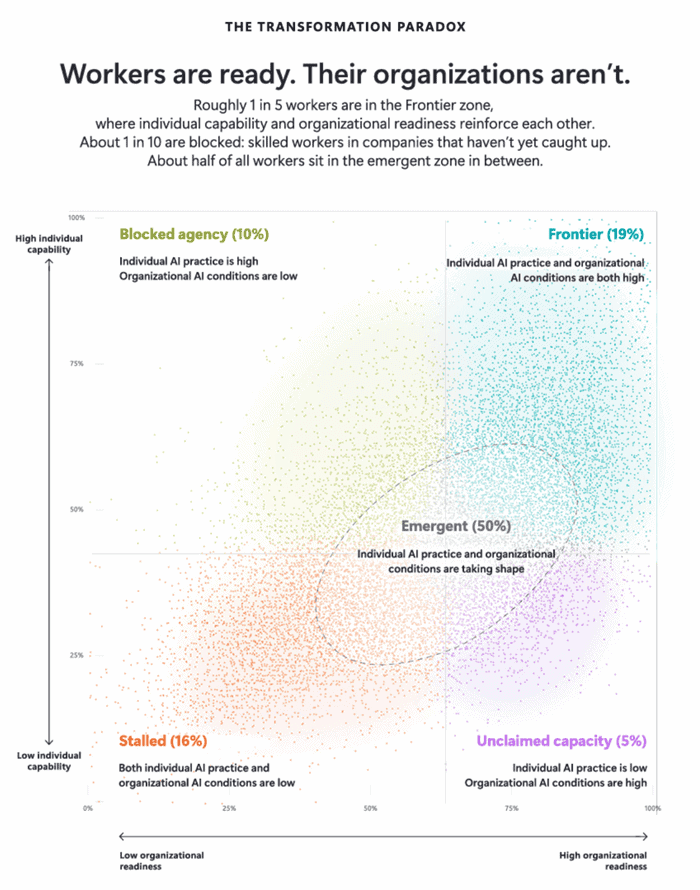
One of the biggest themes in the report is the “Transformation Paradox.” Employees are adopting AI and developing new skills, but many organizations have not updated their systems and operating models to support that progress.
According to the report, only 26% of AI users say their leadership is clearly and consistently aligned on AI. Microsoft also found that 65% of AI users fear falling behind if they do not use AI to adapt quickly, while 45% say it feels safer to focus on current goals than to redesign work with AI.
Key Highlight 4
Organizational Culture Drives AI Impact
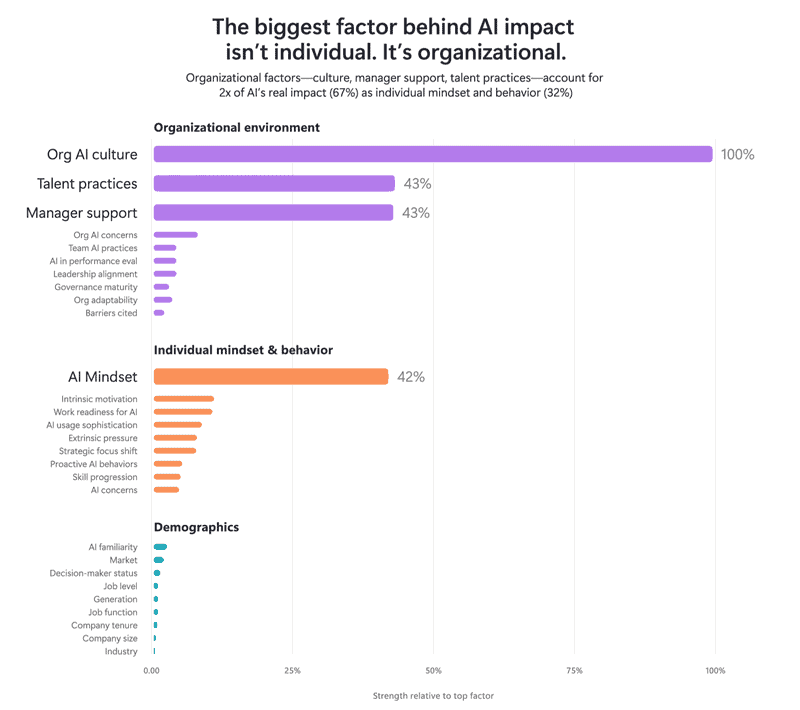
The report found that organizational factors (including culture, manager support, and talent practices) account for more than twice the reported AI impact of individual mindset and behavior.
This means AI value is heavily shaped by whether the organization encourages experimentation, whether managers model AI use, and whether teams have the support to apply AI in meaningful ways. This is on top of an employee’s motivation and skills.
Key Highlight 5
The Frontier Firm is Becoming a Learning System
Microsoft describes leading organizations as “Frontier Firms.” These firms using AI and are redesigning work around people and agents, capturing what works, and turning that knowledge into repeatable systems.
The report also introduces the idea of “Owned Intelligence,” which is institutional knowledge that compounds over time. As agents complete work, organizations gain signals about what succeeded, what failed, and where processes need improvement. Frontier Firms capture those signals and use them to improve future work.
The 2026 Work Trend Index makes a clear case that the future of work isn’t necessarily about AI adoption, but more importantly about an organizational redesign.
At Smartbridge, we help organizations move from AI interest to AI execution by identifying practical use cases, preparing the right data and governance foundation, and building solutions that support how people actually work. Contact us to discuss how your organization can turn AI ambition into measurable business value.