

AI in Clinical Trials: Accelerating Drug Development
Learn how pharma teams use AI in clinical trials to speed enrollment, optimize protocols, and reduce timelines.
Pharmaceutical companies spend approximately $2.6 billion over 12 to 15 years bringing a single drug to market. However, that timeline is shrinking fast with the rise of AI.
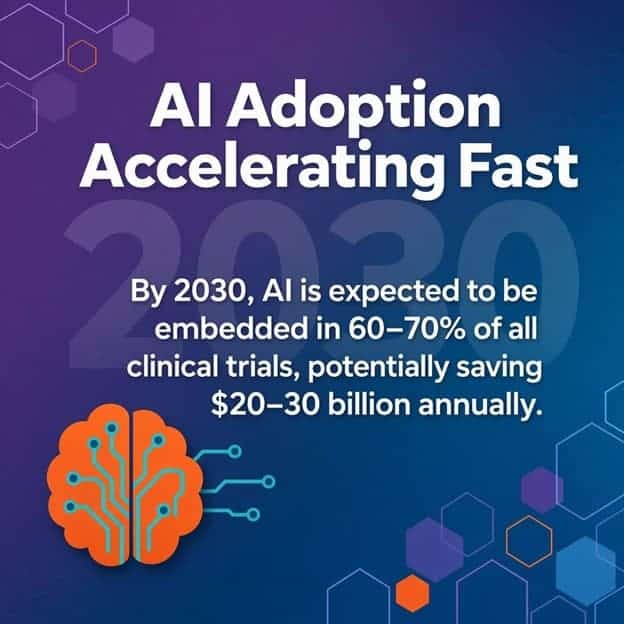
By 2030, AI is expected to be embedded in 60–70% of all clinical trials, potentially saving the pharmaceutical industry between $20–30 billion annually. Teams are now depending on AI to find the right patients faster, optimize protocols before trials start, and predict outcomes with accuracy that wasn’t possible even just five years ago.
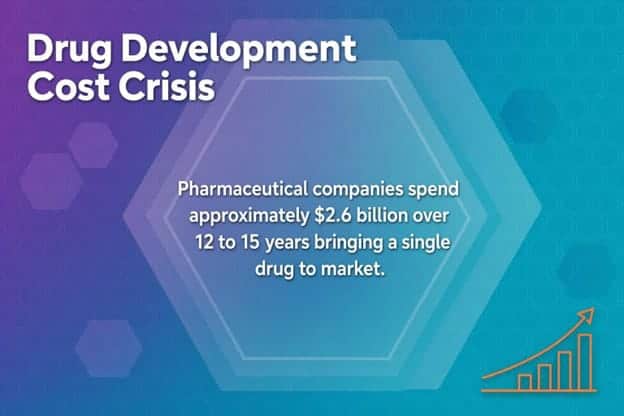
Drug development still costs ~$2.6B over 12–15 years per therapy, but AI is helping compress this baseline.
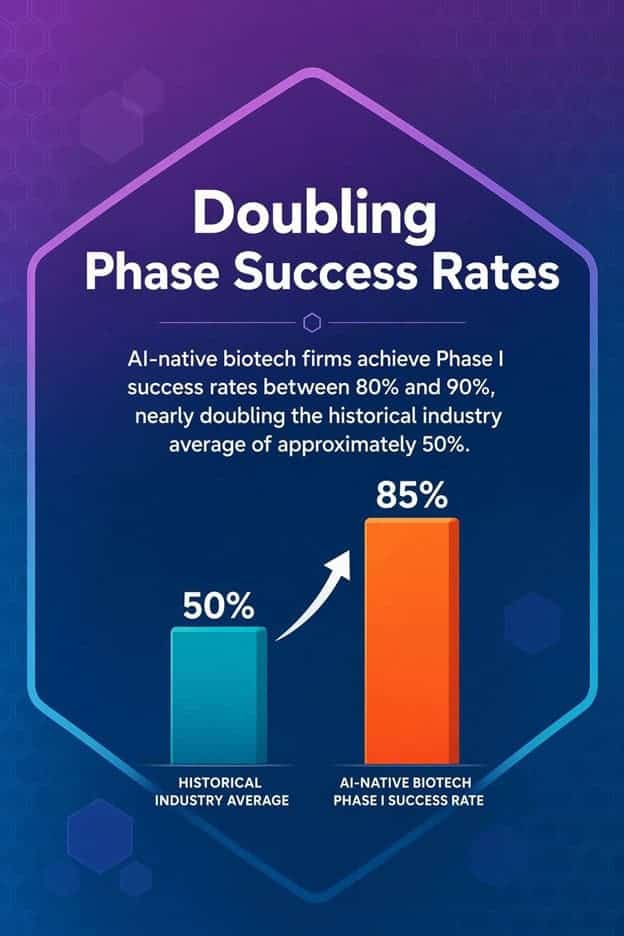
Clinical operations teams that move from manual site selection and patient screening to AI-powered predictive models cut enrollment timelines by months. Some R&D leaders watched AI-native biotech firms achieve Phase I success rates between 80% and 90%, nearly doubling the historical industry average of approximately 50%. This kind of improvement changes everything about how you plan, budget, and execute clinical programs.
AI-native biotechs report 80–90% Phase I success vs ~50% historical average, reshaping R&D expectations.
This means that biotech firms need to rethink how clinical trials work from patient identification through data analysis and regulatory submission. The organizations seeing results combined AI with strong operational discipline, clean data foundations, and domain expertise. They built with purpose, not by patchworking something together.
In this article we will provide a practical guide to where AI delivers measurable value across the clinical trial lifecycle, from recruitment and protocol design through adaptive trial management and real-world evidence generation. You’ll see where pharma and biotech teams actually moved the needle, what platforms and approaches work in production, and where the challenges still require careful navigation.
How AI Is Transforming the Clinical Trial Lifecycle
Clinical trials generate massive amounts of data. Patient records, genetic profiles, imaging scans, wearable device readings, protocol documentation, and regulatory filings. Traditional methods can’t process this volume fast enough to make real-time decisions.
With machine learning algorithms scan electronic health records in seconds. Natural language processing extracts insights from unstructured clinical notes. Predictive analytics identify which patients will respond to treatments before enrollment begins.
The market reflects this acceleration. The AI-enabled clinical trials market is projected to expand from $7.73 billion in 2024 to $9.17 billion in 2025, and reach $21.79 billion by 2030 at a compound annual growth rate of approximately 19%.
Where AI Delivers Immediate Value
Three areas stand out for rapid impact. Patient recruitment automation cuts months from enrollment timelines. Protocol optimization catches design flaws before the first patient enrolls. Real-time monitoring detects safety signals and efficacy patterns earlier than traditional analysis methods.
Each application requires different technical approaches. Recruitment relies heavily on natural language processing and EHR data integration. Protocol design uses machine learning models trained on historical trial databases. Monitoring combines wearable sensors with predictive analytics.
The common thread is data quality. Organizations that invested in cleaning, organizing, and standardizing their data foundations see AI deliver value faster. Those still working with fragmented systems and inconsistent data formats struggle to move beyond pilot projects.
Integration With Existing Clinical Operations
AI doesn’t replace clinical research teams, but rather augments their capabilities. Clinical research associates still design studies, but AI helps them identify optimal endpoints and patient populations. Site coordinators still manage enrollment, but predictive models show them which sites will hit targets on time.
This partnership approach matters. The most effective implementations blend AI capabilities with strong operational discipline and domain expertise. Algorithms suggest patient matches, but experienced clinicians make final eligibility decisions. Models predict dropout risk, but coordinators develop retention strategies based on those insights.
Technology platforms matter less than how you deploy them. Some organizations achieve significant results with basic machine learning tools applied systematically. Others invest in sophisticated platforms but struggle because their data infrastructure and processes aren’t ready.
AI-Powered Patient Recruitment and Enrollment Optimization
Finding the right patients remains the biggest bottleneck in clinical trials. Traditional recruitment methods involve manual chart reviews, broad advertising, and hoping eligible patients see the opportunity. Most trials miss enrollment targets.
With AI, instead of waiting for patients to find you, algorithms identify ideal candidates in electronic health records, insurance databases, and patient registries. Natural language processing reads unstructured clinical notes to find mentions of symptoms, diagnoses, and treatments that match eligibility criteria.
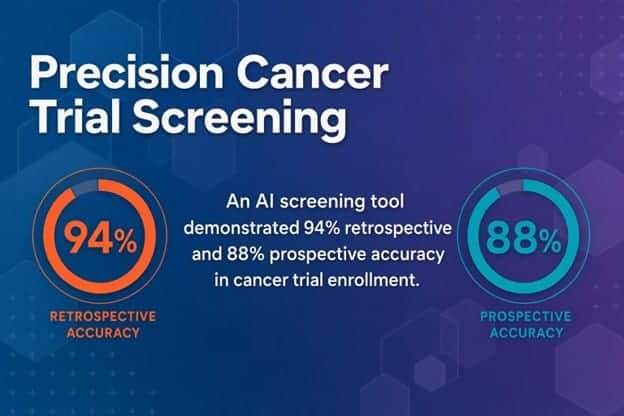
An AI screening tool demonstrated 94% retrospective and 88% prospective accuracy in cancer trial enrollment. This means fewer screening failures and faster enrollment. Sites spend less time reviewing ineligible candidates and more time enrolling patients who will complete the trial.
Predictive Site Selection and Performance Modeling
Not all clinical trial sites perform equally. Some consistently hit enrollment targets ahead of schedule while others struggle. AI models analyze historical site performance data to predict which locations will succeed for specific protocols.
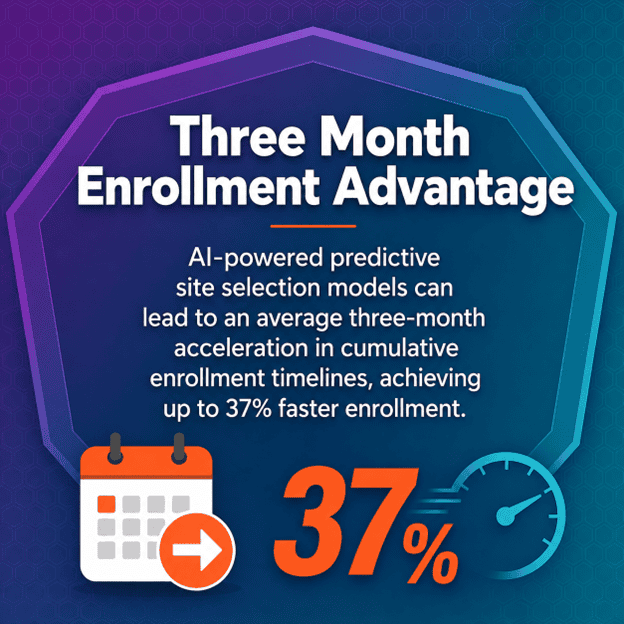
AI-powered predictive site selection models can lead to an average three-month acceleration in cumulative enrollment timelines, enabling trials to achieve up to a 37% faster enrollment rate relative to typical industry benchmarks. Three months might not sound dramatic, but in competitive therapeutic areas, it determines who reaches market first.
These models consider dozens of variables. Patient population density, site investigator experience, competing trial activity in the area, historical enrollment rates, and seasonal variations. They surface patterns human reviewers might miss.
Patient Eligibility Matching at Scale
Eligibility criteria for clinical trials often include 20 to 30 inclusion and exclusion factors. Manually reviewing patient records against these criteria takes hours per candidate. AI systems can process thousands of records overnight.
Natural language processing handles the complexity of unstructured data. Lab values, medication histories, comorbid conditions, and treatment timelines all get extracted and matched against protocol requirements. The system flags potential matches and explains why each patient qualifies.
This automation reduces bias in patient selection and ensures broader demographic representation. AI can systematically search for eligible patients across geographic regions and healthcare systems that traditional recruitment methods overlook.
Retention Prediction and Intervention
Getting patients enrolled matters less if they drop out before trial completion. AI models predict dropout risk based on patient characteristics, travel distance to sites, protocol complexity, and early engagement patterns.
Multimodal AI applications could improve participant retention by 15-40% by 2026. The systems identify at-risk participants early, allowing coordinators to intervene with additional support, schedule flexibility, or transportation assistance before patients decide to withdraw.
Retention strategies become proactive rather than reactive. Instead of discovering dropout patterns in exit interviews, teams spot warning signs in missed appointments, delayed questionnaire responses, or changes in engagement levels. Early intervention saves enrollments.
Machine Learning for Protocol Design and Optimization
Protocol design determines trial success before the first patient enrolls. Poorly chosen endpoints, unrealistic timelines, or overly restrictive eligibility criteria doom trials regardless of execution quality. Machine learning helps teams optimize these decisions upfront.
AI models analyze thousands of historical trials to identify patterns in what works. They predict which endpoint measures will show statistical significance based on proposed sample sizes. They flag inclusion criteria that will make recruitment impossible in target geographies.
This analysis happens in weeks instead of months. Protocol designers get feedback on feasibility, timeline estimates, and cost projections early enough to make adjustments. The alternative is discovering problems after spending months recruiting sites and patients.
Endpoint Selection and Feasibility Analysis
Choosing the right clinical endpoints requires balancing statistical power, clinical meaningfulness, and measurement practicality. Primary endpoints need to show clear differences between treatment and control groups while remaining achievable within reasonable timelines.
Machine learning models trained on trial databases predict outcome probabilities for different endpoint choices. They estimate how many patients you’ll need to achieve statistical significance. They compare measurement burden across different assessment schedules.
This quantitative approach reduces guesswork. Instead of relying solely on clinical judgment and literature reviews, teams see data-driven projections of what different design choices will deliver. Protocol committees make better decisions when they understand tradeoffs explicitly.
Sample Size Optimization
Traditional sample size calculations rely on assumptions about effect sizes and variance that often prove inaccurate. Underestimate, and your trial lacks statistical power. Overestimate, and you waste resources enrolling unnecessary patients.
AI models use real-world data to refine these estimates. They analyze actual patient populations that match your eligibility criteria to calculate realistic variance. They simulate trial outcomes across different sample sizes to identify the optimal enrollment target.
Adaptive trial designs take this further. Instead of locking sample size at protocol approval, AI systems continuously reassess power calculations as data accumulates. Trials can stop early for efficacy or futility, saving time and resources while maintaining statistical validity.
Inclusion and Exclusion Criteria Refinement
Restrictive eligibility criteria improve internal validity but make recruitment nearly impossible. Loose criteria speed enrollment but introduce confounding variables that obscure treatment effects. Finding the right balance is critical.
Natural language processing tools analyze EHR data to estimate how many eligible patients exist for different criteria combinations. They show you exactly how each additional restriction shrinks your potential patient pool. Protocol designers see the recruitment impact of their choices in real numbers, not theoretical estimates.
Some organizations use AI to identify which criteria actually matter for outcomes versus which are historical artifacts carried forward from previous trials. This evidence-based approach to protocol design eliminates unnecessary restrictions while maintaining scientific rigor.
Adaptive Trial Designs Enhanced by AI and Reinforcement Learning
Traditional clinical trials lock in every decision at the start. Sample size, treatment arms, dosing schedules, and patient populations remain fixed regardless of what data reveals during the study. Adaptive trials use accumulating evidence to make mid-course corrections.
AI makes these adaptations smarter and faster. Reinforcement learning algorithms continuously optimize treatment assignments based on patient responses. Bayesian models update probability estimates as new data arrives. Predictive analytics identify which patients will benefit most from which interventions.
Recent frameworks underscore the promise of adaptive trial designs: ClinicalAgent improved trial outcome prediction by 0.33 AUC over baseline methods by integrating real-world data and protocol reasoning. Better predictions enable better decisions about continuing, modifying, or stopping trials.
Response-Adaptive Randomization
Standard randomization assigns patients to treatment arms equally regardless of outcomes. Response-adaptive randomization shifts more patients toward better-performing treatments as evidence accumulates during the trial.
AI systems monitor interim results and adjust randomization probabilities in real-time. Patients enrolled later in the trial have higher chances of receiving treatments showing superior efficacy. This ethical approach maximizes benefit for trial participants while maintaining statistical validity.
The algorithms balance exploration and exploitation. They continue assigning some patients to all arms to ensure robust data collection, but bias toward arms demonstrating better outcomes. This approach works especially well in oncology trials where treatment response becomes apparent relatively quickly.
Biomarker-Driven Subgroup Identification
Not all patients respond equally to treatments. Genetic variations, disease subtypes, and comorbid conditions affect outcomes. AI models identify these response patterns faster than traditional subgroup analysis methods.
Machine learning algorithms scan genomic data, biomarker levels, and clinical characteristics to find correlations with treatment response. They identify patient segments where treatments work exceptionally well and others where benefits are minimal. This information guides enrichment strategies that focus enrollment on likely responders.
Adaptive designs can modify eligibility criteria mid-trial based on these findings. If analysis shows a specific biomarker predicts response, the protocol can adjust to preferentially enroll biomarker-positive patients. This adaptive enrichment increases the probability of demonstrating efficacy.
Dose Optimization and Safety Monitoring
Finding the optimal dose involves balancing efficacy and safety. Traditional dose-finding studies test predetermined levels sequentially. AI-driven approaches explore the dose-response relationship more efficiently.
Bayesian adaptive designs use accumulating data to model the probability of efficacy and toxicity at different dose levels. Algorithms recommend dose escalation, de-escalation, or exploration of intermediate levels based on observed outcomes. This approach finds optimal doses faster with fewer patients exposed to suboptimal levels.
Safety monitoring benefits similarly. AI systems detect adverse event patterns in real-time rather than waiting for scheduled data safety monitoring board reviews. Early detection of safety signals allows faster response, protecting patient safety while maintaining trial integrity.
Digital Twins and Synthetic Control Arms in Clinical Research
Traditional randomized controlled trials require control groups receiving placebo or standard care. This raises ethical concerns in serious diseases where effective treatments exist. It also doubles enrollment requirements, slowing trials and increasing costs.
Digital twins and synthetic control arms offer alternatives. Digital twins create virtual patient models based on real-world data. Synthetic controls use machine learning to match historical patient data to trial participants, eliminating the need for prospective control enrollment.
Regulatory agencies are beginning to accept these approaches for specific use cases. The technology is most mature in oncology and rare diseases where historical data is extensive and enrolling placebo controls is ethically problematic.
Creating Patient Digital Twins
A digital twin is a computational model that simulates an individual patient’s disease progression and treatment response. These models integrate genetic data, medical history, imaging results, and real-world outcomes from similar patients.
Machine learning algorithms train on large datasets to predict how specific patient profiles will respond to treatments. The models capture complex interactions between patient characteristics and treatment effects that traditional statistical methods miss.
Digital twins enable trial simulation before enrollment begins. Researchers can test different protocol designs, endpoint choices, and patient selection criteria virtually. This reduces the risk of failed trials due to poor design decisions.
Synthetic Control Arm Development
Synthetic controls match each trial participant to similar patients from historical databases or real-world evidence sources. AI algorithms identify the best matches based on demographics, disease characteristics, treatment history, and dozens of other variables.
The synthetic control group provides comparison data without requiring prospective enrollment. This approach works best when extensive historical data exists and when disease progression and treatment patterns are well-documented. Rare diseases and cancer trials are ideal applications.
Regulators require robust validation. The matching algorithms must demonstrate that synthetic controls accurately represent what prospective controls would show. Sensitivity analyses test whether conclusions change under different matching assumptions. Done properly, synthetic controls can cut trial costs and timelines substantially.
Real-World Evidence Integration
Real-world evidence from electronic health records, insurance claims, and patient registries provides context for trial results. AI systems integrate RWE with trial data to understand how findings will translate to broader patient populations.
Natural language processing extracts relevant information from clinical notes and pathology reports. Machine learning models adjust for differences between trial populations and real-world patients. This integrated analysis helps predict post-approval effectiveness and safety.
The combination of trial data and real-world evidence supports regulatory submissions and post-market surveillance. AI tools continuously monitor RWE for safety signals and effectiveness patterns that inform label updates and risk management strategies.
Natural Language Processing for EHR Data and Patient Matching
Electronic health records contain rich clinical information, but most of it lives in unstructured text. Physician notes, radiology reports, pathology findings, and discharge summaries describe patient conditions in narrative form that traditional data extraction methods can’t process.
Natural language processing unlocks this information. NLP algorithms read clinical notes like human reviewers, extracting diagnoses, symptoms, medications, lab results, and treatment histories. They identify relationships between concepts and timeline of clinical events.
This capability transforms patient identification for clinical trials. Instead of searching only structured data fields like diagnosis codes, NLP systems read the full clinical narrative. They find eligible patients that simple database queries miss.
Clinical Concept Extraction and Normalization
Medical professionals describe the same conditions in countless ways. “Myocardial infarction,” “heart attack,” “MI,” and “acute coronary syndrome” all refer to related concepts. NLP systems normalize these variations into standardized medical terminology.
This normalization is critical for accurate patient matching. Trial eligibility criteria specify conditions using precise medical terms, but patient records use colloquial language, abbreviations, and context-dependent descriptions. NLP bridges this gap.
The algorithms also extract temporal information. They distinguish between current conditions and past medical history. They identify when symptoms started, how long treatments lasted, and whether conditions resolved or remain active. This temporal understanding is essential for matching patients to protocols with time-based eligibility criteria.
Cohort Discovery Across Healthcare Systems
Large-scale patient recruitment requires searching multiple healthcare systems and data sources. NLP systems federate searches across disparate EHR platforms, each with different data structures and terminology.
The technology handles variations in documentation practices across institutions. It adapts to different medical specialties’ terminology and recognizes institution-specific abbreviations. This flexibility enables comprehensive patient searches that traditional methods can’t achieve.
Privacy-preserving approaches allow cohort discovery without exposing individual patient data. NLP systems can count eligible patients and characterize populations without extracting protected health information. This capability supports feasibility assessments while maintaining HIPAA compliance.
Adverse Event Detection in Clinical Notes
Safety monitoring requires identifying adverse events documented in clinical notes but not captured in structured adverse event reporting forms. NLP systems scan progress notes, nursing documentation, and specialist consultations for mentions of symptoms and complications.
The algorithms distinguish between pre-existing conditions, expected treatment effects, and true adverse events. They detect subtle language indicating clinician concern about safety issues. This proactive surveillance catches signals faster than traditional spontaneous reporting systems.
Integration with pharmacovigilance databases allows comprehensive safety analysis. NLP-detected events supplement formal reports to provide complete pictures of treatment safety profiles. This comprehensive monitoring supports faster regulatory decision-making.
Challenges: Data Quality, Bias, and Regulatory Considerations
AI delivers impressive results in controlled environments with clean data. Real-world clinical trial implementation faces messy data, evolving regulations, and algorithmic bias that can undermine outcomes. Organizations that acknowledge these challenges upfront implement more successfully than those that treat AI as plug-and-play technology.
The most successful implementations blend AI capabilities with strong data governance, diverse development teams, and close regulatory engagement.
Technology alone doesn’t solve complex clinical trial challenges. It amplifies whatever processes and practices you already have.
Data Quality and Standardization Requirements
AI models are only as good as their training data. Clinical trial databases contain inconsistencies, missing values, and documentation errors that corrupt model predictions. Organizations must invest in data cleaning and standardization before expecting AI to deliver value.
This data foundation work is unglamorous but essential. It means establishing controlled vocabularies for adverse events and endpoints. It requires mapping data elements across different trial management systems. It demands rigorous quality checks on data entry and validation processes.
Many organizations underestimate this effort. They purchase AI platforms expecting immediate results, then discover their data isn’t ready. The reality is that data preparation typically consumes more time and resources than model development. Build your foundation first.
Algorithmic Bias in Patient Selection and Outcomes
AI models trained on historical trial data perpetuate existing biases. If previous trials underenrolled women or minorities, algorithms will replicate these patterns. If certain patient populations were systematically excluded, models won’t learn to identify them as eligible candidates.
Addressing bias requires intentional intervention. Development teams must examine training data for representation gaps. They need to implement fairness constraints that ensure models consider diverse patient populations. Validation must specifically test performance across demographic subgroups.
Regulatory agencies are focusing attention on algorithmic bias. FDA guidance emphasizes the need for diverse datasets and fairness testing in clinical decision support tools. Organizations deploying AI for patient recruitment and eligibility screening must demonstrate that their systems don’t discriminate.
Model Interpretability and Clinical Validation
Black box models that make predictions without explanation create problems in clinical settings. Investigators need to understand why AI systems recommend specific patients or predict certain outcomes. Regulatory reviewers require evidence that models make decisions for scientifically valid reasons.
Interpretable AI approaches like SHAP (SHapley Additive exPlanations) values show which features drive model predictions. These explanations help clinicians trust AI recommendations and identify when models make errors. They also support regulatory review by demonstrating that predictions align with clinical knowledge.
Clinical validation goes beyond statistical performance metrics. Models must demonstrate that their predictions lead to better trial outcomes. A recruitment algorithm with 95% accuracy is useless if it doesn’t actually speed enrollment or improve diversity. Real-world validation in prospective trials is essential.
Regulatory Pathways and Compliance
Regulatory frameworks for AI in clinical trials are evolving. FDA has issued guidance on AI/ML-based software as medical devices, but specific requirements for trial design and recruitment tools remain unclear. Organizations must engage with regulators early to understand expectations.
Documentation requirements are substantial. Regulatory submissions must explain model development processes, training data sources, validation methodologies, and ongoing monitoring plans. Algorithm updates during trials require protocol amendments and regulatory notification.
International harmonization is incomplete. What FDA accepts may differ from EMA or other regulatory agencies. Organizations running global trials must navigate multiple regulatory frameworks, each with different AI requirements. This complexity demands careful planning and regulatory expertise.
Data Privacy and Security Considerations
AI systems processing patient data for recruitment and monitoring must comply with HIPAA, GDPR, and other privacy regulations. De-identification is complex when models need granular clinical details to make accurate predictions. Balancing privacy protection with data utility is challenging.
Federated learning approaches train models on distributed data without centralizing sensitive information. The algorithms learn from data at multiple sites while keeping patient records local. This privacy-preserving approach enables AI development across healthcare systems without exposing individual patient data.
Security requirements extend beyond traditional data protection. AI models themselves can become targets for attacks that extract sensitive information from training data. Organizations must implement robust security controls for both data and models throughout the development and deployment lifecycle.
Cost Reduction and Timeline Acceleration Through AI Automation
The financial case for AI in clinical trials is compelling. AI-driven optimization delivers 20-40% cost reductions across clinical trials, potentially reaching 40-60% in aggressive implementations. These savings come from faster enrollment, reduced screen failures, optimized site selection, and more efficient operations.
Timeline acceleration matters as much as cost reduction. First-to-market advantage in competitive therapeutic areas determines revenue potential. Shaving months from development timelines through AI-optimized recruitment and adaptive designs translates directly to business value.
The economics favor organizations that implement systematically rather than pursuing isolated pilots. Point solutions that optimize recruitment without addressing protocol design or monitoring leave value on the table. Comprehensive approaches that integrate AI across the trial lifecycle deliver outsized returns.
Operational Efficiency Gains
Clinical research associates spend enormous time on manual tasks. Chart reviews for patient eligibility, data entry, query resolution, and report generation consume hours that could focus on patient care and protocol adherence. AI automation redirects this effort toward higher-value activities.
Natural language processing automates eligibility screening by reading clinical notes and extracting relevant information. This eliminates hours of manual chart review per patient. AI-powered data validation catches errors at entry rather than during later monitoring visits, reducing query volumes.
Site monitoring gets more efficient through risk-based approaches powered by machine learning. Algorithms identify sites and data points requiring detailed review versus those meeting quality thresholds. Monitors focus attention where it matters most rather than conducting exhaustive reviews of low-risk data.
Resource Allocation Optimization
Trial budgets often misallocate resources to underperforming sites while starving high performers of support. AI models predict site enrollment trajectories early enough to redirect resources toward locations likely to hit targets. This dynamic resource allocation optimizes overall trial performance.
Patient retention interventions become more cost-effective when targeted to high-risk participants. Rather than applying expensive retention strategies uniformly, AI systems identify which patients need additional support. Resources flow where they prevent dropout rather than being spread equally across all participants.
Adaptive trial designs reduce sample sizes when interim analyses show clear efficacy or futility signals. Early stopping for overwhelming efficacy allows smaller trials that still achieve regulatory endpoints. Futility stopping prevents wasting resources on trials unlikely to succeed.
Accelerated Time to Market
Timeline acceleration compounds across the trial lifecycle. Three months saved in recruitment, two months in protocol optimization, and one month in data analysis accumulate to six months of faster development. In competitive markets, this acceleration determines winners.
The patent cliff amplifies timeline value. Each month gained before patent expiration translates to millions in protected revenue. AI that shaves months from Phase III trials delivers enormous financial returns compared to implementation costs.
Regulatory review benefits from higher-quality submissions enabled by AI. Complete data packages with robust statistical analyses and comprehensive safety monitoring reduce review cycles. Faster approvals mean earlier launches and longer market exclusivity periods.
Building Your AI Implementation Roadmap
Moving from AI experimentation to production deployment requires strategic planning. Organizations that succeed start with clear use cases aligned to critical business needs. They build data foundations before deploying sophisticated models. They implement governance frameworks that ensure responsible AI development.
Your roadmap should prioritize quick wins that demonstrate value while building capabilities for more complex implementations. Patient recruitment optimization typically delivers faster results than protocol design assistance. Real-time safety monitoring shows impact more quickly than synthetic control arm development.
The journey takes patience and persistence. Digital innovation is a journey, not a race. Organizations that rush into AI without proper foundations struggle. Those that build systematically, learn from early implementations, and scale what works achieve sustainable competitive advantage.
Assessing Organizational Readiness
Start by evaluating your current state across four dimensions: data maturity, technical capabilities, process readiness, and change management capacity. Organizations strong in all four areas can pursue ambitious AI initiatives. Those with gaps need to address foundations first.
Data maturity is often the limiting factor. Assess data quality, completeness, and standardization across your trial management systems. Evaluate integration capabilities between platforms. Map what data exists, where it lives, and what condition it’s in. This assessment reveals whether you can feed AI models the information they need.
Technical capabilities include both infrastructure and talent. Cloud computing platforms, machine learning tools, and data science expertise all factor into readiness. Many organizations partner with technology vendors rather than building everything internally. Understand which capabilities you need to own versus rent.
Selecting Initial Use Cases
Choose first implementations based on business impact, feasibility, and learning value. Patient recruitment optimization scores high on all three dimensions for most organizations. The problem is critical, the technology is mature, and success builds momentum for broader AI adoption.
Protocol optimization offers high impact but requires more sophisticated capabilities. Start here if you have strong data science teams and extensive historical trial databases. The insights improve every subsequent trial, making the investment worthwhile.
Avoid pilots that are too ambitious. Attempting synthetic control arms as a first AI project sets up failure. Build expertise with simpler applications before tackling complex regulatory challenges. Success breeds support for continued investment.
Building Data and Governance Foundations
Data governance frameworks ensure AI development happens responsibly. Establish policies for data access, model validation, bias testing, and ongoing monitoring. Define roles and responsibilities for AI oversight. Create review processes that evaluate models before deployment.
FAIR data principles matter: Findable, Accessible, Interoperable, and Reusable. Organize data so teams can discover what exists and access it efficiently. Standardize formats to enable interoperability across systems. Document thoroughly to support reuse in future projects.
Security and privacy controls must cover both data and models. Implement encryption for data at rest and in transit. Control access based on roles and need-to-know principles. Monitor for unauthorized access or suspicious activity. Treat AI models as sensitive intellectual property requiring protection.
Partnering for Success
Few organizations have all necessary capabilities internally. Strategic partnerships with AI experts and technology consultants accelerate implementation. The key is choosing partners aligned with your vision and committed to your success.
We’ll work with you to create the best roadmap for your destination. AI implementation in clinical trials isn’t one-size-fits-all. Your therapeutic focus, organizational capabilities, and competitive position all influence the right approach. AI applications in life science R&D require customization to deliver value.
Organizations serious about AI start with strategy, not technology. Understand where AI can truly impact your operations. Build the foundations that enable success. Implement systematically with clear success metrics. This purposeful approach builds competitive advantage that compounds over time.
The pharmaceutical industry is entering a new phase where AI capabilities separate leaders from followers. Teams that master AI-powered recruitment, protocol optimization, and adaptive trial management will bring therapies to market faster and more cost-effectively. Those still relying entirely on traditional methods will struggle to compete.
Your next step is assessment. Evaluate your current clinical trial operations against the capabilities described here. Identify your most critical bottlenecks and highest-value opportunities. Build a phased implementation plan that starts with quick wins and progresses toward comprehensive AI integration. The journey begins with that first honest assessment of where you stand today.
For organizations ready to move beyond pilots to production-scale AI deployment, best practices for AI integration provide frameworks for successful implementation. The technology is ready. The question is whether your organization is prepared to capture the value it offers.