

Salesforce Health Cloud Implementation for Life Sciences
Salesforce Health Cloud is an AI-first platform built on the Salesforce CRM foundation, purpose-built to connect clinical and operational data across providers, payers, and life sciences organizations into a unified Patient 360 view. It combines care coordination tools, care plan management, EHR integration capabilities, and Einstein AI into a single platform that replaces the fragmented, system-by-system approach that still slows most healthcare organizations down.
The global healthcare CRM market reached an estimated USD 21.5 billion in 2025 according to Grand View Research, a figure that reflects how seriously the industry has moved toward platform-based patient engagement.
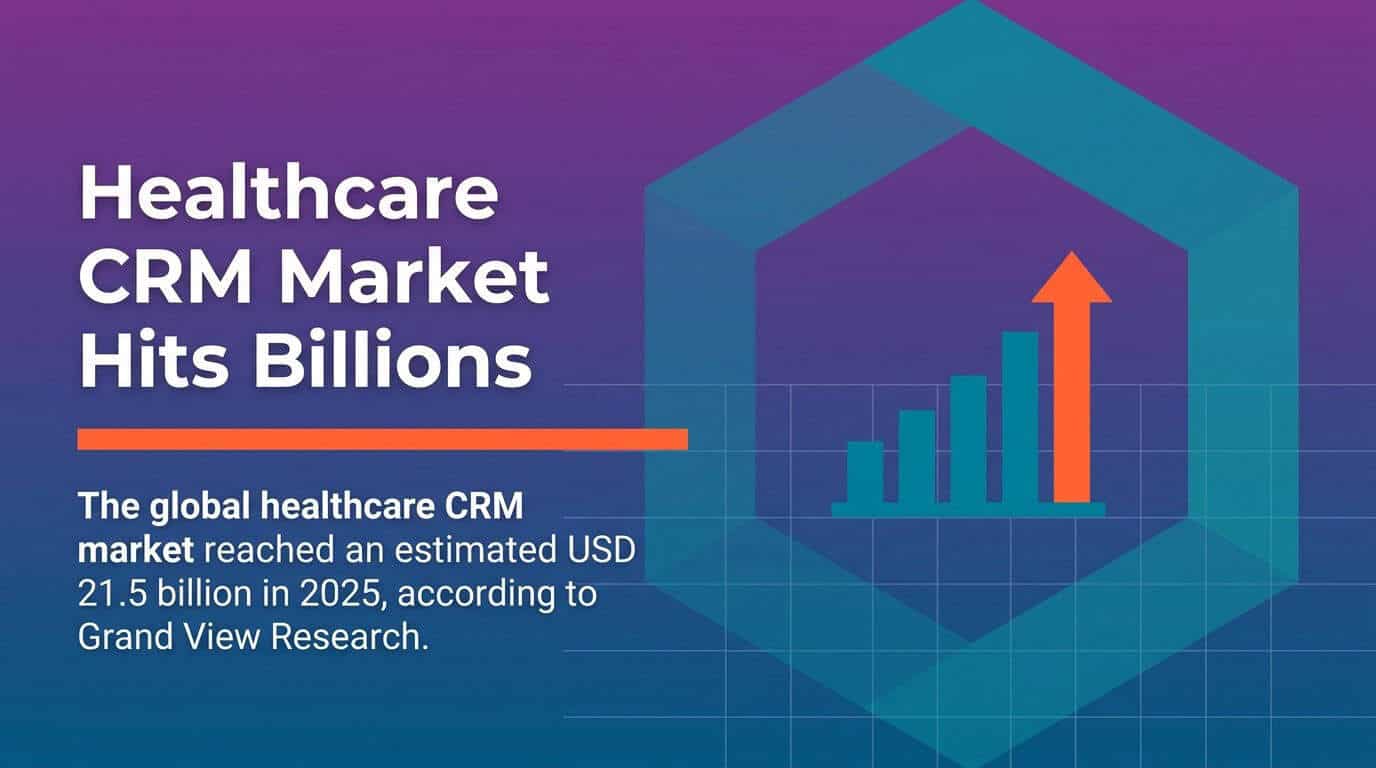
Healthcare CRM market reached an estimated USD 21.5B in 2025 (Grand View Research).
As Smartbridge has watched healthcare and life sciences organizations work through their digital strategies, one pattern keeps surfacing. The data exists. The clinical systems exist. The patient relationships exist. What’s missing is a connected layer that makes all of it usable in real time, by the right care team member, at the right moment. That’s the gap Salesforce Health Cloud was built to fill. This guide covers what the platform actually does, how its data model works, where it moves the needle for providers, payers, and life sciences, and what the AI and integration story looks like in 2026.
What Is Salesforce Health Cloud?
Salesforce Health Cloud is a purpose-built healthcare CRM platform that delivers a 360-degree view of each patient by unifying clinical records, social determinants, care plans, and engagement history in one place. It extends the core Salesforce platform with healthcare-specific data objects, workflows, and compliance controls designed for the regulated environment that providers, payers, and life sciences companies operate in.
The distinction worth drawing is this: Health Cloud doesn’t replace electronic health records. It complements them. EHR systems are built for clinical documentation and billing. Health Cloud is built for care coordination, patient engagement, and operational workflows. The two serve different purposes, and the most effective implementations connect them through integration rather than treating one as a substitute for the other.
Health Cloud organizes patient data around the individual rather than the transaction. A traditional CRM shows you an account and its associated contacts. Health Cloud shows you a patient and their complete clinical picture: their care team, their open care plans, their recent interactions, their risk factors, and their next scheduled touchpoint. Moving from account-centric to patient-centric is the core design philosophy.
The platform also ships with industry-specific console layouts for different roles. A care manager sees a different default view than a medical device sales rep, who sees something different than a payer service agent. This means teams can move faster without wading through irrelevant data.

Consulting Partner

Managed Services Provider
Who Should Use Salesforce Health Cloud?
Salesforce Health Cloud serves three distinct segments of the healthcare industry: providers managing patient populations and care teams, payers managing member experience and utilization, and life sciences companies managing clinical operations, commercial teams, and patient support programs.
You’ve likely seen this tension firsthand. Healthcare organizations frequently carry five or more operational systems, each holding a different slice of the patient or member record. The result is care teams making decisions with incomplete pictures, and patients re-explaining their situations at every touchpoint.
For provider organizations, Health Cloud addresses care coordination gaps. Hospitals, health systems, and specialty practices use it to assign care teams, manage care plans for complex patients, and track patient engagement across the continuum of care. Home health agencies have found particular value in its scheduling and intake automation capabilities.
Payers use Health Cloud to manage the member lifecycle, from enrollment through claims, utilization management, and chronic condition programs. The member 360-degree view mirrors the Patient 360 model on the provider side, giving service agents and care managers a single record rather than a multi-system lookup process.
Life sciences companies, including pharma, biotech, and MedTech manufacturers, use Health Cloud to support commercial operations, patient services, and clinical trial recruitment. Salesforce Life Sciences Cloud, which became generally available in June 2024 according to Salesforce’s release notes, builds on the Health Cloud foundation with life sciences-specific workflows including prior authorization automation, patient hub programs, and medical affairs engagement tools. Industry leaders including Boehringer Ingelheim and Pfizer selected the Life Sciences Cloud according to Salesforce, which signals real enterprise validation beyond pilot programs.
Key Features of Salesforce Health Cloud
Salesforce Health Cloud delivers its core value through four interconnected feature sets: Patient 360 and care team management, care plan management, patient engagement and personalized communication, and workflow automation across clinical and operational processes.
Patient 360 and Care Team Management
The Patient 360 view in Health Cloud aggregates everything known about a patient into a single, structured record. This includes demographics, clinical history pulled from connected EHR systems, active care plans, care team assignments, social determinants of health flags, and communication history. The 360-degree view model means any authorized care team member starts a conversation with full context rather than partial information.
Care team management lets organizations define roles within a patient’s team and assign responsibilities explicitly. A complex patient might have a primary care physician, a care manager, a social worker, and a home health nurse. Health Cloud tracks who is responsible for what and when their last interaction occurred. That accountability layer is what turns a list of providers into an actual functioning care team.
Care Plans and Care Coordination
Care plan management in Health Cloud allows clinical teams to create, assign, and track individualized care plans against measurable goals. Each care plan can include tasks, problems, goals, and interventions, tied to the specific patient record and visible to all care team members. Care coordination workflows trigger alerts and tasks when care plan milestones are missed or when a patient’s risk profile changes.
This is where Health Cloud moves from being a data repository to an operational tool. The care plan doesn’t just document what should happen. It drives the next action and surfaces it to the right person at the right time.
Patient Engagement and Personalized Care
Health Cloud connects to Salesforce Marketing Cloud and Experience Cloud to deliver personalized patient engagement at scale. Organizations can send condition-specific education, appointment reminders, and care plan check-ins through the patient’s preferred channel. The engagement is tied back to the Patient 360 record, so every interaction becomes part of the longitudinal patient history rather than a disconnected outreach event.
For life sciences, this patient engagement capability supports patient hub programs where pharmaceutical companies manage access, adherence, and support services for specialty therapies. The same Patient 360 model applies, just oriented around the therapy relationship rather than the clinical encounter.
The Health Cloud Data Model Explained
The Salesforce Health Cloud data model extends the standard Salesforce object model with healthcare-specific objects including Patient, Care Plan, Care Team Member, Clinical Encounter, and Condition, all built on the HL7 FHIR R4 standard to support interoperability with external clinical systems.
This matters more than most evaluations give it credit for. A data model that doesn’t align with how healthcare data is structured in clinical systems creates translation problems at the integration layer. Health Cloud’s FHIR-aligned data model means that data coming from an EHR via a FHIR API lands in Health Cloud objects that were built to receive it, rather than requiring custom mapping for every field.
The core Health Cloud objects worth understanding are these four: the Patient object (extending the standard Contact), the Care Plan (with its nested Goals, Problems, and Interventions), the Clinical Encounter (a structured record of each patient interaction), and the Care Team (with its member role assignments). Custom objects are still available for organization-specific needs, and the platform’s AppExchange ecosystem includes pre-built Health Cloud extensions from partners who have solved common configuration challenges.
One architectural reality to plan for: Health Cloud does not store clinical data natively in the way an EHR does. It surfaces and contextualizes data pulled from clinical systems through integrations. The data model is designed for engagement and coordination, not for clinical documentation. Organizations that approach Health Cloud as an EHR replacement consistently run into this mismatch. Those that approach it as a coordination layer on top of their EHR get much better results. See how Smartbridge applied this model in a patient and device tracking implementation to understand how the architecture plays out in practice.
Salesforce Health Cloud for Providers, Payers, and Life Sciences
Salesforce Health Cloud delivers meaningfully different value depending on whether the deploying organization is a care provider, a health plan, or a life sciences company, and the implementation approach should reflect those differences rather than applying a single configuration template across all three.
Healthcare Providers
For providers, the core value is care coordination at scale. Health Cloud gives care management teams the tools to stratify their patient population by risk, assign care teams to high-complexity patients, manage active care plans, and track engagement over time. Referral analytics built on Tableau can surface which referral pathways are performing and where patients are falling out of the care continuum.
Prior authorization automation is a high-ROI use case that often gets implemented early. Manual prior auth processes slow care delivery and consume clinical staff time. Health Cloud’s workflow automation can route prior auth requests, track status, and trigger follow-ups without requiring staff to context-switch between systems.
Health Payers
Payers deploy Health Cloud to build a member-centric service model. The member 360-degree view connects enrollment data, claims history, utilization patterns, and care management interactions. Service agents handle inquiries with full context rather than building the member’s picture from multiple lookup screens during a live call.
Utilization management and chronic condition programs are areas where Health Cloud’s care plan and care coordination capabilities apply directly to the payer context. Members enrolled in disease management programs get assigned care managers, individualized care plans, and structured outreach, managed through the same Health Cloud workflows used on the provider side.
Life Sciences Organizations
Life sciences is where the Health Cloud and Life Sciences Cloud distinction becomes important. The comparison between Veeva and Salesforce Life Sciences Cloud is one of the most active evaluation conversations in the space right now, and it’s worth understanding clearly. Notably, Veeva Systems has announced it will move off the Salesforce platform by 2030, which is reshaping how life sciences companies think about their long-term CRM strategy.
Veeva plans to leave the Salesforce platform by 2030—an inflection point for life sciences CRM strategy.
For pharma and biotech, Health Cloud supports medical science liaison teams, patient hub and access programs, and clinical trial recruitment. For MedTech manufacturers, device tracking, field service integration, and commercial operations workflows are the primary drivers. Salesforce Life Sciences Cloud as a unified data platform for MedTech is a configuration that Smartbridge has worked through in detail, and the integration architecture is where most of the implementation complexity lives.
The FDA drug approval timeline, which the Congressional Budget Office has documented at 10 to 15 years, reflects why life sciences commercial and medical operations need platforms that can support both pre-commercial and post-launch phases. Health Cloud’s flexibility across the product lifecycle is a genuine advantage over point solutions built only for one phase. And with 77% of life sciences organizations reporting that data silos hinder their digital strategy, the Patient 360 architecture that Health Cloud provides isn’t a nice-to-have. It’s a structural fix to a well-documented problem.
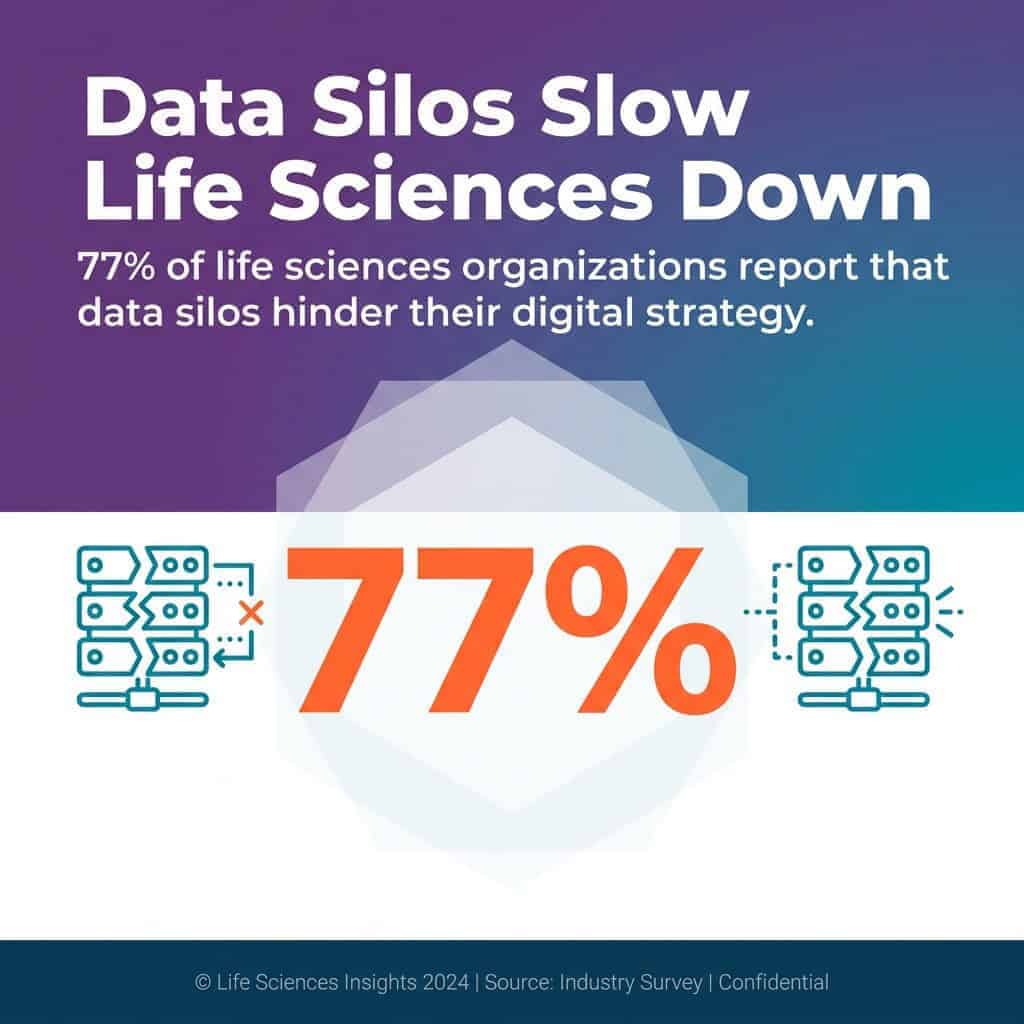
77% of life sciences organizations say data silos hinder digital strategy—underscoring the need for a Patient 360 foundation.
AI and Analytics Capabilities: Agentforce and Einstein
Salesforce Health Cloud’s AI capabilities in 2026 are organized under two frameworks: Einstein AI, which provides predictive analytics, risk scoring, and intelligent recommendations embedded in clinical workflows, and Agentforce for Health, which deploys autonomous AI agents to handle specific operational tasks without requiring manual intervention.
The AI and automation advancements across life sciences that Smartbridge tracked through 2025 consistently pointed toward one pattern: organizations that moved from pilots to production deployments were the ones that had clean, well-governed data underneath their AI layer. Einstein in Health Cloud is the same story. Risk stratification models and next-best-action recommendations are only as useful as the patient data feeding them. Get the data foundation right first.
Agentforce 360 for Health, Salesforce’s agentic AI framework applied to the healthcare context, enables autonomous agents to handle tasks like appointment scheduling, prior authorization follow-up, care gap outreach, and patient intake. These aren’t chatbots routing to a human queue. They’re agents completing discrete operational tasks end to end, with escalation paths when clinical judgment is needed.
Einstein Analytics for Healthcare, delivered through Tableau and the Salesforce Data Cloud, provides operational dashboards for care management teams, referral analytics for provider network managers, and risk analytics for population health programs. The U.S. AI in life sciences market reached USD 1.20 billion in 2025 according to BioSpace, and the clinical validation is becoming clearer: research published in PMC found that AI-discovered molecules achieve an 80 to 90% success rate in Phase I trials, which illustrates the broader shift toward AI-assisted scientific and operational decision-making that platforms like Health Cloud are built to support.
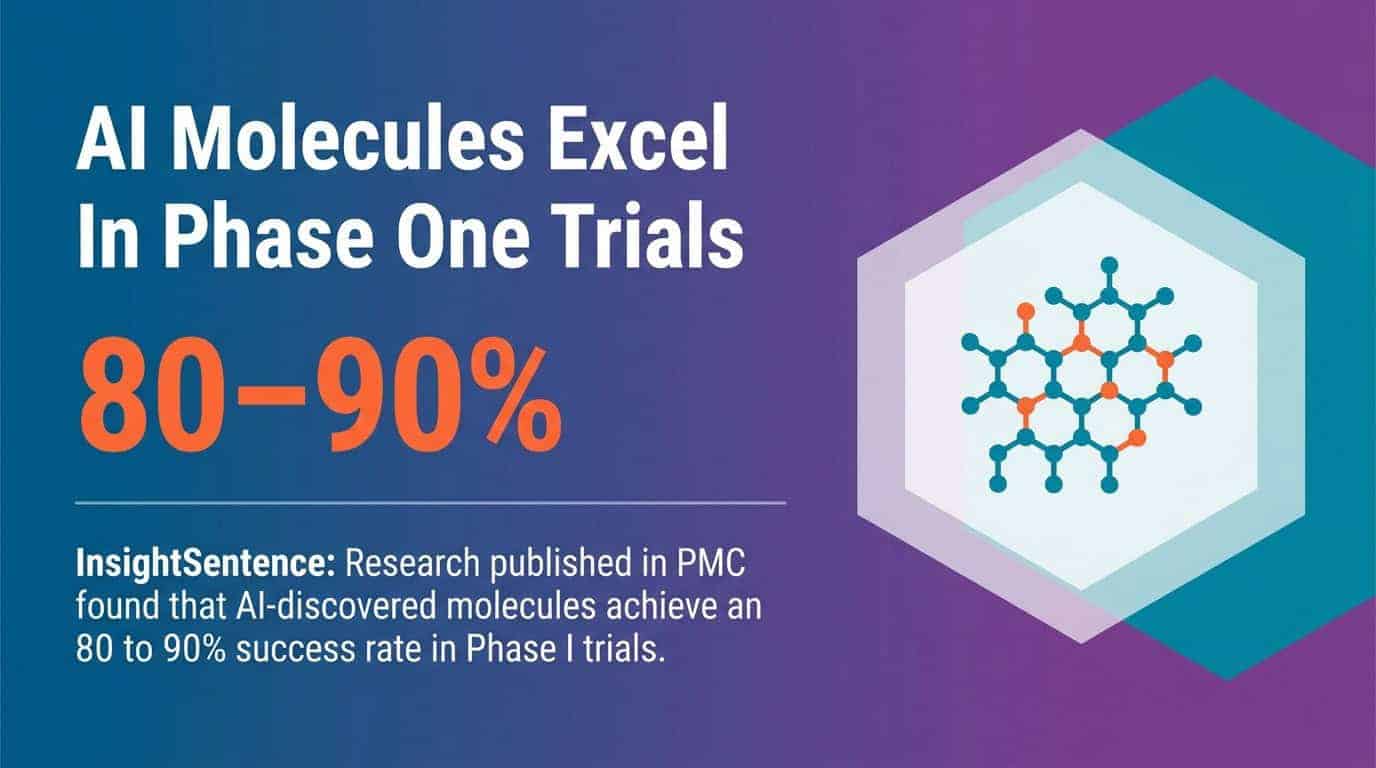
AI-discovered molecules show 80–90% Phase I success (PMC), highlighting AI’s impact across the life sciences value chain.
For life sciences specifically, Agentforce for Health supports patient services teams handling high volumes of access and reimbursement inquiries. Fragmented inquiry management was slowing patient access programs, until agentic AI brought consistency and speed to intake, status updates, and escalation routing.
Integration With MuleSoft, EHR Systems, and FHIR Standards
Salesforce Health Cloud connects to electronic health records and external clinical systems primarily through MuleSoft Anypoint Platform, using FHIR R4-aligned API connectors that map clinical data from Epic, Oracle Health (Cerner), athenahealth, and other major EHR vendors into Health Cloud’s native data model.
The 21st Century Cures Act’s interoperability requirements accelerated EHR vendor adoption of FHIR APIs. That shift matters for Health Cloud implementations because FHIR-aligned connectors through MuleSoft now operate against a more standardized API surface than existed even three years ago. Less custom mapping. More reliable data pipelines. The integration work is still real, but the underlying standards are more consistent.
MuleSoft’s pre-built Health Cloud connectors cover the most common EHR integration patterns: patient demographic sync, clinical encounter retrieval, medication list updates, lab result ingestion, and care plan data exchange. Implementations that use these connectors rather than building custom integrations from scratch move faster and are easier to maintain as EHR vendors release API updates.
Salesforce Data Cloud adds another dimension. It provides a real-time data platform that can ingest streaming clinical events (like a new lab result or a discharge notification) and trigger Health Cloud workflow actions immediately. That real-time layer is what enables use cases like post-discharge follow-up automation, where a discharge event in the EHR triggers a care manager task and a patient outreach message in Health Cloud within minutes.
For life sciences organizations integrating Health Cloud with commercial systems like IQVIA, the integration architecture across ERP, IQVIA, and eQMS platforms requires the same deliberate approach. Build the integration layer with purpose, not patchwork. Each connection point should serve a defined operational use case, not just move data for data’s sake.
Global life sciences companies migrating to cloud CRM from legacy systems face a specific integration challenge: territory and product hierarchy data that has accumulated years of custom logic. A cloud CRM migration for a global life sciences company illustrates how that complexity gets resolved when the migration is approached strategically rather than as a lift-and-shift exercise.
Data Security, Compliance, and HIPAA Considerations
Salesforce Health Cloud operates under Salesforce’s multi-layered security architecture and is covered by Salesforce’s Business Associate Agreement (BAA) for HIPAA compliance, making it suitable for storing and processing Protected Health Information (PHI) when configured according to Salesforce’s healthcare compliance guidelines.
This is where many evaluations get oversimplified. A signed BAA with Salesforce establishes a contractual compliance foundation, but it doesn’t make an implementation HIPAA-compliant by itself. The configuration choices your organization makes, such as which fields store PHI, which users have access to which records, how audit trails are enabled, and how data is handled in connected systems, all affect the actual compliance posture. The BAA covers Salesforce’s obligations. The configuration and governance decisions are yours.
Health Cloud’s security architecture includes field-level security for PHI fields, role-based record access through Salesforce’s sharing model, audit trail logging through Field History Tracking and Event Monitoring, and encryption at rest and in transit. Shield Platform Encryption adds an additional layer for organizations with stricter data residency or encryption requirements.
For life sciences organizations, the compliance picture also includes 21 CFR Part 11 for electronic records and signatures, GDPR for European patient data, and state-level privacy regulations. Health Cloud’s validation documentation and change management controls support GxP validation processes, though the validation work itself requires organizational effort beyond the platform configuration.
The practical advice: map your PHI data elements before you configure, not after. Organizations that define which fields contain PHI, which roles legitimately need access to them, and how that access is audited during the design phase avoid the expensive retroactive security remediation that comes from treating compliance as an implementation afterthought.
Map PHI data elements before configuration to avoid costly retroactive remediation.
Planning a Salesforce Health Cloud Implementation
A Salesforce Health Cloud implementation that actually moves the needle starts with a data and integration assessment, not a feature wishlist. The most common implementation failure pattern is organizations that configure Health Cloud extensively before they understand what data they have, where it lives, and how cleanly it can be connected.
The R&D cost data is a useful frame here. With a median R&D cost of $708 million for FDA-approved drugs according to RAND, life sciences organizations understand the cost of getting complex processes wrong. A Health Cloud implementation isn’t that scale, but the discipline of defining success criteria before committing to a configuration approach applies directly.
Four areas determine implementation quality more than any others. First, data model alignment: does your team understand what clinical data will live in Health Cloud versus staying in the EHR, and have you mapped the objects and fields before build begins? Second, integration architecture: have you selected your integration middleware, mapped your FHIR API connections, and defined your data refresh cadence? Third, care coordination workflows: have you documented your current care management processes in enough detail to configure Health Cloud workflows that reflect how your teams actually work, not an idealized version? Fourth, governance: who owns the Health Cloud configuration, who approves changes, and how are compliance-relevant modifications tracked?
Digital innovation is a journey, not a race. A phased implementation that delivers Patient 360 visibility and core care coordination in the first phase, then adds AI and advanced analytics in subsequent phases, consistently outperforms big-bang deployments that try to activate everything at once. The foundation has to be right before the advanced capabilities can deliver. We’ll work with you to build that roadmap for your specific destination. Salesforce implementations in life sciences that connect revenue operations to clinical and commercial workflows show what the mature state looks like when the foundation is solid.
The common thread across every Health Cloud implementation that actually moved the needle: organizations that invested in clean, governed data before activating Einstein analytics and Agentforce workflows. The platform is capable. The question is always whether the data underneath it is ready to make those capabilities produce reliable results rather than noisy outputs. Chart your path to measurable business value with that data foundation as the starting point.